Free 5.1 Surround Sound to Stereo Downmix Calculator— gemini-3.0-flash
gemini-3.0-flashVisualize and calculate professional 5.1 surround sound to stereo downmix formulas. Adjust channel levels for L, R, C, LFE, Ls, Rs for accurate audio mixing.
AI Generation Prompt
Technical Specification: 5.1 Surround Sound to Stereo Downmix Calculator
Overview
A browser-based, single-file utility designed for audio engineers to visualize and calculate the mathematical downmixing of 5.1 surround sound channels into a stereo (2.0) output. This tool provides real-time updates and a visual graph to show how channel levels contribute to the final stereo image.
Core Functionality
- Live Mathematical Calculation: Inputs for L, R, C, LFE, Ls, Rs channels.
- Preset Profiles: Pre-loaded settings for standard ITU-R BS.775, Cinema, and Music downmix behaviors.
- Interactive Visualizer: A dynamic chart showing the contribution of each channel to the left and right stereo output.
- Formula Explanation: A toggleable view displaying the underlying math behind the calculation.
UI Design & Layout
- Header: Simple, clean, descriptive title with a brief subtitle explaining the utility.
- Control Panel (Left/Main): A grid of sliders for each 5.1 channel (0.0 to 1.0 gain). Labels for channel names (e.g., "Center Level").
- Visualizer Panel (Right/Main): A responsive SVG or Canvas chart that renders bar heights based on current gain settings, updating instantly on slider drag.
- Output Section: A clearly labeled section showing the resulting Left and Right summed values.
- Responsiveness: Single-column layout on mobile (stacked), expanding to a side-by-side split view on desktop.
Color Palette (Light-Mode Only)
- Background: Clean off-white (
#F8FAFC). - Controls: Soft white cards (
#FFFFFF) with subtle shadow drops. - Accents: Professional slate/blue (
#334155) for labels, vibrant teal (#0D9488) for active slider bars, and a muted gray (#94A3B8) for inactive background tracks.
Technical Constraints & Requirements
- Single File: All CSS, HTML, and JS must reside in one file. No external frameworks like React or Vue.
- No Storage: Due to sandboxed iframe execution, absolutely no usage of
localStorage,sessionStorage, orcookies. All state must be handled in memory (JS variables). - Performance: CSS transitions for UI elements (300ms ease-in-out) for a premium feel.
- No Popups: Implementation of custom modals within the DOM if messages are needed (e.g., for 'Help' or 'About' information).
- Browser Support: Standard HTML5/CSS3. All external fonts and icons via CDN (e.g., Google Fonts, Lucide Icons).
Animation & Micro-interactions
- Slider Drag: Instant re-render of calculations and bar heights upon
inputevents. - Preset Selection: Smooth fade animation when switching presets to reflect the new state.
- Interactive Elements: Subtle hover effects (opacity shift) on buttons to indicate interactivity.
Spread the word
gemini-3.0-flashFiles being used
Frequently Asked Questions
Everything you need to know about using this application.
How does a 5.1 to stereo downmix work?
Downmixing 5.1 surround sound to stereo is the technical process of combining six discrete audio channels—Left, Right, Center, Low-Frequency Effects (LFE), Left Surround, and Right Surround—into a coherent two-channel stereo signal. This process ensures that the spatial characteristics and dialogue clarity of the original mix are preserved for playback on standard stereo speakers or headphones. To achieve this, engineers apply specific gain coefficients to each channel before summing them into the master Left and Right outputs. Proper downmixing is essential for broadcast and consumer media to prevent signal clipping and maintain phase coherence across different output environments.
What is the standard formula for downmixing?
The most widely adopted standard for downmixing is the ITU-R BS.775 recommendation. In this approach, the Center channel is typically attenuated by -3dB (or 0.707 coefficient) and mixed into both the Left and Right channels. The Surround channels are similarly attenuated and added to their respective front counterparts. The LFE (Low-Frequency Effects) channel is usually discarded or heavily filtered in a stereo downmix, as stereo playback systems are typically not designed to handle a dedicated LFE track. This calculator allows you to adjust these specific coefficients to visualize exactly how your levels change based on your preferred downmix logic.
Can I use this for professional mixing?
Yes, this tool serves as an excellent reference for sound designers and audio engineers who need to visualize their routing math quickly. Whether you are prepping a delivery for television broadcast, streaming platforms, or DVD mastering, understanding the mathematical impact of your downmix settings on your peak levels is crucial. However, note that this tool provides a visual and mathematical representation. It does not process actual audio files. You should use the resulting values as a configuration guide for your digital audio workstation (DAW) or hardware encoder settings.
Why does my downmix sound 'phasey' or quiet?
A phasey or hollow sound in a downmix is almost always caused by destructive interference, where signals from the surround channels cancel each other out when folded into the stereo field. This often happens if the delay times between the center and surround channels are mismatched or if the signal inversion occurs during the summing process. If the downmix sounds too quiet, it is likely due to excessive attenuation of the individual channels. Balancing the 'center-to-side' ratio is a common struggle; finding the sweet spot where dialogue remains clear while background ambiance is audible is the primary goal of any high-quality surround-to-stereo conversion.
Related Applications

Automated Dockerfile Generator for Node.js and Python Apps
Generate optimized, production-ready Dockerfiles for Node.js and Python applications instantly. Customize base images, port configurations, and dependencies.
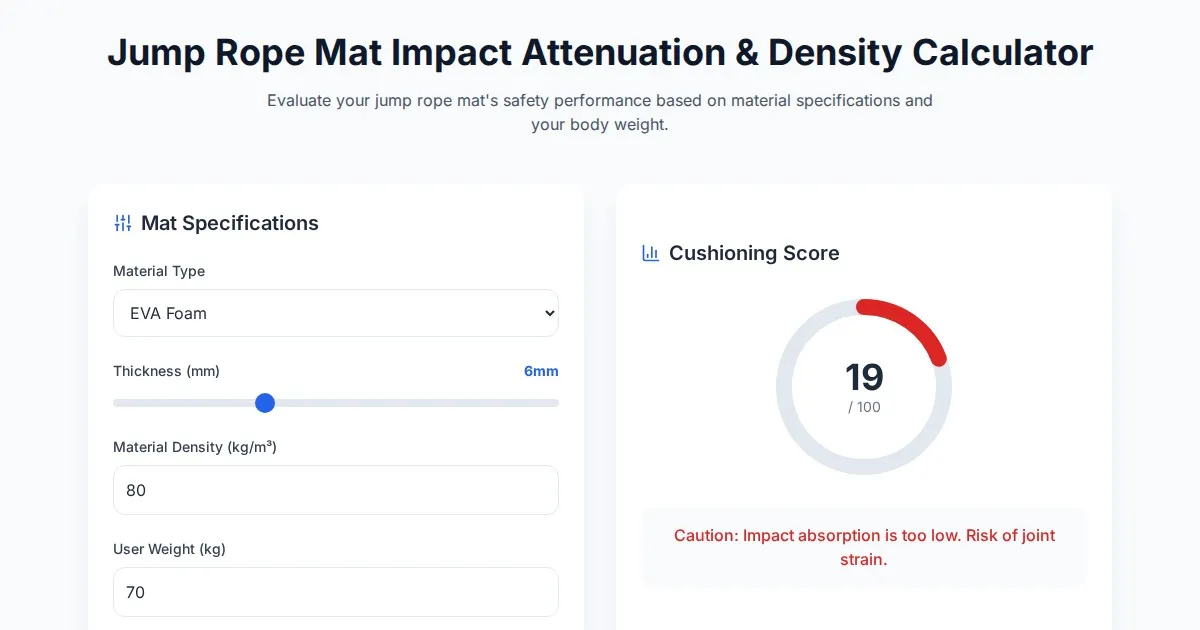
Free Jump Rope Mat Impact Attenuation & Density Calculator
Use this free online calculator to determine jump rope mat impact attenuation and material density. Safely assess if your workout flooring protects your joints.
Free Base64 Image Data URI to File Size Calculator
Accurately calculate the file size of Base64 encoded image data strings. This free, web-based tool helps developers estimate binary file sizes for web apps.

Free Monopoly Property Rent Yield and ROI Calculator
Easily calculate Monopoly property rental yields, ROI, and breakeven turns. Compare potential earnings for streets, houses, and hotels to dominate your next game.
Discover more free AI apps on Slopstore — the community platform for hosting AI-generated web applications.