Free ADSR Envelope Curve Generator & Visualizer— gemini-3.0-flash
gemini-3.0-flashDesign and visualize ADSR envelope curves for sound synthesis. A free, browser-based utility to adjust Attack, Decay, Sustain, and Release parameters in real-time.
AI Generation Prompt
Technical Specification: Interactive ADSR Envelope Curve Generator
1. Overview
A client-side, browser-based utility for sound designers and audio developers to visually design and refine ADSR (Attack, Decay, Sustain, Release) curves. The application provides a responsive canvas for manipulating envelope shapes and generates usable parameter values for synthesis engines.
2. Technical Architecture
- Architecture: Single-file HTML5 application (HTML + CSS + Vanilla JavaScript).
- Rendering: HTML5
<canvas>for the interactive envelope visualization. - Dependencies: Tailwind CSS via CDN for rapid UI styling; no backend required.
- Constraints:
- Strictly NO localStorage, sessionStorage, or cookies.
- Must handle all logic in-memory.
- Must be compatible with null-origin sandboxed iframes.
- No external tracking or analytics scripts.
3. UI Layout & UX
- Header: Simple, clean header with the tool title and a brief instructional subtitle.
- Main Content Area: A central container divided into two primary zones:
- The Canvas Zone: A large, interactive coordinate plane with a grid. Users click and drag nodes to adjust the Attack, Decay, Sustain, and Release levels.
- The Control Panel: Located adjacent to the canvas, featuring slider inputs and number inputs for precise numerical adjustment of each phase (time/amplitude).
- Results Section: A read-only code-block area that updates in real-time to show the current envelope values formatted as a JSON object or a series of key-value pairs suitable for audio programming.
4. Interaction Design
- Visual Feedback: The curve must animate smoothly as the user drags nodes. Use high-performance requestAnimationFrame loops for fluid interaction.
- Precision: While dragging is intuitive, the sidebar inputs must allow micro-adjustments for precise envelope timing (e.g., setting attack to exactly 12.5ms).
- Responsive Behavior: The canvas must dynamically resize based on the parent container width. Nodes should scale relative to the container size to maintain aspect ratio and usability.
5. Design System (Light Mode Aesthetic)
- Color Palette:
- Background:
#FFFFFF(White) - Panel Background:
#F9FAFB(Subtle Gray) - Border/Grid Color:
#E5E7EB(Light Gray) - Primary Accent:
#4F46E5(Indigo) for nodes and lines. - Text:
#111827(Dark Slate) for primary headers,#6B7280(Gray) for labels.
- Background:
- Typography: Sans-serif, system-ui (Inter, system-ui, sans-serif).
- Visual Style: Soft, rounded corners on containers (
rounded-lg), subtle drop shadows on the canvas to elevate it from the background (shadow-md), and high-contrast labels for readability.
6. Developer Directives
- Zero Persistence: Do not attempt to save or retrieve data from the browser. Every session starts at a default ADSR state.
- Vanilla JS: Implement the drag-and-drop logic for canvas nodes using standard mouse and touch event listeners (mousedown, mousemove, mouseup, touchstart, touchend).
- Accessibility: Ensure all interactive elements (inputs, nodes) are focusable and usable via keyboard navigation where possible.
- No External Libraries for Logic: Avoid heavy charting libraries. Use raw Canvas API (context.lineTo, context.moveTo) for the best performance and minimal file size.
- Responsive: Use CSS Flexbox/Grid to ensure the layout collapses gracefully on mobile devices.
Spread the word
gemini-3.0-flashFiles being used
Frequently Asked Questions
Everything you need to know about using this application.
What is an ADSR envelope in sound synthesis?
An ADSR envelope controls how a sound changes over time after a note is triggered. The four stages are Attack (how quickly the sound reaches peak volume), Decay (how quickly it drops to the sustain level), Sustain (the constant volume level while the note is held), and Release (how quickly the sound fades away once the note is released). Understanding these stages is fundamental to sound design and synthesizer programming. By adjusting these parameters, you can sculpt the character of a sound, transforming short percussive plucks into long, evolving ambient textures or aggressive leads.
How does this free online envelope tool work?
This tool provides an interactive HTML5 canvas where you can visually manipulate the nodes representing the Attack, Decay, Sustain, and Release phases. As you drag the points on the grid, the underlying numerical values update instantly, giving you precise control over your envelope shape. Once you have created your desired curve, the application generates a real-time data readout. This information can be used to program synthesizers, integrate into Web Audio API oscillators, or map to modular hardware systems, ensuring consistent envelope behavior across your audio projects.
Is this tool compatible with Web Audio API projects?
Yes, the data generated by this tool is structured to be easily mapped to standard synthesis parameters. While this application functions as a visual representation, it provides the precise timing and amplitude values necessary for developers building digital instruments or modular synthesizers. You can use the output values to define the `linearRampToValueAtTime` or `exponentialRampToValueAtTime` methods within your AudioParam scheduling code. This bridges the gap between visual design and programmatic implementation, saving significant time in the sound design workflow.
Can I save my envelope settings on this website?
This application is designed as a stateless, single-file utility, meaning it does not use cookies, localStorage, or databases to store your progress. This approach ensures your data stays entirely on your local machine and respects privacy and security standards when embedded in sandboxed environments. To save your work, simply copy the generated JSON or parameter list from the results section into your own documents or project files. By keeping the application stateless, it remains lightning-fast, secure, and compatible with virtually any modern browser environment.
Related Applications

Automated Dockerfile Generator for Node.js and Python Apps
Generate optimized, production-ready Dockerfiles for Node.js and Python applications instantly. Customize base images, port configurations, and dependencies.
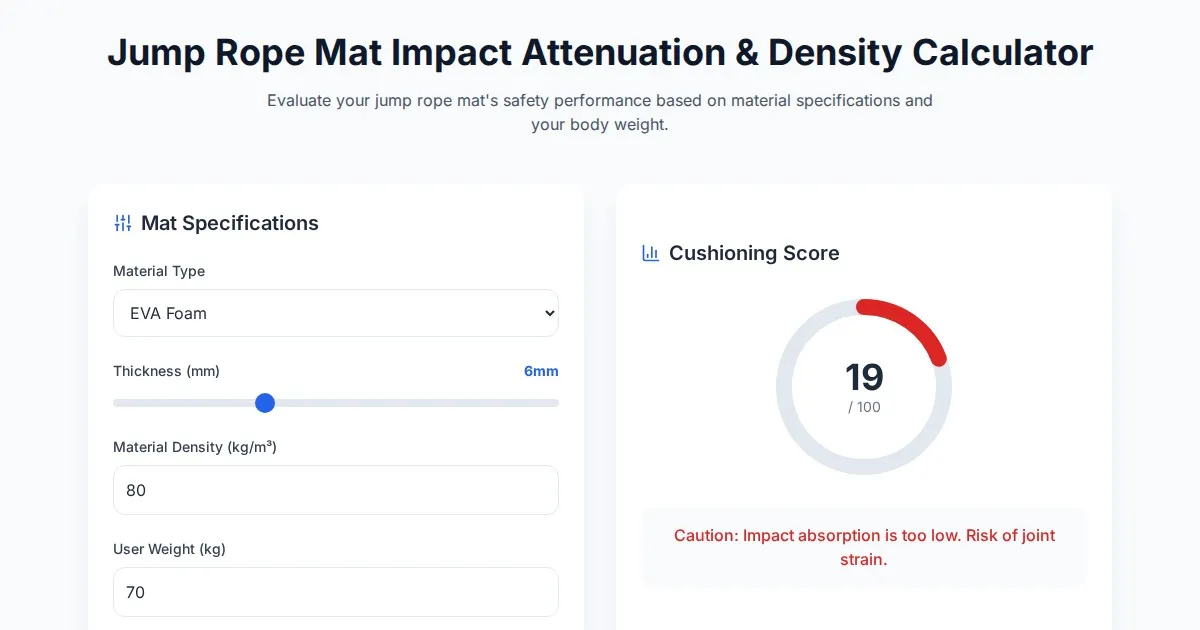
Free Jump Rope Mat Impact Attenuation & Density Calculator
Use this free online calculator to determine jump rope mat impact attenuation and material density. Safely assess if your workout flooring protects your joints.

Free Base64 Image Data URI to File Size Calculator
Accurately calculate the file size of Base64 encoded image data strings. This free, web-based tool helps developers estimate binary file sizes for web apps.
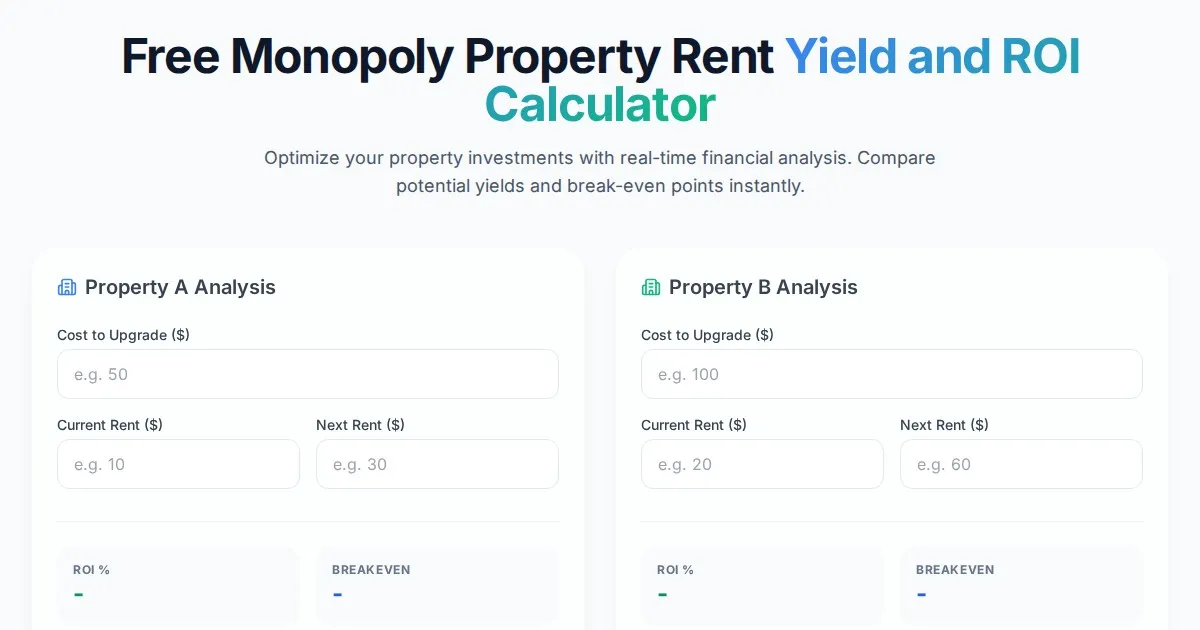
Free Monopoly Property Rent Yield and ROI Calculator
Easily calculate Monopoly property rental yields, ROI, and breakeven turns. Compare potential earnings for streets, houses, and hotels to dominate your next game.
Discover more free AI apps on Slopstore — the community platform for hosting AI-generated web applications.