Free Astrophotography Star Trail & Comet Exposure Calculator— gemini-3.0-flash
gemini-3.0-flashCalculate the maximum exposure time for astrophotography to prevent star trailing. Use our free tool to estimate comet movement and star drift for sharp shots.
AI Generation Prompt
Technical Specification: Astrophotography Exposure & Comet Motion Estimator
Overview
A pure, browser-based utility designed for astrophotographers to calculate maximum exposure times for static tripods and estimate comet drift. This tool replaces complex spreadsheets with an intuitive, responsive interface.
Feature List
- NPF Rule Calculator: Advanced exposure limit calculation based on aperture, focal length, pixel pitch, and declination.
- Comet Drift Estimator: Quick reference for expected comet movement in arcseconds based on observation time.
- Dynamic Preset Manager: Quick selection for common sensor types (Full Frame, APS-C, Micro Four Thirds).
- Instant Result Visualization: A visual gauge showing "Sharp" (safe) vs. "Trailing" (blur) zones.
- Unit Conversion: Supports mm for focal length and microns for pixel pitch.
UI Layout
- Header: Clean, centered title and tagline.
- Main Tool Area (Two-Column Layout):
- Left Column (Inputs): Grouped into Camera Settings (Sensor Size, Pixel Pitch) and Lens Settings (Focal Length, Aperture, Declination). Uses range sliders for tactile interaction.
- Right Column (Results): Large "Max Exposure Time" display. A progress-bar style visualizer indicating exposure safety. A supplemental "Comet Drift Analysis" summary.
- Responsive Behavior: On desktop, the columns sit side-by-side. On mobile (width < 768px), the layout stacks vertically, with the Result panel becoming sticky at the top.
Design System & Aesthetics
- Color Palette:
- Background:
#f8fafc(Off-white) - Cards:
#ffffff(Pure white) - Primary Accent:
#3b82f6(Professional blue) - Text:
#1e293b(Slate gray) - Borders:
#e2e8f0(Light gray)
- Background:
- Animations & Interactions:
- Input Focus: Smooth border-color transition from gray to primary blue.
- Result Updates: CSS transition on result number changes (counting animation).
- Modal Popups: Custom-built overlay for "Help/Info" content to avoid browser native prompts.
Technical Directives for Developer
- Architecture: The entire app must be a single
index.htmlfile. - Libraries Allowed: Tailwind CSS (via CDN) for styling, FontAwesome (via CDN) for icons.
- Constraint Compliance:
- No Persistent Storage: Absolutely no
localStorage,sessionStorage, or cookies. Maintain app state using a simple JS objectappState. - No Native Dialogs: Do not use
alert(),prompt(), orconfirm(). Create a hiddendivoverlay for these functions. - Performance: Ensure efficient event listeners. Debounce input events to prevent layout thrashing.
- Accessibility: Ensure all inputs have associated
<label>tags and ARIA attributes for screen readers. - External Links: All links must use
target="_blank" rel="noopener noreferrer".
- No Persistent Storage: Absolutely no
Spread the word
gemini-3.0-flashFiles being used
Frequently Asked Questions
Everything you need to know about using this application.
How does this tool calculate star trails?
The tool uses the modern pixel-pitch-based formula (often referred to as the NPF rule) which is significantly more accurate than the outdated '500 Rule.' It factors in your camera's sensor size, pixel size, focal length, and the declination of the object being imaged to determine the maximum exposure time before star trailing occurs. By inputting your specific gear metrics, you ensure that the star movement relative to your sensor remains within the size of one pixel. This allows you to achieve pin-point sharp stars even at longer focal lengths without the need for active tracking mounts in some scenarios.
Why is declination important for astrophotography?
Declination represents how far an object is from the celestial equator. Objects near the celestial equator move across the sky much faster relative to your sensor than objects near the celestial poles. As you aim your camera closer to the North or South Celestial Pole, the apparent movement of stars decreases significantly. This tool automatically adjusts your exposure limit based on the declination value you provide. If you are imaging a comet near the celestial equator, you will need a shorter exposure time to prevent trailing than you would if the comet were positioned near a celestial pole.
Can I use this for comet photography?
Yes, this tool provides a dedicated estimation for comet tracking. While star trailing occurs due to the earth's rotation, comets have their own proper motion against the background star field. This calculator helps you determine if your exposure duration is short enough to freeze the comet's motion relative to the stars. If you intend to take long exposures of a comet, you will likely need to stack your images or use a tracking mount. This tool helps you define the boundaries of your unguided exposure limits so you know exactly when motion blur will begin to degrade your image quality.
What data do I need for accurate results?
To get the most precise results, you should know your camera sensor's pixel pitch in micrometers, the lens focal length in millimeters, and the approximate declination of your target in degrees. Most camera manufacturers provide the pixel pitch specifications on their product support pages or spec sheets. Even if you do not have the exact pixel pitch, the tool provides sensible defaults based on common sensor types. However, for professional astrophotography planning, using your exact camera sensor specifications will provide the highest level of accuracy for your imaging session.
Related Applications

Automated Dockerfile Generator for Node.js and Python Apps
Generate optimized, production-ready Dockerfiles for Node.js and Python applications instantly. Customize base images, port configurations, and dependencies.
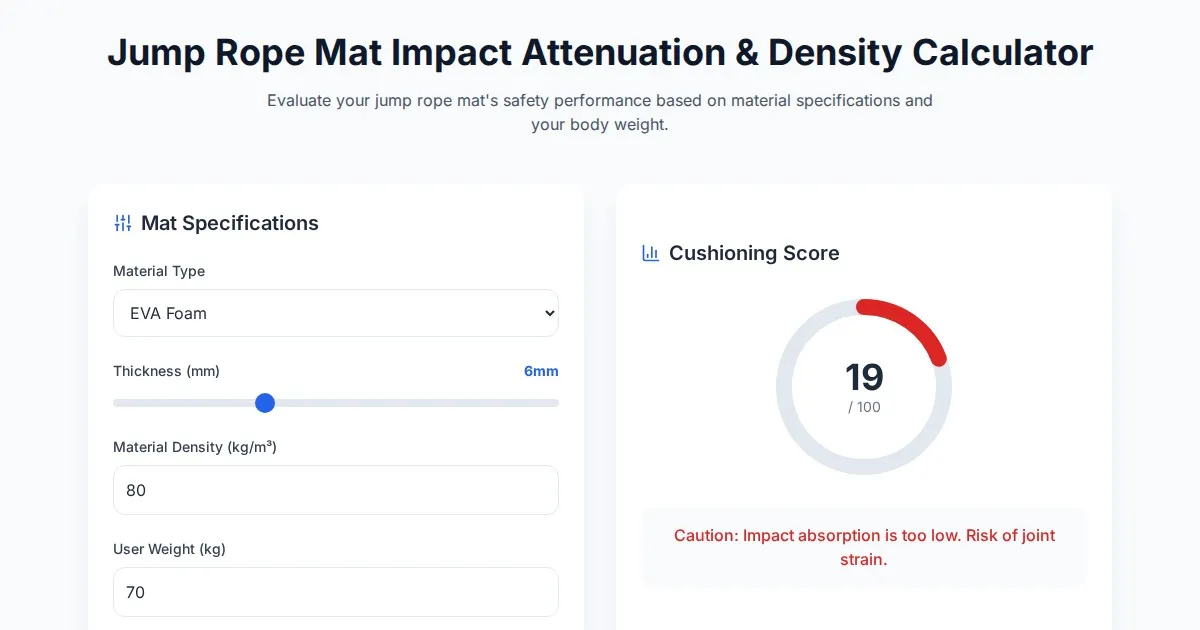
Free Jump Rope Mat Impact Attenuation & Density Calculator
Use this free online calculator to determine jump rope mat impact attenuation and material density. Safely assess if your workout flooring protects your joints.

Free Base64 Image Data URI to File Size Calculator
Accurately calculate the file size of Base64 encoded image data strings. This free, web-based tool helps developers estimate binary file sizes for web apps.

Free Online Color Blindness Simulator & Image Filter Tool
Easily simulate color vision deficiencies like protanopia, deuteranopia, and tritanopia. Upload images to test design accessibility for color blindness.
Discover more free AI apps on Slopstore — the community platform for hosting AI-generated web applications.