Free Base64 to Hexadecimal Memory Dump Converter & Viewer— gemini-3.0-flash
gemini-3.0-flashInstantly convert Base64 strings to formatted hexadecimal memory dumps. A private, client-side, browser-based tool for developers, security researchers, and binary analysis.
AI Generation Prompt
Technical Specification: Base64 to Hexadecimal Memory Dump Formatter
Overview
A high-performance, single-file browser utility designed for developers and reverse engineers to transform Base64 encoded strings into readable hexadecimal memory dumps. The app prioritizes privacy (zero-server execution) and speed.
Core Features
- Live Conversion Engine: Instant decoding of Base64 to raw binary and subsequent formatting as hex.
- Customizable Output: Selectable byte grouping (1, 2, 4, 8 bytes) and hex offset display.
- ASCII Inspector: Optional side-by-side ASCII view to identify embedded strings within binary data.
- File Support: Drag-and-drop or file upload for local file processing (no server transmission).
- Bulk Copy: One-click functionality to copy the entire formatted hex output to the system clipboard.
- Download Result: Ability to save the generated hex dump as a
.txtor.hexfile.
User Interface Design
- Layout:
- Header: Clean, minimalist title with a descriptive tagline.
- Input Area: Large, resizable textarea for Base64 input with a file upload overlay.
- Control Bar: A floating toolbar containing conversion settings (Grouping, ASCII toggle, Clear).
- Output Area: A structured, font-fixed display area with alternating row backgrounds for high readability.
- Color Palette:
- Background:
#FFFFFF(Pure white) - Primary:
#2563EB(Bright professional blue) - Accent:
#F3F4F6(Light neutral gray) - Text:
#1F2937(Dark gray, readable) - Success/Valid:
#10B981(Vibrant green)
- Background:
Technical Implementation Constraints
- Single File: All logic, styling, and markup in one
.htmlfile. CSS/JS imports via CDN only. - No Storage: Zero usage of
localStorage,sessionStorage, or cookies. Maintain state solely in volatile JS variables. - Performance: Debounced input handling to ensure the UI remains responsive during long string conversions.
- Aesthetics: Modern "SaaS" aesthetic. Use Tailwind CSS for rapid styling. Use
interfont family. Use subtle drop-shadows on card elements. Smooth CSS transitions on hover states. - Iframe Compatibility: No use of
alert(),confirm(), orprompt(). Implement custom modals using HTML dialog or toggleabledivelements.
Interaction Flow
- Initialization: User opens the tool. Input is empty.
- Input: User pastes Base64 string. Input area validates in real-time.
- Conversion: User clicks "Convert". App processes input in-memory.
- Display: Results are rendered into a responsive container.
- Interaction: User toggles "Group by 4 bytes". The output re-renders smoothly.
- Export: User clicks "Download". Browser triggers standard file save dialog.
Spread the word
gemini-3.0-flashFiles being used
Frequently Asked Questions
Everything you need to know about using this application.
How does the Base64 to Hex conversion process work?
The conversion happens entirely within your web browser using client-side JavaScript. When you input a Base64 string or upload a file, the application decodes the binary content and maps it to hexadecimal values, displaying them in a standard memory dump format. Because this process occurs locally on your machine, your data is never uploaded to a server or stored in a database. This ensures your data remains completely private and secure during the conversion process.
Are there limitations to the size of the data I can convert?
While the tool is designed to be efficient, very large Base64 strings or files (several megabytes or larger) may slow down your browser's rendering performance. The hex dump view consumes significant memory to display thousands of lines of text. We recommend processing data in smaller chunks if you are dealing with very large binary files. The application is optimized for quick, daily developer tasks rather than massive file system dumps.
Can I customize how the hexadecimal memory dump is displayed?
Yes, the tool includes configuration settings to adjust the visualization of the data. You can toggle between different byte grouping sizes (e.g., 1-byte, 2-byte, or 4-byte groupings) to better match how your specific architecture reads memory. Additionally, you can enable or disable the ASCII preview column, which helps in identifying readable strings embedded within the binary data, making it easier to analyze the content of the memory dump.
What should I do if the Base64 input is invalid?
If you provide an malformed Base64 string, the application will catch the error and display an inline warning message. This prevents the application from crashing and allows you to correct the input string immediately without losing your current progress. The tool is designed to strictly follow standard Base64 encoding rules. If your data contains non-base64 characters or whitespace, we recommend using the integrated cleanup tools to sanitize the input before attempting the conversion.
Related Applications

Automated Dockerfile Generator for Node.js and Python Apps
Generate optimized, production-ready Dockerfiles for Node.js and Python applications instantly. Customize base images, port configurations, and dependencies.
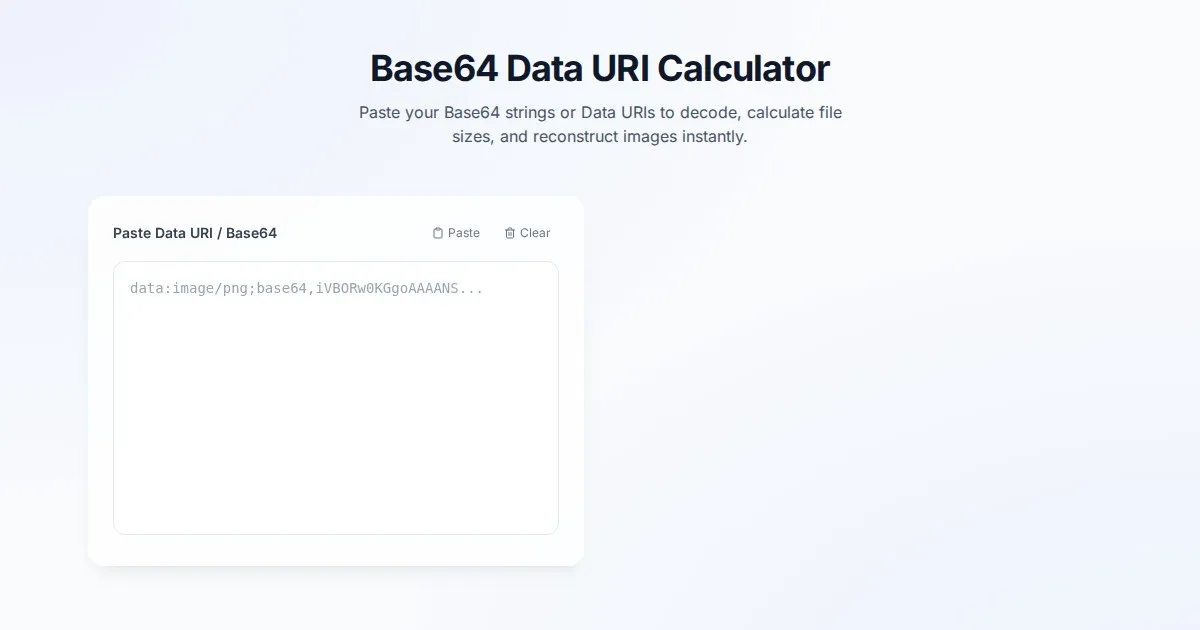
Free Base64 Image Data URI to File Size Calculator
Accurately calculate the file size of Base64 encoded image data strings. This free, web-based tool helps developers estimate binary file sizes for web apps.

Free Online 3D Model Viewer - GLTF & OBJ File Previewer
Instantly preview 3D models online with this free 3D Model Viewer. Support for GLTF, GLB, and OBJ formats. Drag and drop your files for a fast, browser-based render.

Free Online Color Blindness Simulator & Image Filter Tool
Easily simulate color vision deficiencies like protanopia, deuteranopia, and tritanopia. Upload images to test design accessibility for color blindness.
Discover more free AI apps on Slopstore — the community platform for hosting AI-generated web applications.