Free Bonsai Fertilizer NPK Breakdown Timeline Calculator— gemini-3.0-flash
gemini-3.0-flashVisualize and track your bonsai tree fertilizer NPK breakdown schedule. This free, web-based tool calculates slow-release nutrient timelines based on temperature.
AI Generation Prompt
Bonsai Fertilizer NPK Release Timeline Calculator
1. Overview
A clean, browser-based utility designed for bonsai practitioners to estimate when their slow-release fertilizer prills will expire based on environmental conditions. This tool helps remove the guesswork from fertilization cycles.
2. Core Features
- Interactive NPK Configuration: Users select their NPK ratio (e.g., 10-10-10, 6-4-6) to visualize the nutrient distribution.
- Environmental Sliders: Adjust 'Average Soil Temperature' (5°C to 35°C) and 'Watering Frequency' (Low, Medium, High) to see how these impact prill degradation.
- Dynamic Timeline Chart: A CSS/SVG-powered graph showing the intensity of nutrient release over a 120-day horizon.
- Application Date Marker: Input the date of last application to see exactly when to re-apply, accounting for environmental degradation rates.
- Print-Friendly Summary: A button to generate a clean, stripped-down view of the current configuration for printing or saving as a PDF.
3. User Interface (UI) Design
- Layout:
- Header: Clean, minimalist title with a short descriptive subtitle.
- Control Panel (Left/Top): Clearly labeled sliders and dropdowns for NPK values and temperature.
- Visualization Area (Main): A large, responsive SVG line chart representing the nutrient release curve.
- Summary Area (Bottom): Text-based summary: "Next application recommended around [Date]."
- Aesthetic:
- Palette: Nature-inspired but professional. Uses soft "Bonsai Green" (#4A6741), clean whites (#FFFFFF), light stone grays (#F4F4F4), and a subtle charcoal (#333333) for text.
- Typography: Sans-serif, geometric font (like Inter or system-ui) for maximum readability.
- Interactions: Subtle, 200ms ease-in-out transitions on all sliders and inputs. No jarring animations.
4. Technical Specifications
- Architecture: Single HTML file (Internal CSS, Vanilla JS).
- Sandbox Compliance:
- NO
localStorage,sessionStorage,IndexedDB, orcookies. All data is transient. - NO
alert()orprompt(). All user feedback via custom HTML<dialog>elements or CSS-hidden containers.
- NO
- Performance: Must be lightweight (< 100KB total size).
- Frameworks: No frameworks. Plain Vanilla JS
document.querySelectorandaddEventListeneronly. - Responsive: Fluid layout using CSS Grid and Flexbox. The chart must resize relative to its parent container without breaking.
5. Development Constraints
- No Branding: Ensure no fictional brand names are present. The tool is purely utilitarian.
- Light Mode Only: Enforce a light-themed design. All CSS background colors must be light (off-white or light gray).
- External Libraries: Only use CDN links for essential tools (e.g., lightweight charting libraries like Chart.js via CDN if needed, or simple SVG generation for minimal footprint). Do not bundle external files.
- State Management: All calculations (NPK breakdown logic) must happen in real-time in memory based on the user's current slider positions.
Spread the word
gemini-3.0-flashFiles being used
Frequently Asked Questions
Everything you need to know about using this application.
How does temperature affect the release of slow-release bonsai fertilizer?
Most slow-release fertilizers used in bonsai cultivation rely on either moisture-controlled or temperature-controlled coatings to release nutrients. As the ambient temperature of your bonsai soil increases, the polymeric coating on the prills becomes more permeable, allowing water to enter and nutrients to be released into the substrate. This means that during the peak of summer, your fertilizer will break down significantly faster than it would in the early spring or late autumn. Our calculator adjusts the expected nutrient release timeline based on these environmental variables, ensuring your tree receives consistent nourishment without the risk of fertilizer burn caused by an accelerated release window.
Why is it important to track NPK ratios for bonsai trees?
The NPK ratio—Nitrogen, Phosphorus, and Potassium—dictates the primary biological function a fertilizer encourages in your tree. High nitrogen formulas are typically applied in early spring to promote vigorous foliage growth, while higher phosphorus and potassium levels are beneficial during the summer and autumn to encourage root strength and bud hardening for the following season. By tracking the breakdown timeline of these specific formulations, you can time your re-application cycles perfectly. This avoids 'nutrient gaps,' where the tree is left without supplemental food, and prevents 'nutrient stacking,' where new applications occur while the previous batch is still releasing at high concentrations.
Does this tool save my bonsai care history?
This application operates entirely within your browser's memory and is designed for privacy and security. It does not utilize localStorage, cookies, or any server-side database to store your personal bonsai care history or fertilizer schedules. Because of this design, all data entered is cleared as soon as the browser tab is closed. We recommend using the 'Print' or 'Export to PDF' functionality built into the tool to save your generated breakdown timelines for reference in your personal gardening journals.
How do I interpret the breakdown timeline graph?
The timeline visualization represents the anticipated availability of nutrients in your soil substrate over a 120-day cycle. The 'Release Curve' is modeled on typical slow-release prill performance, accounting for a standard, temperate growing climate. Peaks in the curve indicate the primary nutrient release phase. When you adjust the temperature and water frequency sliders, you will see the curve shift. A higher average temperature will shift the peak to the left (faster release), while a cooler environment will flatten and extend the curve. Always use this as a supplemental guide alongside visual inspection of your tree's health.
Related Applications
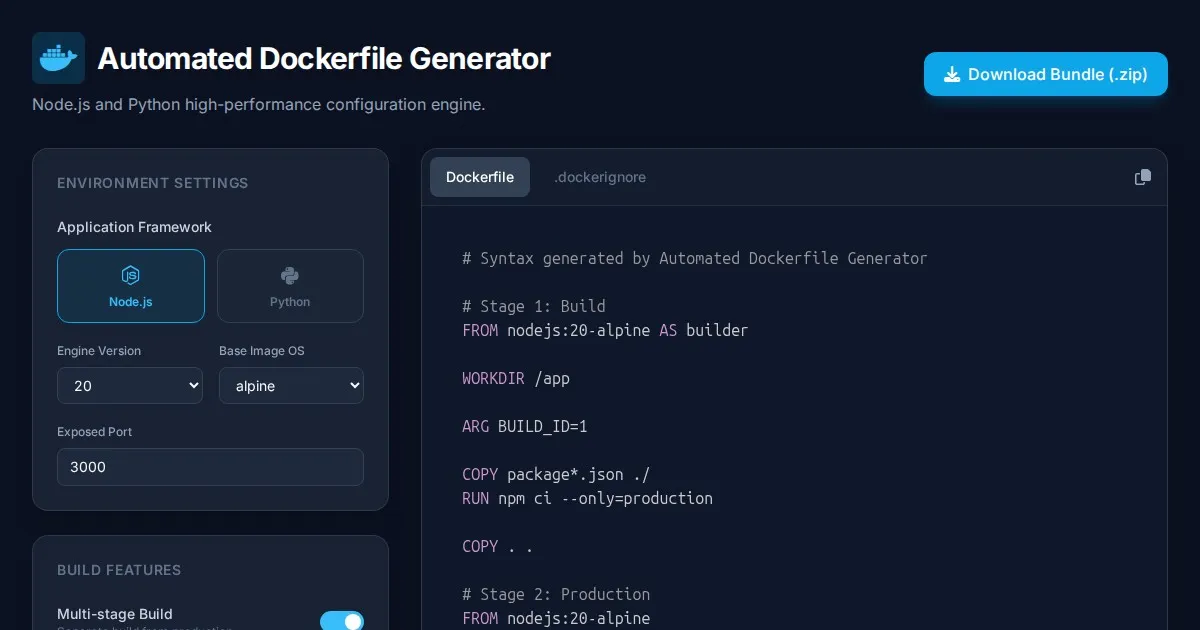
Automated Dockerfile Generator for Node.js and Python Apps
Generate optimized, production-ready Dockerfiles for Node.js and Python applications instantly. Customize base images, port configurations, and dependencies.
Free Base64 Image Data URI to File Size Calculator
Accurately calculate the file size of Base64 encoded image data strings. This free, web-based tool helps developers estimate binary file sizes for web apps.
Free Online Color Blindness Simulator & Image Filter Tool
Easily simulate color vision deficiencies like protanopia, deuteranopia, and tritanopia. Upload images to test design accessibility for color blindness.
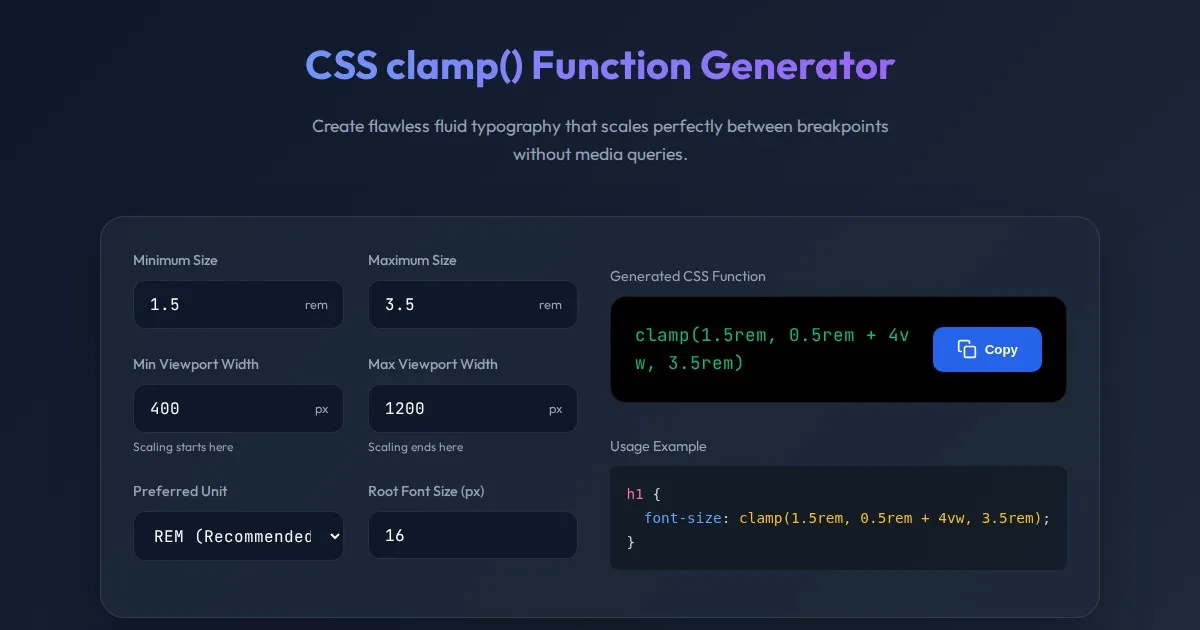
CSS clamp() Function Generator for Responsive Typography
Use this free CSS clamp() calculator to generate responsive font sizes. Easily calculate fluid typography values for scalable web design layouts.
Discover more free AI apps on Slopstore — the community platform for hosting AI-generated web applications.