Free Calisthenics Muscle-Up False Grip Torque Calculator— gemini-3.0-flash
gemini-3.0-flashEstimate muscle-up transition torque with our free online calisthenics tool. Calculate mechanical advantage, gripping force, and false grip physics easily.
AI Generation Prompt
Calisthenics Muscle-Up False Grip Torque Estimator
Overview
A high-performance, single-file web utility designed for calisthenics athletes to calculate the mechanical torque requirements of the muscle-up transition phase. The application provides a visual and mathematical analysis of how false grip depth and biomechanical factors influence the difficulty of the transition.
Technical Implementation Directives
- Architecture: Single HTML file containing embedded CSS and Vanilla JS.
- Stateless Operation: ABSOLUTELY NO
localStorage,sessionStorage,IndexedDB, or Cookies. State must be handled entirely in JavaScript objects/variables. - Sandboxed Compatibility: No usage of
prompt(),alert(), orconfirm(). All interactions must be handled via custom DOM overlays (e.g.,<dialog>elements or CSS-hidden divs). - Responsive Design: Mobile-first grid layout that scales to desktop widescreen monitors.
- Performance: High-fidelity UI using CSS transitions (300ms) for input feedback and result updates.
Feature List
- Dynamic Physics Engine: Real-time calculation of torque based on athlete weight (kg/lbs), arm length (cm/in), bar diameter (mm/in), and false grip depth (cm/in).
- Mechanical Advantage Visualizer: A graphical gauge indicating whether the current grip position offers 'High', 'Moderate', or 'Low' mechanical advantage.
- Interactive Input Sliders: Smooth range inputs for precise data entry, including instant visual feedback on the results panel.
- Unit Conversion: Toggle between Metric and Imperial units dynamically without page reloads.
- Constraint Awareness: A risk assessment summary based on standard torque loads for shoulder and wrist stability.
UI Layout
- Header: Clean, centered application title with a brief subtitle explaining the tool's purpose.
- Main Tool Area: A two-column layout on desktop (split left for inputs, right for results) that stacks vertically on mobile devices.
- Input Panel: Card-based interface with clearly labeled inputs, slider controls, and unit selection buttons.
- Results Panel: A 'hero' display area showing the calculated Torque (Nm), with supporting text providing insights into the mechanical stress.
- Visuals: A clean, vibrant light-mode aesthetic. Use a palette of:
- Primary: #2563EB (Vibrant Blue)
- Background: #F8FAFC (Off-white)
- Card Surface: #FFFFFF
- Text: #1E293B (Slate)
- Accent/Success: #059669 (Emerald Green)
- Alert: #D97706 (Amber)
- Transitions: Subtle box-shadow 'lift' effects on hover; CSS
transition: all 0.3s easefor all interactive elements.
Design Aesthetics
- Typography: Clean, sans-serif font stack (Inter, system-ui).
- Whitespace: Generous padding and margin to ensure a professional, uncluttered look.
- No Branding: Ensure absolutely no logos or third-party company names are present in the final HTML code.
- Responsiveness: The grid system must use percentage-based widths or CSS Flexbox/Grid to handle window resizing gracefully.
Spread the word
gemini-3.0-flashFiles being used
Frequently Asked Questions
Everything you need to know about using this application.
What is the false grip in calisthenics and why does it matter?
The false grip is a specialized hand position where the athlete places their wrists over the bar rather than just their fingers. This technique reduces the distance between the center of gravity and the bar, significantly shortening the leverage required during the transition phase of a muscle-up. By engaging the false grip, athletes can bypass the difficult 'sticking point' of the muscle-up transition. Understanding the physics and torque involved in this position helps athletes optimize their training and minimize unnecessary strain on the wrists and elbows.
How does this torque calculator determine muscle-up readiness?
This calculator uses biomechanical inputs, such as body weight, forearm length, and grip depth, to estimate the torque exerted during the transition phase. It treats the arm as a lever system, calculating the mechanical advantage provided by varying the depth of the false grip on the bar. While this tool provides a highly useful estimate for training purposes, it is a theoretical model. Real-world muscle-up performance relies on a combination of explosive pulling power, core tension, and neuromuscular coordination that physics equations alone cannot fully capture.
Does this tool store my personal physical data?
No. This application is designed with privacy and security in mind. It uses in-memory processing exclusively, meaning no information is saved to your browser's local storage, cookies, or databases. Because this tool runs entirely in your browser window as a stateless application, all data is purged the moment you close the tab or refresh the page. We do not track or store your input metrics.
How can I use this data to improve my muscle-up training?
Use the calculated torque values to understand the relationship between your grip depth and the mechanical load on your joints. If the calculated torque is consistently higher than your strength capacity, you may need to adjust your grip or incorporate specific wrist-strengthening exercises. You can experiment with different inputs to see how minor changes in bar width or grip depth drastically affect the force required to complete the transition. This allows you to tailor your training intensity based on realistic mechanical data rather than guesswork.
Related Applications
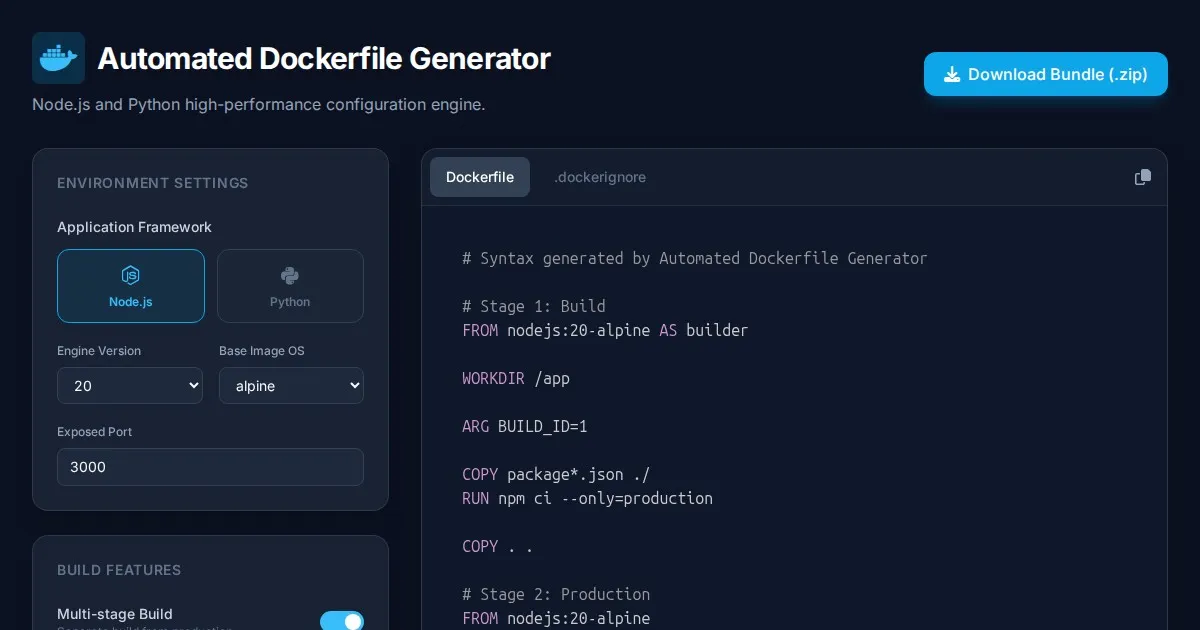
Automated Dockerfile Generator for Node.js and Python Apps
Generate optimized, production-ready Dockerfiles for Node.js and Python applications instantly. Customize base images, port configurations, and dependencies.

Free Base64 Image Data URI to File Size Calculator
Accurately calculate the file size of Base64 encoded image data strings. This free, web-based tool helps developers estimate binary file sizes for web apps.

Free Online Color Blindness Simulator & Image Filter Tool
Easily simulate color vision deficiencies like protanopia, deuteranopia, and tritanopia. Upload images to test design accessibility for color blindness.
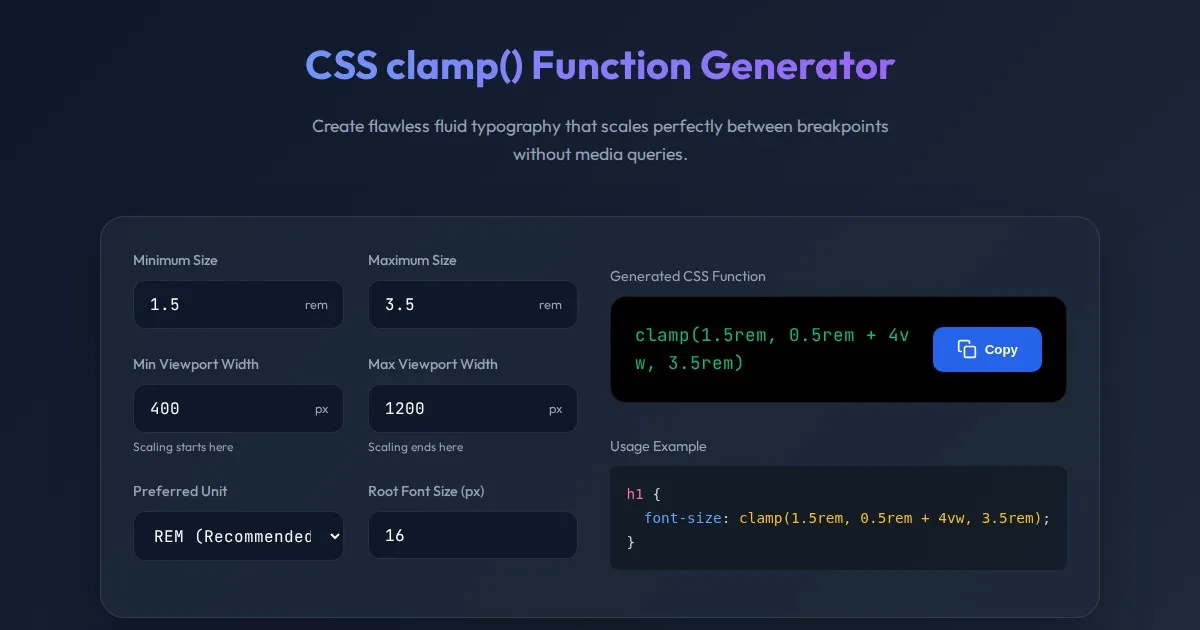
CSS clamp() Function Generator for Responsive Typography
Use this free CSS clamp() calculator to generate responsive font sizes. Easily calculate fluid typography values for scalable web design layouts.
Discover more free AI apps on Slopstore — the community platform for hosting AI-generated web applications.