Free Carnot Engine Efficiency Calculator | Thermodynamics Tool— gemini-3.0-flash
gemini-3.0-flashCalculate the theoretical maximum efficiency of a Carnot heat engine online. Free, fast thermodynamics tool for engineering students and physics professionals.
AI Generation Prompt
Carnot Engine Efficiency Calculator: Technical Specification
1. Overview
A clean, professional, single-file browser application designed to compute the theoretical maximum efficiency of a Carnot heat engine. The app emphasizes clarity, accuracy, and educational value, providing users with instant results and a clear understanding of the thermodynamics behind the calculation.
2. UI Layout
- Header: Contains the descriptive title and a concise one-line introduction to the tool.
- Input Section: A responsive card layout featuring:
- Input fields for 'Hot Reservoir Temperature' (Th) and 'Cold Reservoir Temperature' (Tc).
- Dropdown selectors for temperature units (Kelvin, Celsius, Fahrenheit).
- A prominent 'Calculate Efficiency' button with a subtle hover effect.
- Results Section:
- A large, visually centered display showing the percentage efficiency.
- An 'Equation Visualization' area showing the formula with the substituted values.
- Educational Info Section: A clean, readable text block explaining the Carnot principle and the importance of absolute temperature.
3. Color Palette (Light Mode Only)
- Primary Blue: #2563eb (Buttons and active states)
- Background: #f8fafc (Soft off-white)
- Card Background: #ffffff (Clean white)
- Text Primary: #1e293b (Dark slate)
- Text Secondary: #64748b (Muted gray)
- Accent/Border: #e2e8f0 (Light gray lines)
4. Technical Constraints & Directives
- Architecture: Pure HTML5, CSS3, and Vanilla JavaScript. Zero build-step dependencies.
- Storage: NO
localStorage,sessionStorage, or cookies. Calculation logic must reside entirely in-memory. - Compatibility: Must operate within a sandboxed
null-originiframe. All calculations and logic are triggered by UI events. - Responsiveness: Use Tailwind CSS (via CDN) to ensure a fluid grid that stacks inputs on mobile devices and aligns them horizontally on desktops.
- Interaction:
- Use CSS transitions for button hover states and result card visibility.
- Implement a custom modal (not
alert()) for input error handling (e.g., if Tc >= Th, or if input is empty).
- SEO Directive: Ensure the HTML structure includes semantic tags (
<header>,<main>,<section>,<footer>is excluded) and appropriate<meta>tags for search indexing.
Spread the word
gemini-3.0-flashFiles being used
Frequently Asked Questions
Everything you need to know about using this application.
What is a Carnot efficiency calculator?
A Carnot efficiency calculator is a web-based educational instrument designed to help students, researchers, and engineers determine the maximum theoretical efficiency a heat engine can achieve. It operates based on the second law of thermodynamics by evaluating the relationship between the absolute temperatures of the cold and hot reservoirs. This tool simplifies the process by allowing users to input temperatures in different scales, automating the complex conversions required for accurate thermal calculations. It serves as a vital resource for anyone studying engine performance, power plant cycles, or fundamental heat transfer principles.
How do you calculate Carnot efficiency?
The Carnot efficiency is calculated using the formula η = 1 - (Tc / Th), where Tc represents the temperature of the cold reservoir and Th represents the temperature of the hot reservoir. It is critically important that both temperature values are converted into the Kelvin scale before the calculation is performed to maintain physical accuracy. Our tool handles these conversions automatically, allowing users to enter values in Celsius or Fahrenheit seamlessly. By standardizing the arithmetic, it prevents common unit-related errors that often occur when performing manual thermodynamic analysis in physics coursework.
Why is Carnot efficiency important in thermodynamics?
Carnot efficiency establishes the absolute physical upper limit of performance for any heat engine operating between two specific temperatures. It provides a standard 'ideal' benchmark that engineers use to evaluate the energy loss and performance potential of real-world machines, such as combustion engines or steam turbines. Understanding this limit is essential for thermodynamic engineering because it defines the boundary of what is physically possible. By knowing the theoretical maximum, professionals can quantify the 'real-world' inefficiency of systems and identify if further optimization is limited by physics or by mechanical design.
Can a heat engine reach 100% efficiency?
No, it is physically impossible for a heat engine to reach 100% efficiency. According to the Second Law of Thermodynamics, an engine must always reject some portion of its thermal energy into a cold reservoir to complete the thermodynamic cycle. Therefore, the efficiency will always remain strictly less than 100%. To reach 100% efficiency, the cold reservoir would need to be at absolute zero (0 Kelvin), which is unattainable. This tool helps illustrate that limitation by showing how the temperature difference between the hot and cold reservoirs dictates the maximum possible efficiency, proving that some energy loss is a fundamental requirement of nature.
Related Applications

Free Base64 Image Data URI to File Size Calculator
Accurately calculate the file size of Base64 encoded image data strings. This free, web-based tool helps developers estimate binary file sizes for web apps.

Free Online Color Blindness Simulator & Image Filter Tool
Easily simulate color vision deficiencies like protanopia, deuteranopia, and tritanopia. Upload images to test design accessibility for color blindness.
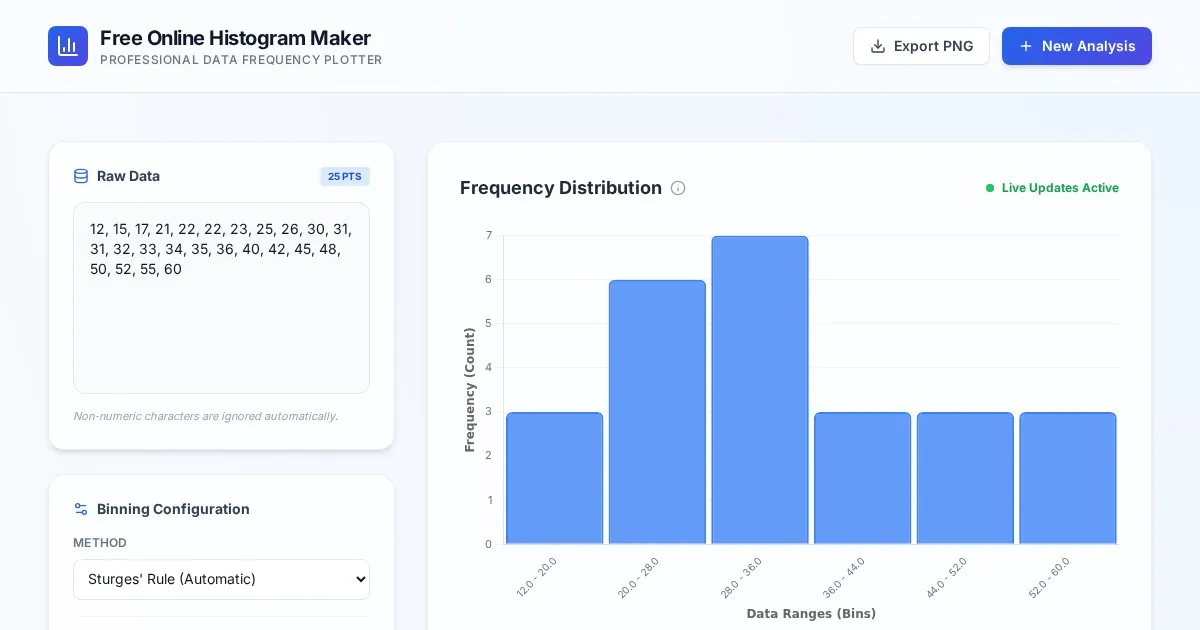
Free Online Histogram Maker & Data Frequency Plotter
Easily create professional histograms from your numeric data. Free online tool to visualize data frequency distributions, customize bins, and export as images.
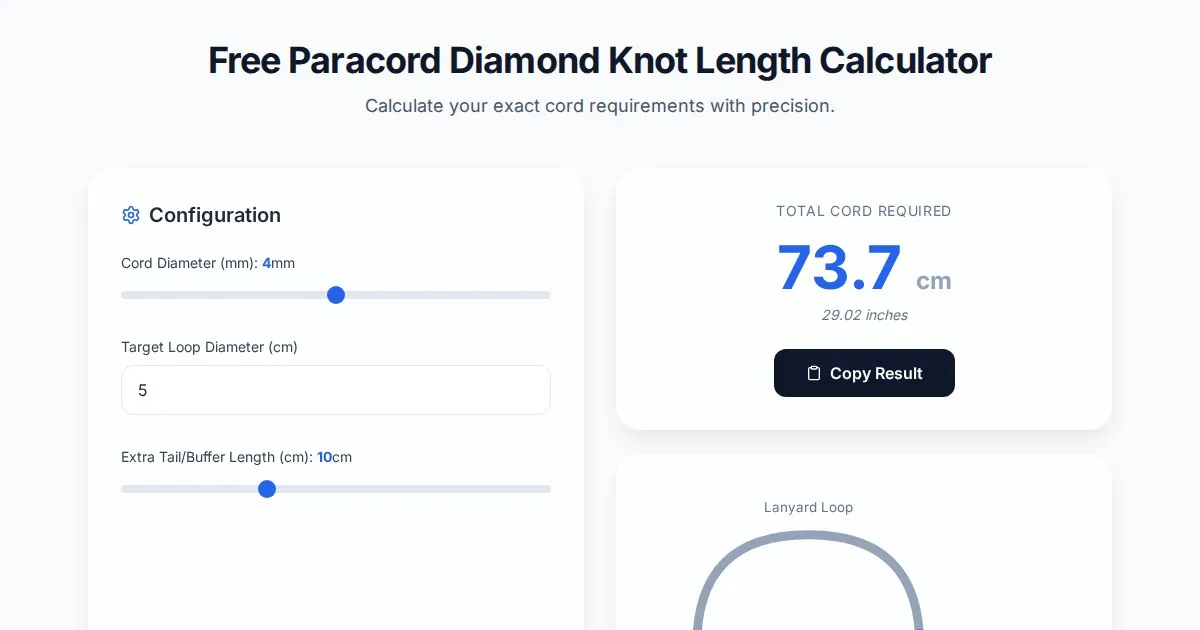
Free Paracord Diamond Knot Length Calculator & Estimator
Accurately estimate paracord length needed for diamond knots, lanyards, and custom rope projects with this free, browser-based cord usage calculator tool.
Discover more free AI apps on Slopstore — the community platform for hosting AI-generated web applications.