Free DMARC DNS Record Generator & Policy Builder— gemini-3.0-flash
gemini-3.0-flashGenerate, validate, and customize your DMARC DNS TXT records instantly. Secure your domain email with our professional, free DMARC policy builder tool.
AI Generation Prompt
DMARC Policy Generator Technical Specification
1. Overview
A browser-based, single-file utility tool designed to help system administrators and domain owners generate precise DMARC (Domain-based Message Authentication, Reporting, and Conformance) DNS TXT records. The tool provides a clean, user-friendly interface to configure policy tags without manual syntax errors.
2. Key Features
- Live Syntax Builder: As users interact with form fields, the DMARC string updates in real-time.
- Configuration Presets: Quick selection buttons for common policies: "None" (monitoring), "Quarantine" (suspicious to spam), and "Reject" (block).
- Field Validation: Real-time validation for email addresses (rua/ruf), integers (pct, ri), and required fields.
- Copy-to-Clipboard: One-click functionality to copy the generated TXT record for easy DNS entry.
- Educational Tooltips: Integrated help text explaining each DMARC tag (e.g., what 'aspf' or 'adkim' actually does).
- Sandboxed Execution: The entire application runs client-side with no persistent storage, ensuring zero privacy risk for user data.
3. UI Layout
- Header: Clean, centered header with a clear tool title and a brief sub-headline.
- Main Content Area: A two-column layout on desktop (split left: Configuration, right: Output Preview).
- Left (Configuration): A vertical stack of inputs grouped by functionality (Core Policy, Reporting, Alignment, Advanced).
- Right (Output): A sticky container displaying the generated TXT string. Includes a "Copy to Clipboard" button with a success animation.
- Responsive Design: On mobile, the side-by-side layout collapses into a single vertical column, ensuring the output is always visible near the inputs.
4. Design & Aesthetics
- Palette: A professional SaaS-focused light theme.
- Primary: Deep Navy (#1e293b) for text and titles.
- Secondary: Vibrant Indigo (#4f46e5) for primary action buttons.
- Background: Soft Slate/White (#f8fafc) for the page background, #ffffff for tool containers.
- Shadows: Subtle elevation shadows (box-shadow: 0 4px 6px -1px rgb(0 0 0 / 0.1)) for cards.
- Typography: Sans-serif, human-readable font (Inter or system-ui).
- Micro-interactions: Smooth CSS transitions on hover states, focus rings, and input field changes.
5. Technical Constraints
- Single File: Everything in one
.htmlfile (HTML5 structure, embedded CSS via<style>, Vanilla JS inside<script>). - Dependencies: Tailwind CSS via CDN for styling; Lucide Icons (or similar) via CDN for UI elements.
- No Local Storage: State is managed entirely in memory via JavaScript objects. No cookies,
localStorage, orindexedDB. - Sandboxed: Code must execute inside an iframe context, meaning absolute URL references and standard web APIs are fine, but storage/popup APIs are restricted (all modals must be DOM-injected).
- Accessibility: Ensure high contrast, semantic HTML tags, and ARIA labels for all inputs.
Spread the word
gemini-3.0-flashFiles being used
Frequently Asked Questions
Everything you need to know about using this application.
What is a DMARC record and why is it needed?
A DMARC record is a DNS TXT entry that provides instructions to receiving mail servers on how to handle emails sent from your domain. It helps prevent domain spoofing, phishing, and unauthorized email usage by ensuring that only authorized senders can send mail on your behalf. By publishing this record, domain owners gain insights into their email traffic via reports and specify policies (such as none, quarantine, or reject) to protect their domain reputation and overall email deliverability. It is a fundamental component of modern email security.
Why is email authentication critical for domain owners?
Email authentication protocols like SPF, DKIM, and DMARC are essential for verifying that the sender is authorized to send emails on behalf of a domain. Without these records, your legitimate emails are significantly more likely to be marked as spam or rejected by major mailbox providers. Implementing a strong DMARC policy reduces the risk of malicious actors successfully impersonating your brand. It is an industry standard for maintaining trust, security, and ensuring your marketing or transactional communications reach their intended recipients.
What do the DMARC tags like 'p', 'rua', and 'ruf' represent?
The 'p' tag defines your core policy (none, quarantine, or reject) for the domain. The 'rua' tag specifies the email address where aggregate reports should be sent, and 'ruf' specifies the address where forensic (failure) reports are sent for detailed analysis. Other tags like 'pct' define the percentage of messages to apply the policy to, while 'adkim' and 'aspf' set the alignment modes for DKIM and SPF. Configuring these tags correctly is vital for granular control over your organization's email authentication ecosystem.
How do I publish the generated DMARC record to my DNS?
After generating the record with this tool, log into your domain registrar's or DNS provider's management console. Create a new TXT record with the host/name field set to '_dmarc' and paste the generated string as the value. After saving, DNS propagation can take some time, typically ranging from a few minutes to 48 hours. You can verify your record is active by performing a DNS lookup using various online diagnostic tools to ensure your policy is correctly published and visible to receiving servers.
Related Applications
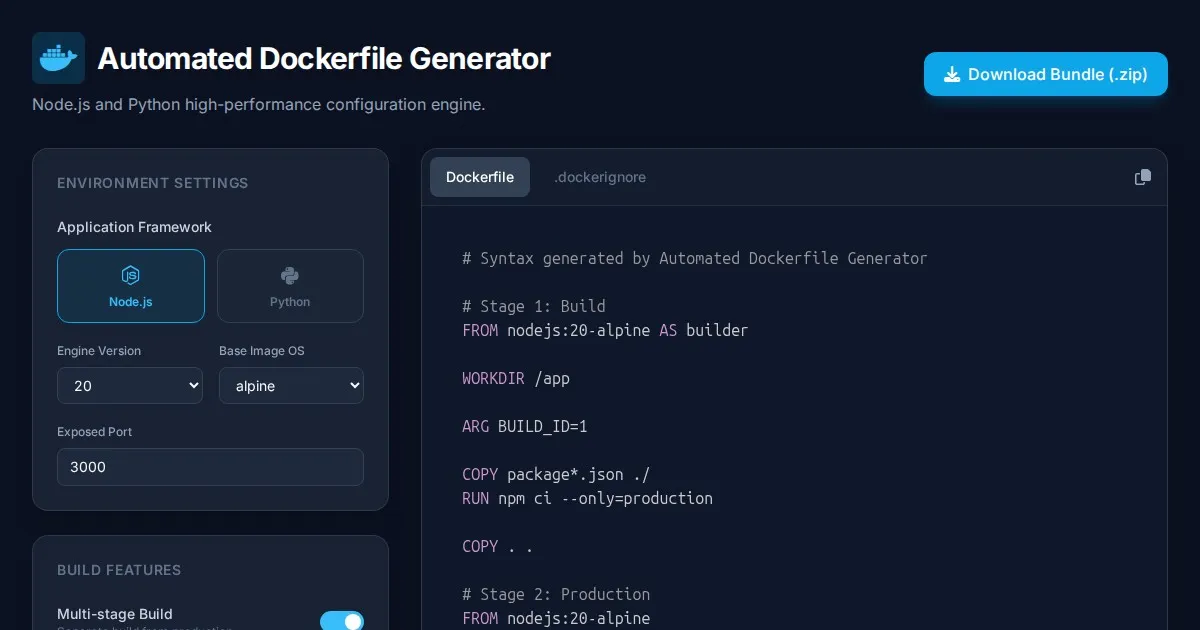
Automated Dockerfile Generator for Node.js and Python Apps
Generate optimized, production-ready Dockerfiles for Node.js and Python applications instantly. Customize base images, port configurations, and dependencies.
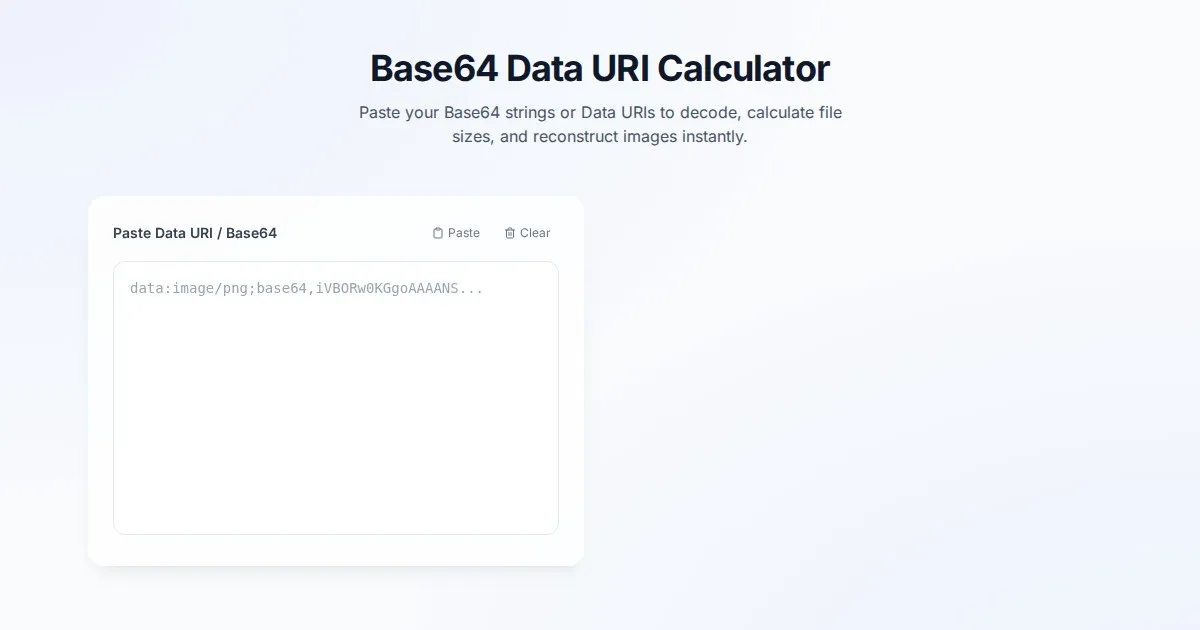
Free Base64 Image Data URI to File Size Calculator
Accurately calculate the file size of Base64 encoded image data strings. This free, web-based tool helps developers estimate binary file sizes for web apps.

Free Online Color Blindness Simulator & Image Filter Tool
Easily simulate color vision deficiencies like protanopia, deuteranopia, and tritanopia. Upload images to test design accessibility for color blindness.
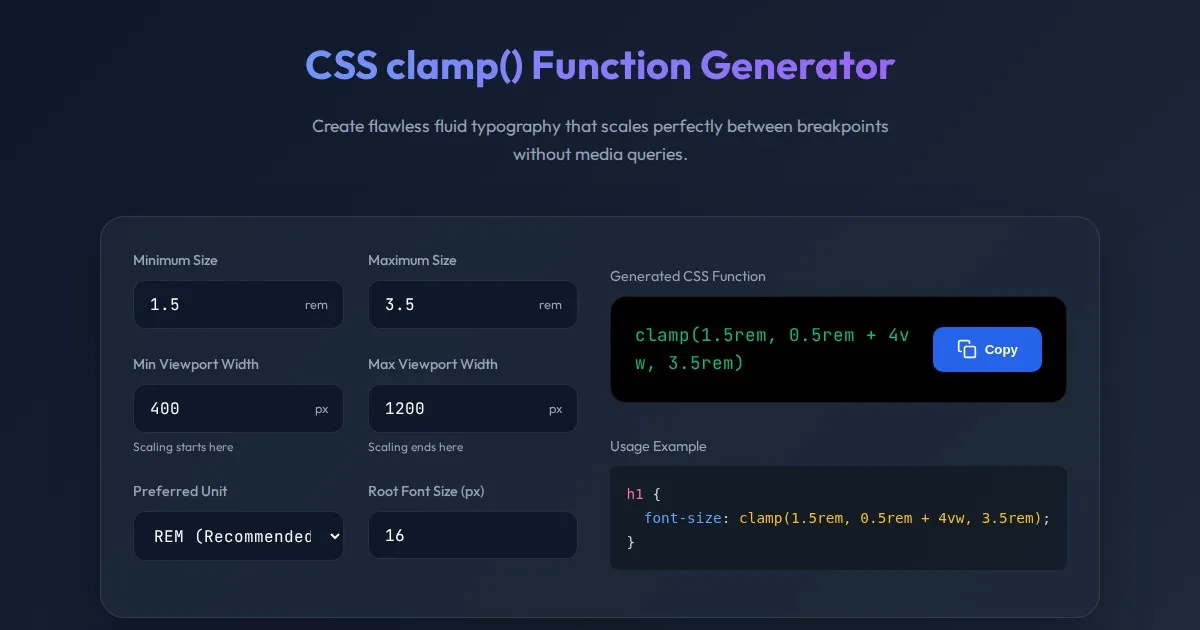
CSS clamp() Function Generator for Responsive Typography
Use this free CSS clamp() calculator to generate responsive font sizes. Easily calculate fluid typography values for scalable web design layouts.
Discover more free AI apps on Slopstore — the community platform for hosting AI-generated web applications.