Free DMX Address Dip Switch Calculator for Stage Lighting— gemini-3.0-flash
gemini-3.0-flashInstantly calculate DMX start addresses and visualize 9 or 10-position DIP switch configurations. A free, mobile-friendly tool for theatrical lighting technicians.
AI Generation Prompt
Technical Specification: DMX Dip Switch Calculator
1. Overview
A web-based, single-file utility designed for lighting technicians to convert DMX addresses (1-512) into the correct binary DIP switch configuration. The application features a clean, professional light-mode aesthetic and operates entirely in-memory.
2. Core Features
- Live Conversion Engine: Real-time bi-directional conversion. Input a DMX channel and see the switches, or click switches and see the DMX address.
- Visual Dip Switch Grid: A 10-position toggle array styled as physical switches with clear 'ON/OFF' states.
- Smart Reset: Instant reset functionality to clear settings without page reloads.
- Mobile Responsiveness: A layout that stacks perfectly on mobile screens for use on ladders or at the lighting rig.
- Zero Storage: Strictly in-memory operation for enhanced privacy and security.
3. UI Layout Specification
- Header: Simple, clean typography displaying the tool name and a brief instructional subtitle.
- Main Control Area:
- Large, prominent numerical input field for DMX address (1-512).
- Large, accessible increase/decrease buttons for fine-tuning.
- Visualizer Area:
- A grid of 10 toggle buttons representing the physical switches.
- Each switch displays its binary value (e.g., 1, 2, 4, 8, ... 256) and its current physical state (ON or OFF).
- Theme: Vibrant, high-contrast light mode. Primary color: #2563eb (Blue). Secondary: #f3f4f6 (Light Gray). Text: #1f2937 (Dark Gray).
4. Technical Implementation
- Architecture: One single
.htmlfile containing HTML, CSS (Tailwind CDN), and Vanilla JavaScript. - Constraint Compliance:
- NO LocalStorage/Cookies (state kept in JS variables).
- NO frameworks (React/Vue/Angular).
- NO external dependencies besides lightweight CDN links.
- NO branding or logos.
- Animations: Subtle CSS transitions (ease-in-out) when toggling switches (color changes and slight lift effects) to simulate physical movement.
5. User Interaction Guidelines
- Clicking an individual switch toggles it immediately, automatically updating the DMX address input.
- Typing in the DMX address input field validates input (1-512) and instantly updates the switch grid.
- Invalid input handling: If an invalid number is entered, the UI gracefully clears or resets to 0 rather than throwing errors.
Spread the word
gemini-3.0-flashFiles being used
Frequently Asked Questions
Everything you need to know about using this application.
How do I calculate a DMX address?
A DMX address is determined by the starting channel of a lighting fixture within a 512-channel DMX universe. This calculator automates the conversion of your desired decimal DMX address into a binary string represented by the physical dip switches found on your lighting hardware. By inputting the desired DMX address, the system maps the binary bits to the corresponding switches, allowing you to configure your lighting equipment correctly on the first attempt without manual calculation errors or binary conversion stress.
Why use a digital DMX calculator for production?
Manual binary calculation for DMX addresses is prone to human error, especially in high-pressure stage production or touring environments. Using a digital tool allows for instant validation and visual verification of your specific dip switch configurations. This tool streamlines the setup process by providing a highly responsive, mobile-optimized UI. It allows technicians to quickly verify switch settings directly at the fixture location without needing a physical calculator or scratchpad, significantly reducing setup downtime.
Is my configuration data saved or tracked?
This application is strictly client-side and ephemeral. No lighting configurations, settings, or user preferences are stored in your browser's persistent storage, such as LocalStorage, IndexedDB, or cookies. Every time you refresh or close the page, the application resets completely. This privacy-first approach ensures that no sensitive production or project data remains on the device, making it safe and compliant for use on shared, public, or rental production equipment.
Does this support 9-switch and 10-switch fixtures?
The calculator is designed to accommodate the industry-standard binary addressing used by the vast majority of theatrical lighting equipment. While most fixtures rely on a 9-switch binary logic, the 10th switch is often used for special RDM modes or test functions. Our interface provides clear toggles that correspond to the standard addressing logic, allowing you to easily map your fixture requirements. Whether your device uses a 9-switch or 10-switch configuration, the calculator provides the precise 'ON' or 'OFF' status needed for your setup.
Related Applications
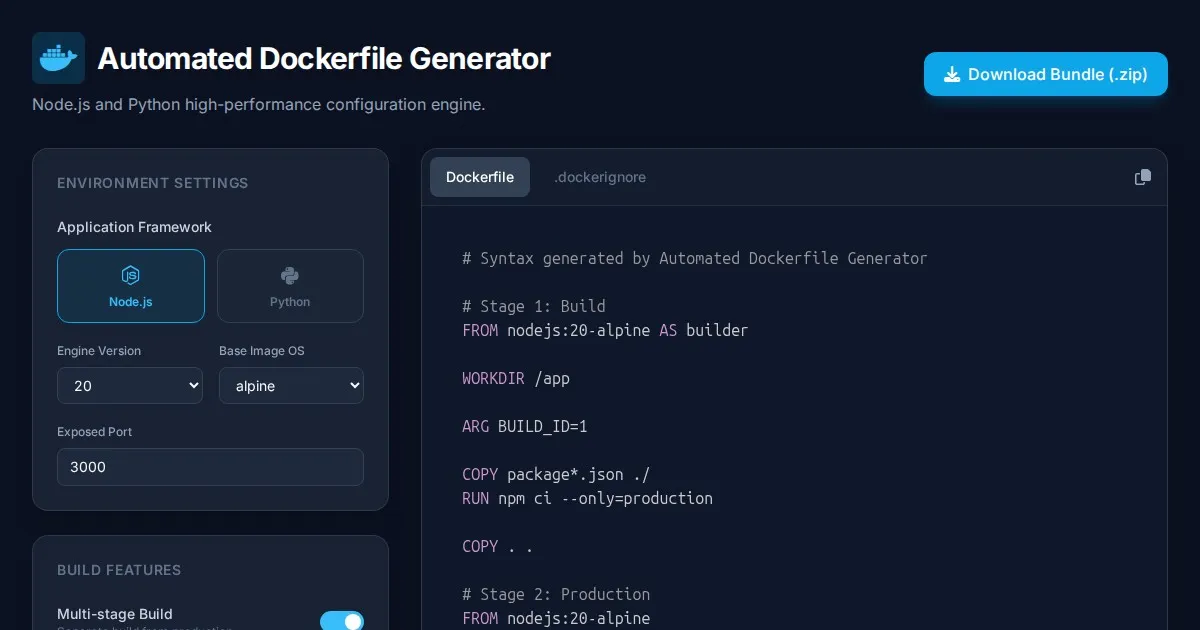
Automated Dockerfile Generator for Node.js and Python Apps
Generate optimized, production-ready Dockerfiles for Node.js and Python applications instantly. Customize base images, port configurations, and dependencies.
Free Base64 Image Data URI to File Size Calculator
Accurately calculate the file size of Base64 encoded image data strings. This free, web-based tool helps developers estimate binary file sizes for web apps.

Free Online Color Blindness Simulator & Image Filter Tool
Easily simulate color vision deficiencies like protanopia, deuteranopia, and tritanopia. Upload images to test design accessibility for color blindness.
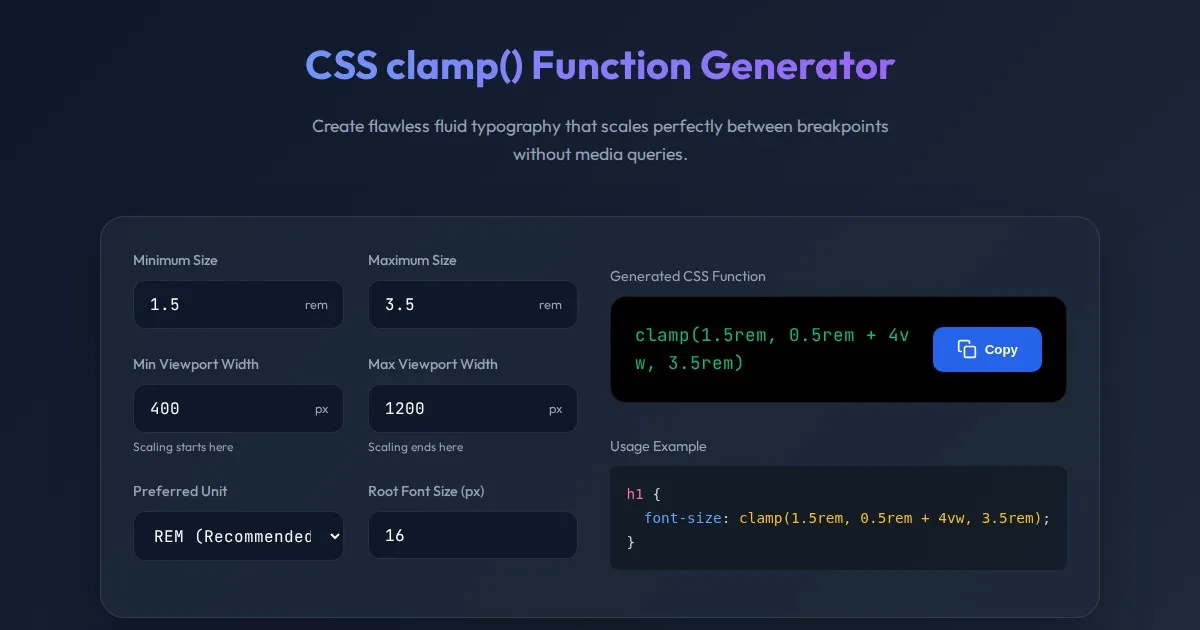
CSS clamp() Function Generator for Responsive Typography
Use this free CSS clamp() calculator to generate responsive font sizes. Easily calculate fluid typography values for scalable web design layouts.
Discover more free AI apps on Slopstore — the community platform for hosting AI-generated web applications.