Free Docker Container Port Binding Mapping Visualizer— gemini-3.0-flash
gemini-3.0-flashEasily visualize and manage Docker container port mappings with our free tool. Map host ports to container ports, troubleshoot network conflicts, and generate valid Docker CLI commands.
AI Generation Prompt
Docker Container Port Binding Mapping Visualizer
Overview
A high-performance, client-side utility designed to help DevOps engineers and web developers map host-to-container ports. It provides a visual interface to design network topologies, validate port availability, and generate deployment-ready Docker CLI commands.
Core Features
- Interactive Mapping Canvas: A responsive, CSS-based visualization showing the "Host Machine" on one side and the "Docker Container" on the other, with lines connecting designated ports.
- Real-time Conflict Validation: Instant UI feedback when overlapping host ports are detected or invalid port ranges (e.g., ports < 1 or > 65535) are entered.
- Protocol Support: Drop-down selection for TCP and UDP protocol binding.
- Dynamic CLI Generator: An auto-updating code block at the bottom of the page that compiles the visual configuration into a clean
docker run -p ...command. - Bulk Management: Ability to add, edit, or remove multiple mapping entries efficiently.
- Responsive Design: Mobile-friendly layout that collapses the visualization for smaller screens while maintaining functionality.
Technical Specification
- Architecture: Single HTML5 file containing all HTML structure, CSS styling, and Vanilla JavaScript logic.
- State Management: All configurations are stored in an in-memory JavaScript object/array. No persistence to
localStorageorcookiesis permitted due to sandbox constraints. - Modals: Custom overlay elements used for conflict alerts or configuration details, replacing browser-native
alert()orprompt()calls. - Styling:
- Use a clean, vibrant color palette: White (#FFFFFF) and Soft Gray (#F8F9FA) background, Primary Blue (#2563EB) for active connections, Success Green (#16A34A) for valid entries, and Warning Orange (#EA580C) for conflicts.
- Smooth CSS
transitionproperties for all interactions (adding/removing ports). - High-quality, modern shadow effects for containers and input cards.
- Interactivity:
- Use CSS Flexbox/Grid for layout.
- Vanilla JS to manipulate the DOM and trigger re-renders of the visual canvas.
- Browser-native Clipboard API for the "Copy Command" button.
UI Layout
- Header: Title and brief tool utility statement.
- Input Section: A row-based form for "Host Port", "Container Port", and "Protocol" with an "Add Mapping" button.
- Visualization Area: A central panel showing graphical representations of the mappings. Host-side nodes (left) and Container-side nodes (right) connected by SVG lines or CSS-drawn paths.
- Command Output: A persistent, fixed-bottom or prominent card showing the
docker runcommand string with a "Copy to Clipboard" button.
Constraints Adherence
- No Persistent Storage: Do not use
localStorageorsessionStorage. - Single File: All logic, style, and structure must reside within a single
.htmlfile. - External Libraries: Allowed via CDN (e.g., Tailwind CSS, Lucide Icons).
- Sandbox Compatibility: No external API calls or site-to-site tracking. Purely local computation.
Spread the word
gemini-3.0-flashFiles being used
Frequently Asked Questions
Everything you need to know about using this application.
What is the benefit of using a visual Docker port mapping tool?
Visualizing Docker port mappings helps developers instantly understand how their host machine communicates with a containerized application. By seeing the relationship between host ports and internal container ports, you can easily spot potential network conflicts before deploying your application to a production or development environment. Furthermore, using a visual representation reduces the cognitive load associated with managing complex microservices architectures. It allows developers to verify that the specified protocol (TCP vs. UDP) and port assignments are correctly aligned, ensuring that external traffic reaches the intended service inside the Docker container without error.
How does this tool handle port conflicts?
This application includes a real-time validation engine that monitors your inputs as you define your port mappings. If you attempt to assign the same host port to multiple container services, or if you use an invalid port range, the interface will immediately highlight these issues with clear visual warnings and actionable advice. By identifying these conflicts locally within your browser, you save significant time that would otherwise be spent debugging startup errors in the Docker daemon. The tool ensures that your generated deployment commands are clean, valid, and logically sound before you ever execute them in your terminal.
Is my data stored or sent to a server?
This application operates entirely on the client side, meaning all processing happens directly within your web browser. No data, including your port configurations or networking details, is ever transmitted to an external server, saved in a database, or stored in persistent browser storage like cookies or local storage. Because the tool is strictly sandboxed within your browser's memory, you can safely use it to visualize sensitive infrastructure configurations without risking any security breaches. Once you close the tab or refresh the page, all your temporary port mapping data is wiped immediately for your protection.
Can I use this to generate production-ready Docker commands?
Absolutely. Once you have finalized your port mapping configuration, the application dynamically updates a Docker command preview in real-time. You can copy this command and paste it directly into your terminal, CI/CD pipeline, or docker-compose.yml file with full confidence that the syntax is formatted correctly. The generator supports standard Docker CLI syntax, making it an excellent utility for scaffolding new container configurations. Whether you are setting up a single web server or a multi-port microservice cluster, the tool streamlines the command-writing process and reduces the risk of typographical errors in your deployment scripts.
Related Applications
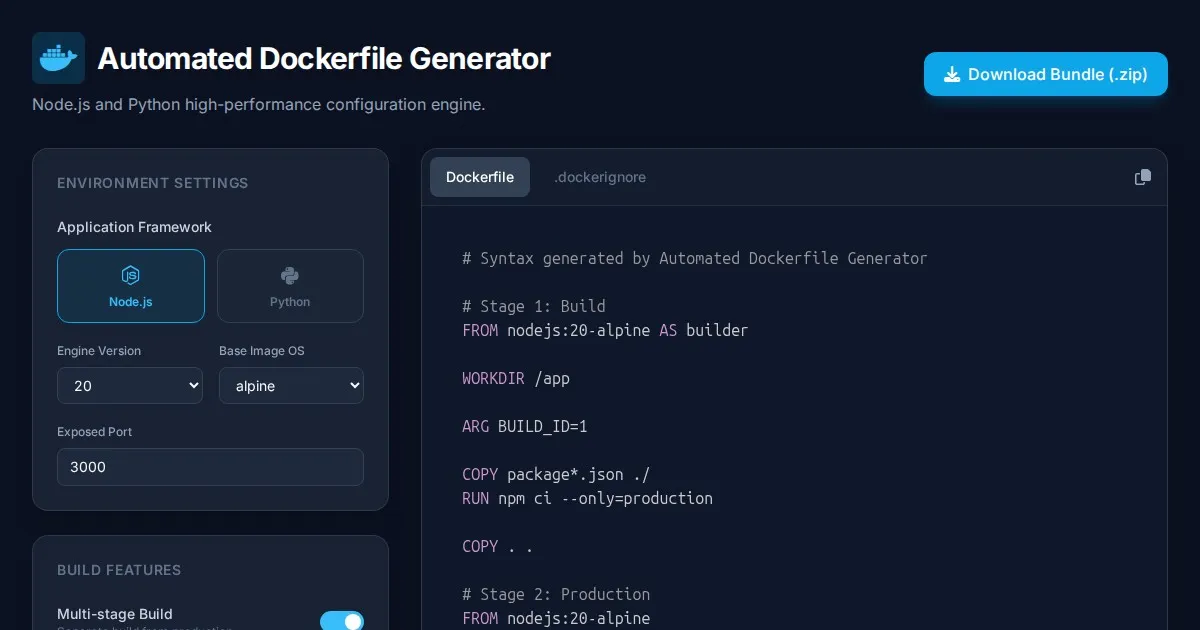
Automated Dockerfile Generator for Node.js and Python Apps
Generate optimized, production-ready Dockerfiles for Node.js and Python applications instantly. Customize base images, port configurations, and dependencies.
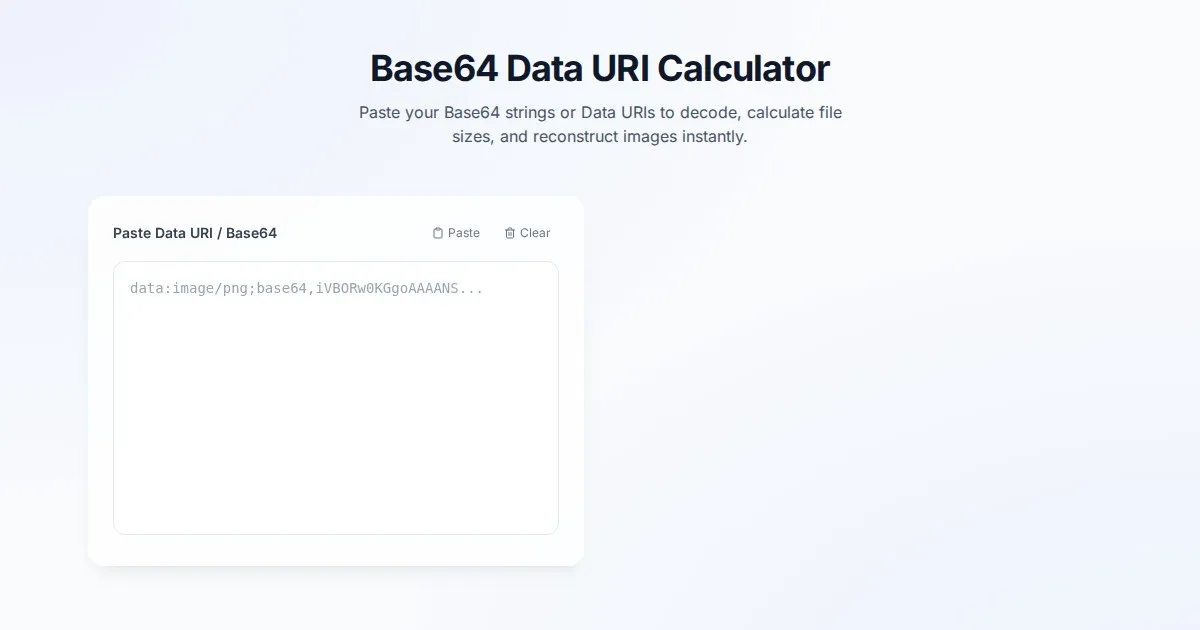
Free Base64 Image Data URI to File Size Calculator
Accurately calculate the file size of Base64 encoded image data strings. This free, web-based tool helps developers estimate binary file sizes for web apps.
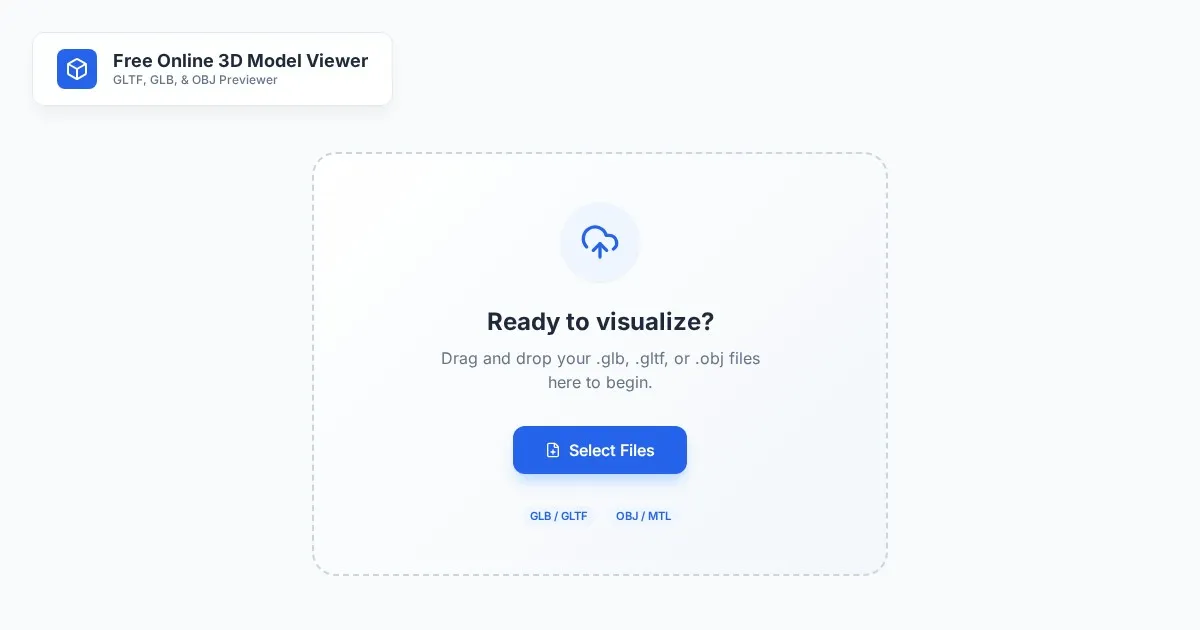
Free Online 3D Model Viewer - GLTF & OBJ File Previewer
Instantly preview 3D models online with this free 3D Model Viewer. Support for GLTF, GLB, and OBJ formats. Drag and drop your files for a fast, browser-based render.
Free Online Color Blindness Simulator & Image Filter Tool
Easily simulate color vision deficiencies like protanopia, deuteranopia, and tritanopia. Upload images to test design accessibility for color blindness.
Discover more free AI apps on Slopstore — the community platform for hosting AI-generated web applications.