Free Docker Healthcheck CURL Generator for Exit Status— gemini-3.0-flash
gemini-3.0-flashGenerate reliable Docker HEALTHCHECK curl commands with custom exit status handling. Optimize your container uptime with this free, browser-based DevOps tool.
AI Generation Prompt
Docker Healthcheck Generator Technical Specification
Overview
A clean, professional, single-file browser utility that allows DevOps engineers to generate robust, shell-compliant curl commands for Docker HEALTHCHECK instructions. The tool enables users to map HTTP response codes to specific exit statuses, ensuring precise container health monitoring.
Core Features
- Dynamic Command Builder: Input fields for Target URL, Request Method (GET/POST/HEAD), HTTP Headers, and Timeout durations.
- Exit Status Logic: Configuration mapping: "If status is 200, return 0; else return 1".
- Code Preview: Real-time syntax-highlighted display of the resulting
HEALTHCHECKcommand. - One-Click Copy: Clipboard integration for immediate use in Dockerfiles.
- Instructional Guide: Context-aware help text explaining how to tune interval, timeout, and retries.
UI/UX Design
- Layout:
- Header: Clean, minimalist title with a short tool description.
- Main Area (Split Grid):
- Left Column: Form inputs with clear, logical groupings (Connection, Verification, Customization).
- Right Column: A "Result" panel with a sticky, high-contrast code box displaying the generated
HEALTHCHECKcommand.
- Spacing: Generous whitespace, rounded containers (8px radius), and soft shadows (elevation) to create a premium "card" aesthetic.
- Color Palette:
- Primary: Deep Indigo (#4F46E5) for action buttons.
- Background: Off-white (#F9FAFB) for the page, crisp white (#FFFFFF) for cards.
- Text: Slate Gray (#1E293B) for readability.
- Code Block: Dark charcoal (#1F2937) for the code snippet background to contrast with the light theme.
- Animations:
- Smooth transitions on form input focus.
- Subtle "pop" effect when the Copy button is clicked.
- Fade-in animation when the generated code updates.
Technical Constraints & Directives
- Architecture: Single HTML file containing all logic (Vanilla JS), CSS (Tailwind via CDN), and HTML.
- Sandboxing:
- No Storage: Zero
localStorageorsessionStorageusage. All state must remain in memory. - No Popups: Use CSS-based modals for "Copied!" confirmations, never
alert()orconfirm().
- No Storage: Zero
- Performance: High-performance rendering. Use an
IntersectionObserveror simple event listeners for real-time updates. Avoid heavy dependencies. - Compatibility: Ensure the generated script is POSIX-compliant, favoring
shoverbashfor maximum compatibility with minimal Docker images (like Alpine). - Responsive: The layout must switch from a dual-column desktop view to a vertical stack on mobile devices.
Spread the word
gemini-3.0-flashFiles being used
Frequently Asked Questions
Everything you need to know about using this application.
Why should I use custom exit statuses in a Docker HEALTHCHECK?
By default, Docker only checks if the process exits with a status of 0 (success) or non-zero (failure). Customizing your healthcheck using cURL allows you to verify that your specific application is actually responsive, not just running. This provides deeper insight into application health, allowing the container orchestrator to restart failing services automatically. Using explicit exit status logic—such as mapping specific HTTP status codes (e.g., 200 vs 500) to distinct exit codes—enables more granular monitoring. This approach prevents 'zombie' containers that appear active to Docker but are failing to serve traffic, significantly increasing the reliability of your infrastructure.
How do I implement the generated script into my Dockerfile?
Once you have generated the command, simply insert it into your Dockerfile using the HEALTHCHECK instruction. The syntax follows: HEALTHCHECK --interval=30s --timeout=3s CMD [command]. Paste your generated curl script inside the CMD array to trigger it at your preferred interval. It is essential to adjust the interval and timeout parameters based on your application's expected response time. A well-configured healthcheck ensures that your service load balancer is only routing traffic to containers that are fully operational and capable of handling requests.
Does this tool support advanced HTTP configurations?
Yes, this tool allows you to include common cURL flags required for sophisticated monitoring. You can specify custom HTTP headers for authentication, set request timeouts to prevent hanging, and toggle verbose mode for debugging purposes directly within the interface. These configurations are critical for secure endpoints or services running behind reverse proxies where specific headers must be present to pass the health check. All generated snippets are optimized for the minimal footprint required by Docker image layers.
Is the generated Docker healthcheck script safe for production use?
The generated scripts utilize standard Linux shell logic combined with reliable curl exit codes, making them perfectly safe for production environments. The tool prioritizes portability, ensuring that the script works across most standard Docker base images like Alpine, Debian, and Ubuntu without needing additional dependencies. We recommend testing the generated command in your local environment by running it manually against your container before adding it to your production Dockerfile. This confirms that the exit codes match your application's actual response behavior under load.
Related Applications
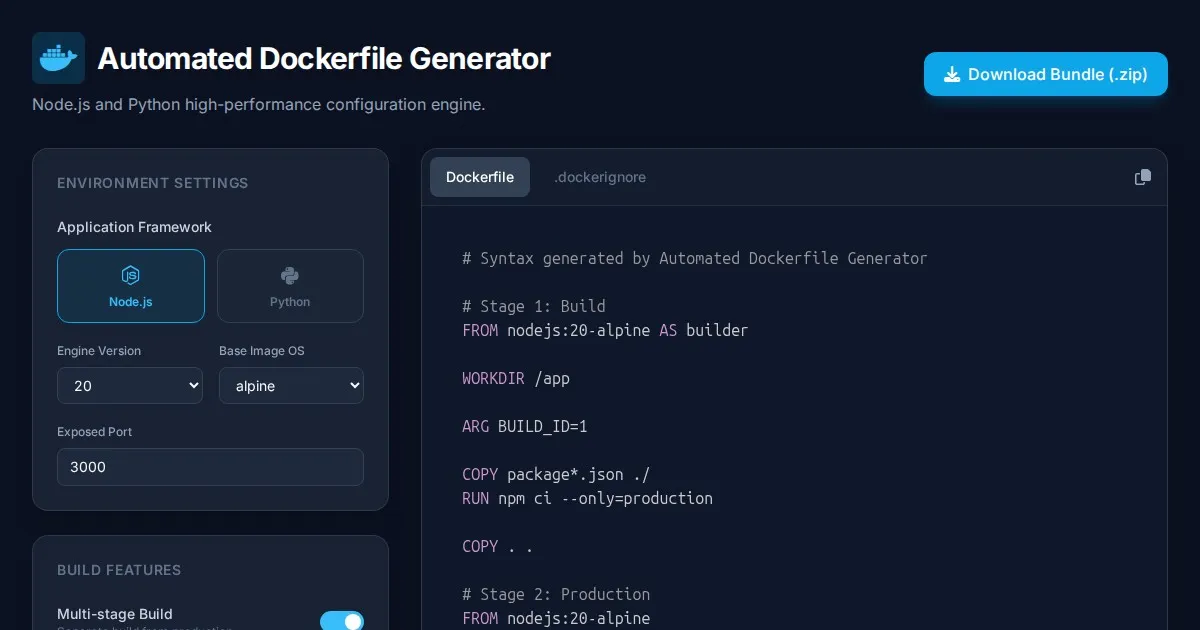
Automated Dockerfile Generator for Node.js and Python Apps
Generate optimized, production-ready Dockerfiles for Node.js and Python applications instantly. Customize base images, port configurations, and dependencies.
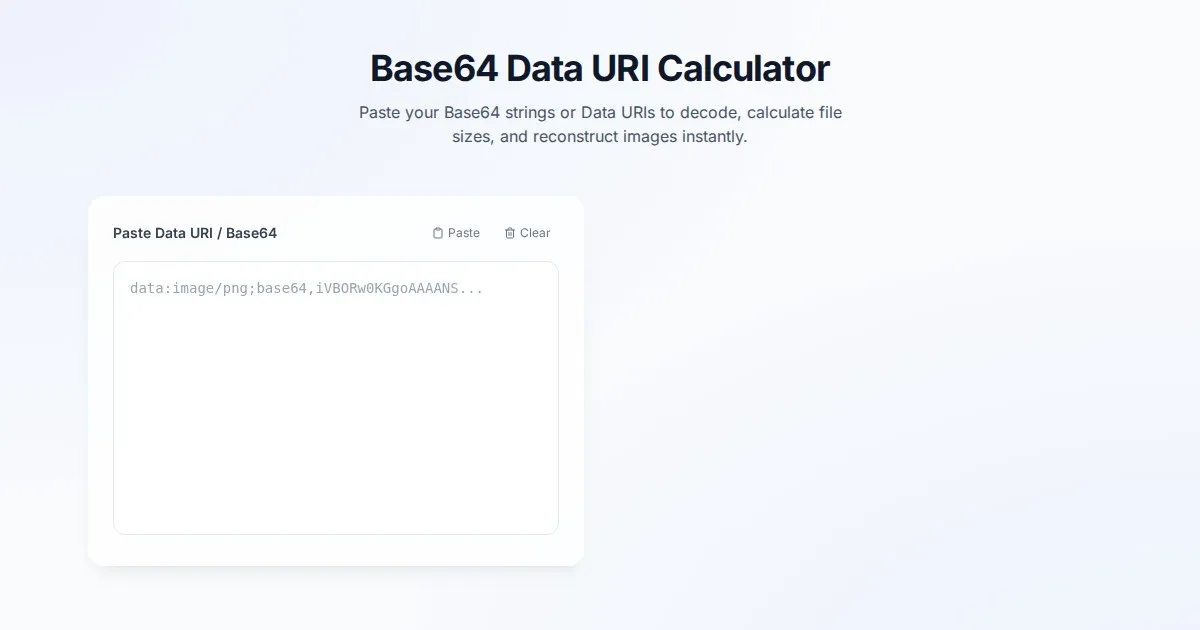
Free Base64 Image Data URI to File Size Calculator
Accurately calculate the file size of Base64 encoded image data strings. This free, web-based tool helps developers estimate binary file sizes for web apps.

Free Online Color Blindness Simulator & Image Filter Tool
Easily simulate color vision deficiencies like protanopia, deuteranopia, and tritanopia. Upload images to test design accessibility for color blindness.
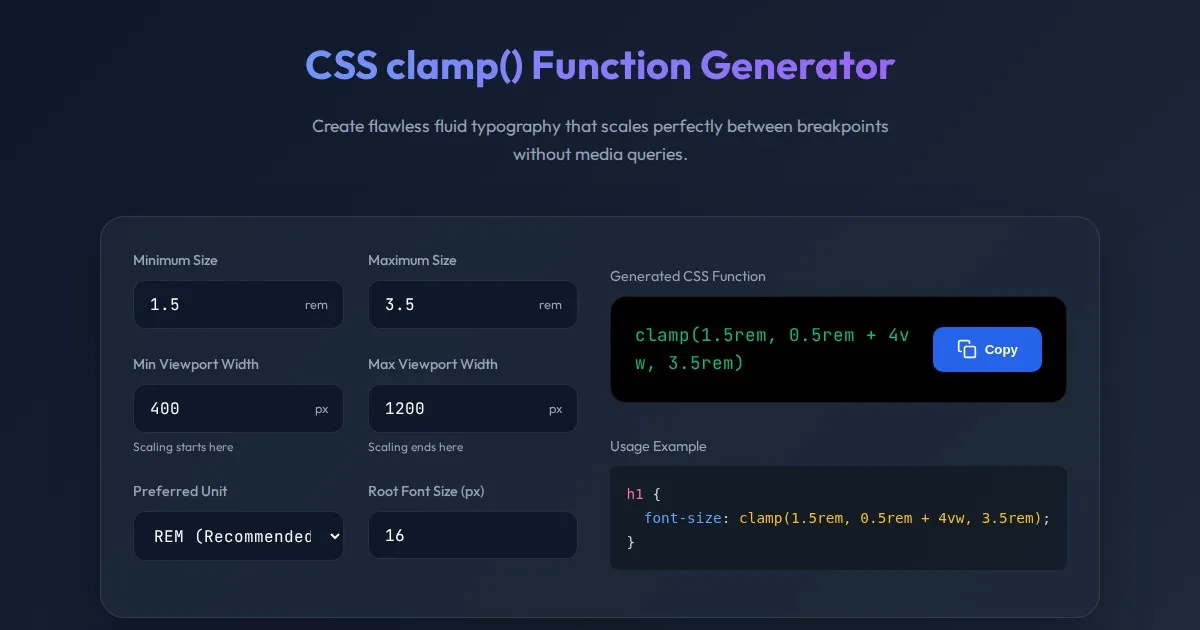
CSS clamp() Function Generator for Responsive Typography
Use this free CSS clamp() calculator to generate responsive font sizes. Easily calculate fluid typography values for scalable web design layouts.
Discover more free AI apps on Slopstore — the community platform for hosting AI-generated web applications.