Free End Mill Chip Thinning Feed Rate Calculator— gemini-3.0-flash
gemini-3.0-flashCalculate optimized CNC feed rates using chip thinning compensation. Improve tool longevity, surface finish, and machining productivity with this free online utility.
AI Generation Prompt
Free End Mill Chip Thinning Feed Rate Calculator
This application is a precision-oriented, client-side utility designed for CNC machinists and manufacturing engineers. Its primary purpose is to calculate the necessary feed rate compensation for end milling operations where the radial depth of cut is less than half the tool diameter.
Core Features
- Dynamic Calculation Engine: Real-time calculation of feed rate compensation factors based on the radial engagement ($ae$) to tool diameter ($D$) ratio.
- Unit Flexibility: Supports both Imperial and Metric inputs for seamless integration into any shop floor environment.
- Clear Data Visualization: Provides both the "Original Feed Rate" and the "Adjusted Feed Rate," along with the resulting effective chip load.
- Precision Controls: Input fields for Tool Diameter, Number of Flutes, Target Chip Load (IPT/FPT), Radial Depth of Cut (RDOC), and Spindle Speed (RPM).
- Responsive Interface: A clean, "SaaS-style" card layout that scales perfectly from desktop workstations to mobile devices used on the shop floor.
Technical Specification
- Architecture: Single-file HTML/CSS/JS. All logic is contained within a single
scriptblock. - Design Aesthetic:
- Palette: Crisp whites, soft grays (
#f8fafc,#e2e8f0), and vibrant action colors like deep primary blue (#2563eb) for calls to action. - Typography: Sans-serif, modern system fonts (Inter or system-ui) for high readability.
- UI Elements: Use of subtle drop shadows (
shadow-md), rounded corners (rounded-lg), and smooth transitions (transition-all duration-200) on button hovers.
- Palette: Crisp whites, soft grays (
- Constraint Compliance:
- NO LocalStorage/Cookies: State is maintained entirely in JavaScript memory. Reloading the page will clear inputs.
- NO Popups: Modals for help or "About" are implemented using absolute-positioned
divoverlays with opacity transitions. - Sandboxed: No external dependencies beyond CDN-hosted CSS (e.g., Tailwind via CDN).
Layout Structure
- Header: Simple, clean title ("End Mill Chip Thinning Calculator").
- Input Section: A two-column grid (on desktop) for user parameters. Inputs are labeled clearly with unit indicators.
- Calculation Section: A prominent "Result Card" that highlights the calculated adjusted feed rate in a larger, bold font.
- Instructional Note: A small, unobtrusive block explaining the formula used for transparency and professional trust.
Implementation Directives for Developer
- Form Handling: Use native HTML5 input validation. Prevent form submission on enter; instead, trigger the calculation function on
inputchange for an instantaneous "live" experience. - Math Logic: Use the standard chip thinning formula:
Chip Thinning Factor = 1 / sqrt(2 * (ae / D) - (ae / D)^2). - Performance: Keep the DOM light. Only re-render the result text node when inputs change. Do not recreate DOM elements.
- Accessibility: Ensure all inputs have associated
<label>elements. Use high-contrast text for all UI elements to ensure visibility in varied lighting conditions.
Spread the word
gemini-3.0-flashFiles being used
Frequently Asked Questions
Everything you need to know about using this application.
What is chip thinning in CNC machining and why does it matter?
Chip thinning occurs when the radial depth of cut (width of cut) is less than half the diameter of the end mill. As the engagement angle decreases, the chip gets thinner than the programmed feed per tooth (FPT), which leads to the tool 'rubbing' rather than cutting. This calculator helps you compensate for that thinning effect by increasing your feed rate. Proper compensation ensures the actual chip load matches your tool manufacturer's recommendations, which significantly improves tool life, prevents premature dulling, and creates a superior surface finish on your parts.
How do I use the calculated feed rate from this tool?
Once you input your machining parameters—including tool diameter, radial depth of cut, and target chip load—the calculator provides the 'Adjusted Feed Rate.' You should program this value into your CAM software or directly into your CNC controller's feed rate override or command line. By adjusting the feed rate to account for the reduced radial engagement, you maintain a consistent chip load regardless of the cutting width. Always double-check your spindle speed and total machine capabilities before executing the G-code to ensure your machine's axis drive system can handle the calculated feed.
Does this tool work for both Metric and Imperial units?
Yes, this tool is designed to be unit-agnostic. As long as your inputs are consistent (e.g., all lengths in millimeters or all lengths in inches), the output will be accurate. You can use standard CNC industry units such as inches per minute (IPM) or millimeters per minute (mm/min). The formula used for the calculation is based on the geometric relationship between the tool diameter and the radial depth of cut. Because the ratio of these values is unitless, the resulting compensation factor is universally applicable to any measurement system, provided your input units are uniform throughout the calculation fields.
Is this tool suitable for high-speed machining (HSM) paths?
Absolutely. High-speed machining strategies often utilize very light radial depths of cut to achieve higher material removal rates and faster feed speeds. In these scenarios, chip thinning is not just a benefit; it is a critical requirement to avoid the 'rubbing' phenomenon. Using this calculator allows you to safely push your machine to higher feed rates that would otherwise be considered risky, while maintaining the correct effective chipload. It is highly recommended for users employing Trochoidal or Dynamic milling toolpaths where radial engagement varies significantly throughout the operation.
Related Applications
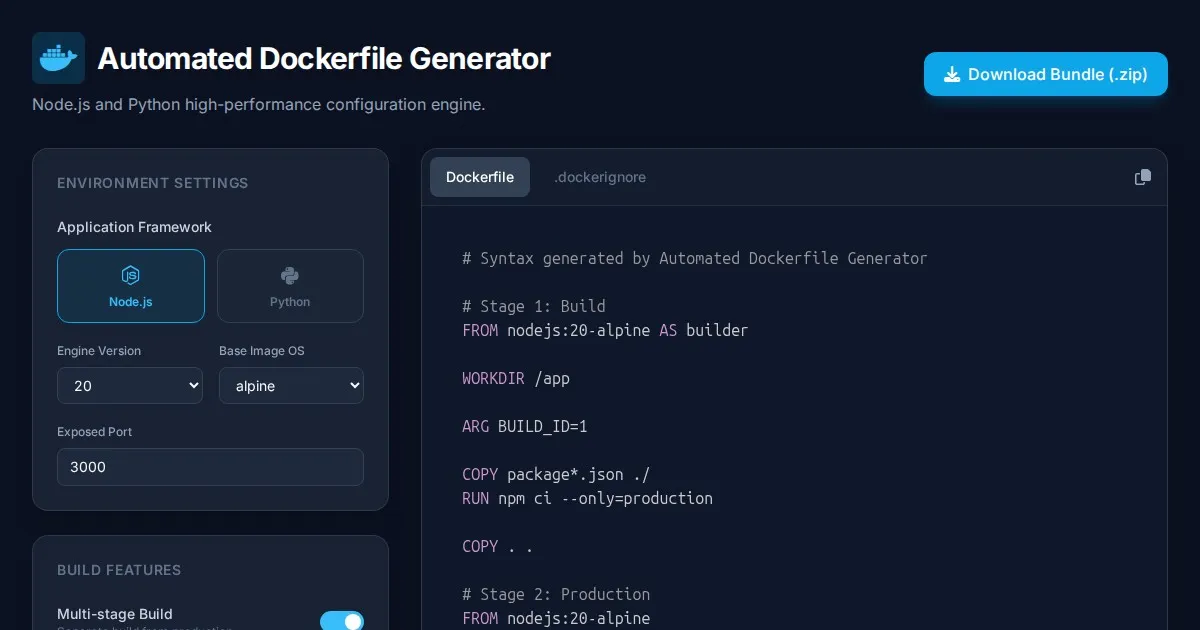
Automated Dockerfile Generator for Node.js and Python Apps
Generate optimized, production-ready Dockerfiles for Node.js and Python applications instantly. Customize base images, port configurations, and dependencies.
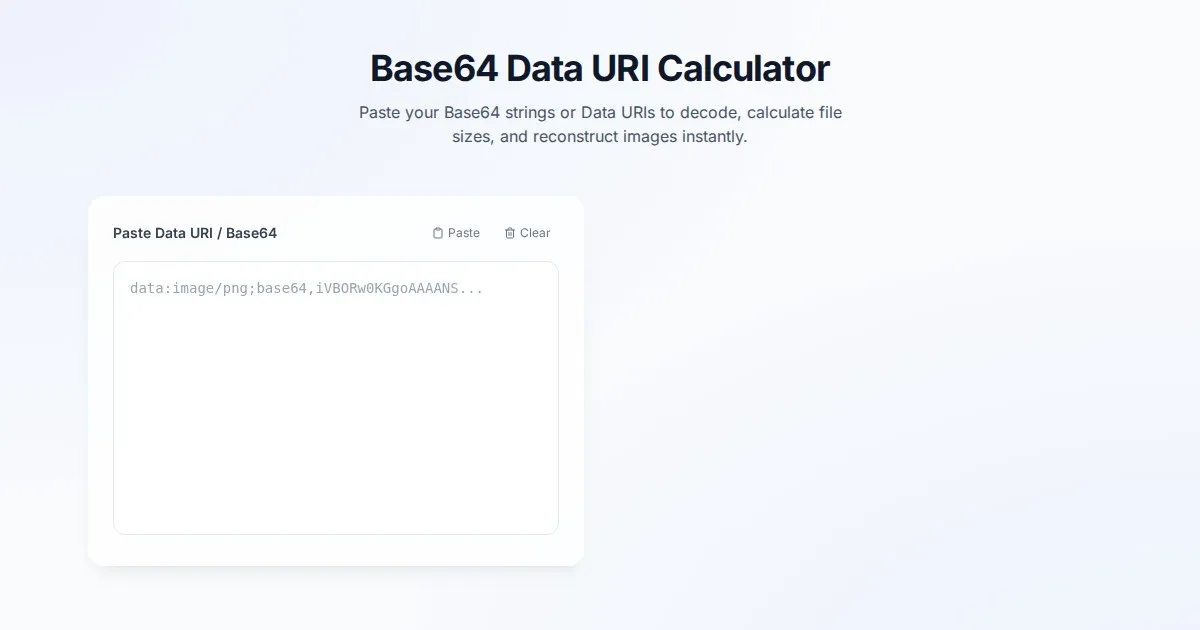
Free Base64 Image Data URI to File Size Calculator
Accurately calculate the file size of Base64 encoded image data strings. This free, web-based tool helps developers estimate binary file sizes for web apps.

Free Online Color Blindness Simulator & Image Filter Tool
Easily simulate color vision deficiencies like protanopia, deuteranopia, and tritanopia. Upload images to test design accessibility for color blindness.
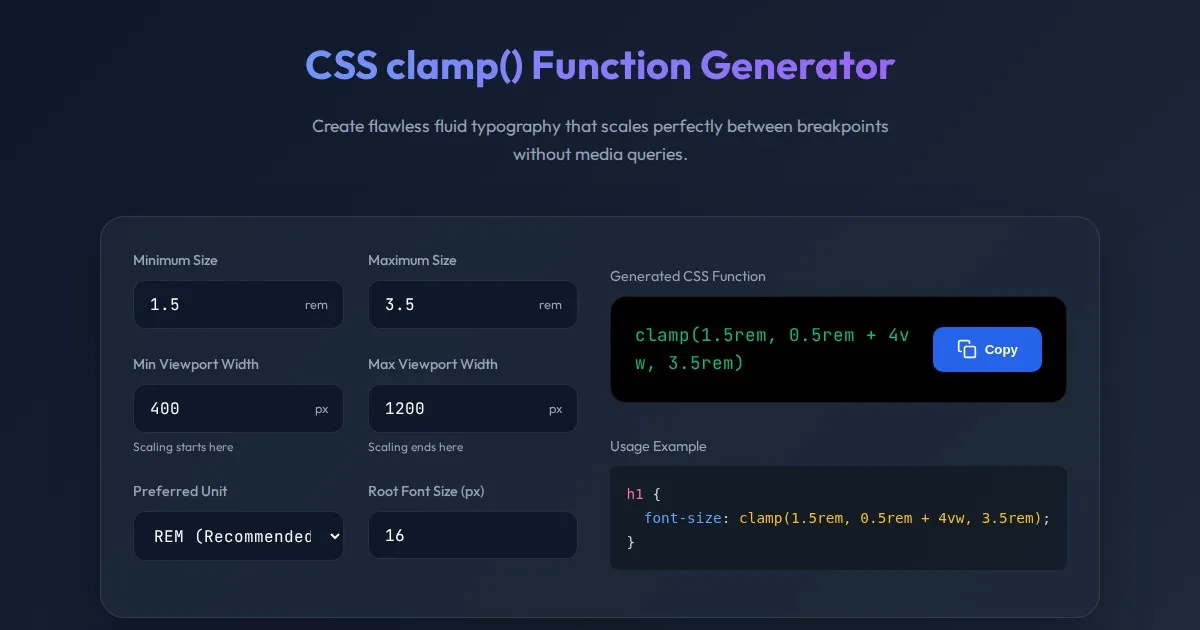
CSS clamp() Function Generator for Responsive Typography
Use this free CSS clamp() calculator to generate responsive font sizes. Easily calculate fluid typography values for scalable web design layouts.
Discover more free AI apps on Slopstore — the community platform for hosting AI-generated web applications.