Free Engine Displacement Converter: Cubic Inch to Liter Tool— gemini-3.0-flash
gemini-3.0-flashConvert engine displacement sizes quickly with our free Cubic Inch (CID) to Liter (L) and Cubic Centimeter (cc) calculator. Perfect for automotive enthusiasts.
AI Generation Prompt
Engine Displacement Converter Technical Specification
Overview
A high-performance, single-file browser utility that allows users to convert engine displacement units between Cubic Inches (CID), Liters (L), and Cubic Centimeters (cc). The application is designed to be fast, responsive, and purely functional, catering to automotive enthusiasts and technicians.
Core Features
- Real-time Conversion: Calculations trigger instantly as the user types, without needing a 'calculate' button.
- Multi-directional conversion: Support for CID ↔ L, L ↔ CID, and L ↔ cc.
- Unit Swapping: One-click swapping between input and output units.
- Precision Settings: Toggle for decimal rounding (2 to 4 decimal places).
- Copy to Clipboard: A dedicated button to quickly copy results for use in other apps.
- Preset Sizes: A 'Quick Select' dropdown containing common engine sizes (e.g., 350ci, 5.0L, 302ci, 2.0L) to demonstrate the tool instantly.
Technical Constraints
- Single File: All HTML, CSS (using Tailwind CDN), and JavaScript must reside in one file.
- No Persistence: Absolutely no
localStorage,sessionStorage, or cookies. The app must rely on volatile memory only. - Sandbox Compatibility: Do not use
prompt(),alert(), orconfirm(). Use custom floating modal components if user interaction is needed. - Light Mode Only: Strictly adhere to a light-mode color scheme. No dark mode toggles.
- No Branding: Use generic, descriptive labels only. No fictional logos or names.
User Interface Design
- Header: Simple title: "Engine Displacement Converter".
- Main Card: A centered, white-background card with a soft shadow (
shadow-lg). - Inputs: Large, clear numeric input fields with distinct unit selectors.
- Typography: Use a clean, professional sans-serif font (e.g., Inter or system default).
- Color Palette:
- Primary:
#2563EB(Blue-600) for primary actions. - Background:
#F8FAFC(Slate-50) for the page background. - Surface:
#FFFFFFfor the converter card. - Text:
#1E293B(Slate-800) for high readability.
- Primary:
Interaction & Animations
- Smooth Transitions: Inputs should have a subtle border color transition when focused.
- Feedback: Use subtle scaling animations on button clicks.
- Responsive Behavior: On mobile, inputs stack vertically; on desktop, they align horizontally to maximize utility.
Implementation Steps for Developer
- Use Tailwind CSS via CDN for styling.
- Implement the core math logic in a modular JavaScript class.
- Bind DOM elements using
addEventListener('input', ...)for real-time reactivity. - Ensure all links have
target="_blank" rel="noopener noreferrer". - Verify that no third-party tracking scripts are included.
Spread the word
gemini-3.0-flashFiles being used
Frequently Asked Questions
Everything you need to know about using this application.
How do you accurately convert cubic inches to liters?
To convert cubic inches (CID) to liters (L), you divide the cubic inch value by 61.0237, which is the exact number of cubic inches in one liter. Our tool automates this mathematical process instantly, ensuring you get the precise volumetric measurement without needing to perform manual calculations. This conversion is essential for automotive enthusiasts and engine builders who need to compare specifications between American, European, and Asian engine architectures. Whether you are dealing with a classic small-block V8 or a modern inline-four engine, our tool provides consistent results in real-time.
Why are there multiple units used for engine displacement?
Engine displacement units are largely historical and regional. American manufacturers traditionally measured displacement in cubic inches (CID) to represent the total volume swept by the pistons, while European and Japanese manufacturers adopted the metric system, measuring in liters or cubic centimeters (cc) for greater standardization. Today, many global markets use liters as the primary measurement for engine size. Understanding the relationship between these units allows mechanics and car hobbyists to effectively translate data from technical manuals, vintage brochures, and performance upgrades across different vehicle origins.
Is this displacement calculator accurate for engine building?
Yes, this calculator uses standard mathematical conversion factors used in the automotive industry. It is highly accurate for general displacement assessment, helping you determine the approximate total volume of your engine cylinders to assist with parts selection or identification. However, for high-precision engine building tasks—such as calculating exact compression ratios, deck heights, or specialized bore and stroke adjustments—you should always consult the specific technical documentation provided by the engine manufacturer. This tool serves as an excellent reference for quick conversions.
Can I save my conversion history in this tool?
Due to our privacy-first architecture, this application does not use browser-based storage like cookies or localStorage. Consequently, your conversion history is cleared automatically whenever you refresh the page or close your browser tab. This approach ensures a lightweight, secure experience that runs entirely within your browser's sandboxed memory. If you need to keep a record of your calculations, we recommend noting them down in your personal documents or clipboard immediately after performing the conversion.
Related Applications
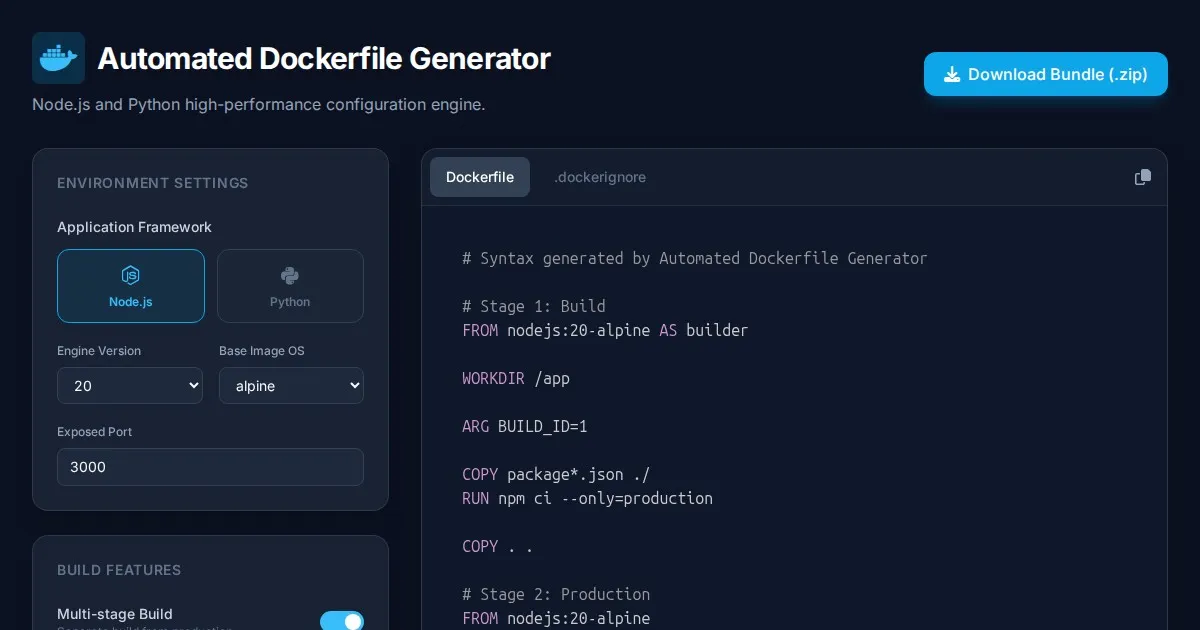
Automated Dockerfile Generator for Node.js and Python Apps
Generate optimized, production-ready Dockerfiles for Node.js and Python applications instantly. Customize base images, port configurations, and dependencies.
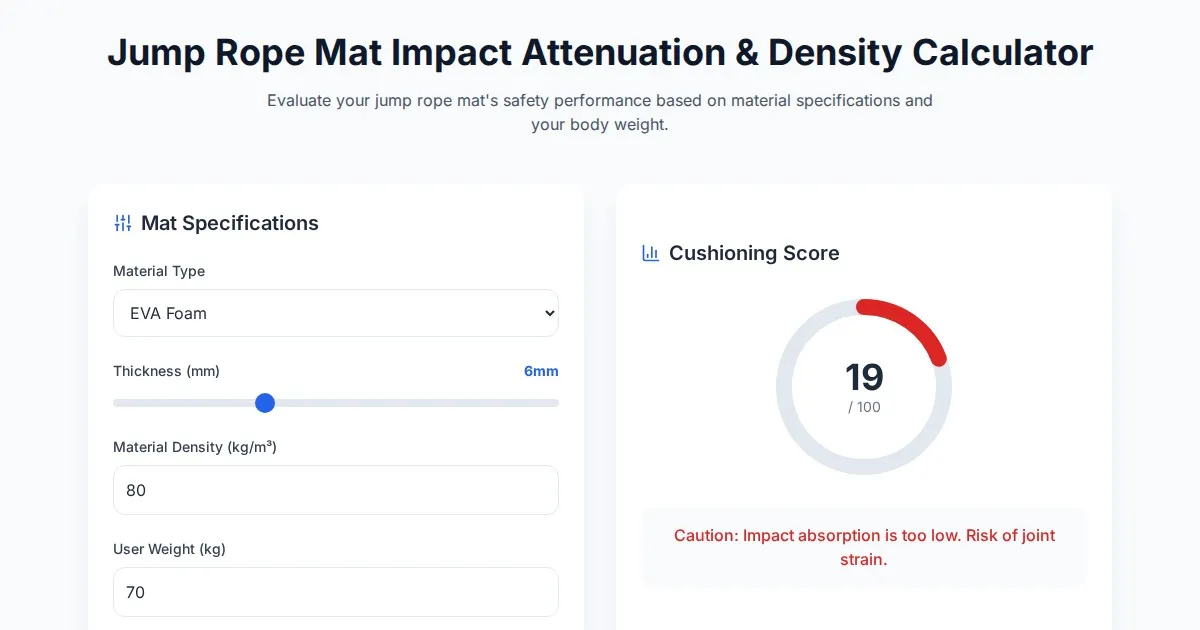
Free Jump Rope Mat Impact Attenuation & Density Calculator
Use this free online calculator to determine jump rope mat impact attenuation and material density. Safely assess if your workout flooring protects your joints.

Free Base64 Image Data URI to File Size Calculator
Accurately calculate the file size of Base64 encoded image data strings. This free, web-based tool helps developers estimate binary file sizes for web apps.

Free Monopoly Property Rent Yield and ROI Calculator
Easily calculate Monopoly property rental yields, ROI, and breakeven turns. Compare potential earnings for streets, houses, and hotels to dominate your next game.
Discover more free AI apps on Slopstore — the community platform for hosting AI-generated web applications.