Free Epoxy Resin Viscosity & Flow Rate Calculator— gemini-3.0-flash
gemini-3.0-flashAccurately calculate resin flow rates, viscosity in CPS, and casting speed with our free online tool. Perfect for resin artists and casting professionals.
AI Generation Prompt
Epoxy Resin Viscosity & Flow Rate Simulator
Technical Specification
This application is a precision-engineered tool designed to help resin artists and casting professionals calculate fluid dynamics for epoxy resin. It provides a clean, professional, and interactive interface for predicting flow rates based on viscosity (CPS), temperature, and volume.
1. Core Features
- Viscosity-Temperature Simulator: A dynamic slider interface that adjusts CPS based on temperature gradients.
- Flow Rate Estimator: Calculates the time required to fill a specified mold volume based on viscosity and orifice size.
- Unit Converter: Seamless toggling between Metric (ml, mm, Celsius) and Imperial (oz, in, Fahrenheit).
- Visual Flow Preview: A CSS-based animation representing the flow velocity relative to the calculated output.
- Reference Database: An in-memory object containing standard viscosity ranges for common epoxy resins (e.g., laminating vs. casting resins).
2. UI/UX Design & Layout
- Aesthetic: Modern, light-mode "SaaS" aesthetic. Use high-contrast gray text on a white background with subtle blue accents (Hex #2563eb).
- Layout:
- Header: Simple, clean title with a brief description.
- Main Container: Two-column grid layout (desktop) stacking to a single column (mobile).
- Left Column (Inputs): Grouped fields for Temperature, Desired Viscosity, Mold Volume, and Channel Diameter. Use standard HTML5 form controls styled with custom focus states.
- Right Column (Results/Visualization): A live results card displaying "Calculated Flow Rate" and "Estimated Pour Time". Include a canvas element or CSS animation showing the "Flow speed" visual indicator.
- Styling: Use
interfont (via Google Fonts), generous padding/whitespace, and rounded corners (border-radius: 8px) on all cards. Subtle drop shadows (box-shadow: 0 4px 6px -1px rgb(0 0 0 / 0.1)) for depth.
3. Animations & Micro-interactions
- Smooth Transitions: Use CSS
transition: all 0.3s ease;on all form inputs and button hover states. - Live Updates: Results should recalculate instantly using
oninputevents, avoiding the need for a 'Calculate' button. - Loading/Pulse: Add a subtle pulse animation to the flow rate result value when parameters are updated, indicating live calculations.
4. Technical Constraints & Compliance
- Architecture: Single HTML file containing CSS in
<style>tags and Vanilla JS in<script>tags. - Dependencies: Tailwind CSS via CDN is permitted for layout responsiveness. No complex frameworks.
- State Management: All calculations must reside in memory. DO NOT use
localStorageorsessionStorage. - Sandboxing: Do not trigger popups. Use a hidden
<div>or a CSS-managed modal structure for errors or instructions. - External Links: All must include
target="_blank" rel="noopener noreferrer". - Design: No dark mode toggles. Enforce a clean, vibrant light mode aesthetic.
Spread the word
gemini-3.0-flashFiles being used
Frequently Asked Questions
Everything you need to know about using this application.
How does resin viscosity affect casting?
Viscosity directly influences how resin fills intricate mold cavities and allows for effective de-gassing. Lower viscosity resins typically provide better detail capture and easier bubble release, which is essential for complex molds, while higher viscosity options are often preferred for layering or doming applications. Understanding these fluid properties is vital for avoiding casting defects such as trapped air bubbles or incomplete mold filling. This calculator helps you model how your specific resin behavior changes based on environmental conditions, ensuring a more professional finish every time.
What is the relationship between temperature and epoxy CPS?
Temperature acts as the primary driver for resin viscosity, with an inverse relationship; as the temperature increases, the internal friction of the resin molecules decreases, effectively lowering the CPS value. This drop in viscosity significantly improves flow rate and penetration into narrow channels or tight mold features. Conversely, operating in lower temperature environments causes resin to become thick and syrupy, which can lead to incomplete pours or structural voids. By using this tool, you can simulate how specific temperature shifts will alter your material's flow characteristics before you begin mixing.
Can this tool help determine ideal pour speed?
Yes, pour speed is determined by the fluid dynamics of the resin combined with the diameter and geometry of your mold opening. By inputting your known viscosity, resin volume, and orifice dimensions, you can accurately estimate the time required to fill a cavity without overflowing or creating unnecessary turbulence. This estimation is particularly useful for preventing common issues like entrapment of air bubbles or premature initiation of the exothermic reaction. Knowing your flow rate helps you decide whether to utilize a pressure pot or simply adjust your pouring technique to achieve a flawless cast.
Why is my resin curing faster than expected?
Curing speed is primarily governed by the resin's chemical formulation, but is heavily accelerated by high ambient temperatures and the mass of the pour. When you pour a large volume of resin, the internal exothermic heat cannot escape, which rapidly lowers viscosity and accelerates the hardening process, drastically shortening your working window. If your resin is curing too quickly, consider cooling your environment or switching to a slow-cure epoxy formulation. This tool provides data on how viscosity behaves during the early stages of the pour, helping you plan your workflow to stay well within the resin's open-time limits.
Related Applications
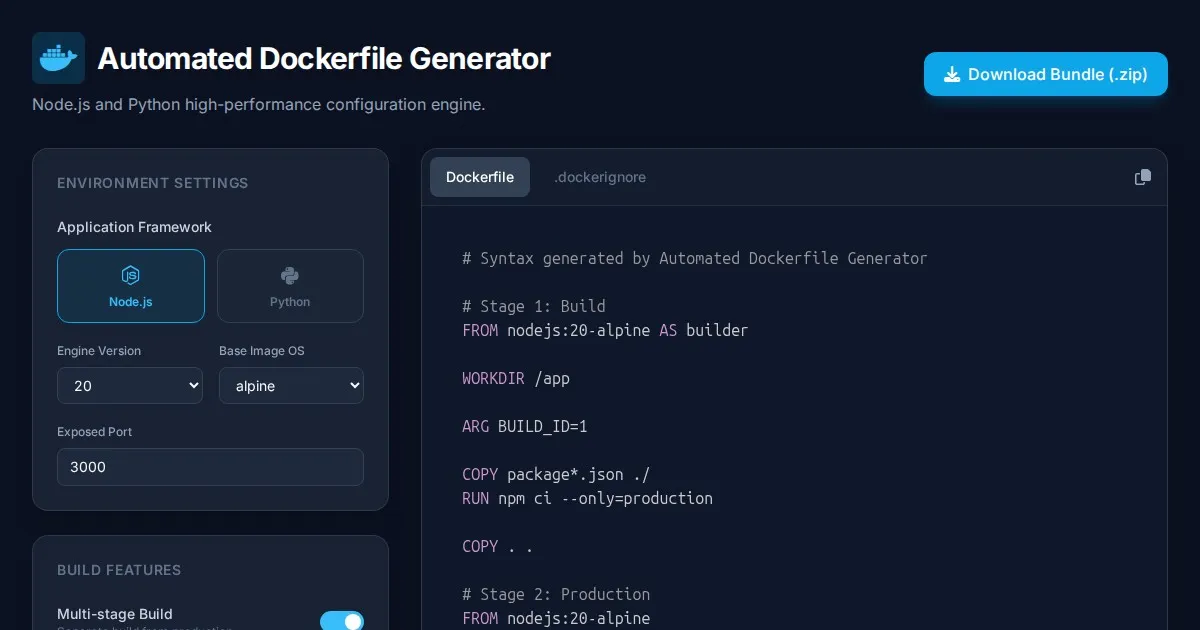
Automated Dockerfile Generator for Node.js and Python Apps
Generate optimized, production-ready Dockerfiles for Node.js and Python applications instantly. Customize base images, port configurations, and dependencies.

Free Base64 Image Data URI to File Size Calculator
Accurately calculate the file size of Base64 encoded image data strings. This free, web-based tool helps developers estimate binary file sizes for web apps.

Free Online Color Blindness Simulator & Image Filter Tool
Easily simulate color vision deficiencies like protanopia, deuteranopia, and tritanopia. Upload images to test design accessibility for color blindness.
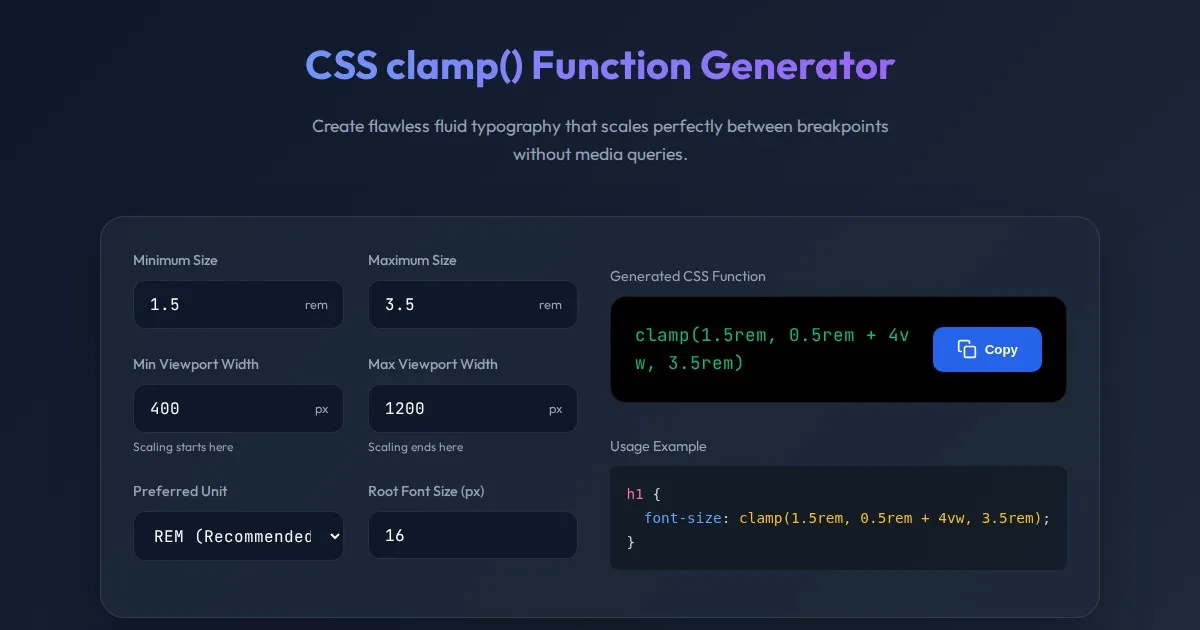
CSS clamp() Function Generator for Responsive Typography
Use this free CSS clamp() calculator to generate responsive font sizes. Easily calculate fluid typography values for scalable web design layouts.
Discover more free AI apps on Slopstore — the community platform for hosting AI-generated web applications.