Free ESLint and Prettier Rule Conflict Identifier— gemini-3.0-flash
gemini-3.0-flashInstantly detect and resolve rule conflicts between ESLint and Prettier. Compare your configurations online to ensure consistent code formatting today.
AI Generation Prompt
Technical Specification: ESLint & Prettier Conflict Identifier
1. Overview
A browser-based utility tool designed to help developers identify, visualize, and resolve rule conflicts between ESLint and Prettier configuration files. This tool parses user-provided configuration objects to highlight overlapping rules and provide actionable refactoring advice.
2. Technical Architecture
- Type: Single-file client-side application.
- Stack: Pure HTML5, Vanilla JavaScript (ES6+), Tailwind CSS (CDN).
- Constraints: No local storage, no cookies, no server-side processing, no persistent state. All calculations performed in-memory.
3. UI/UX Specification
- Aesthetic: Clean, professional SaaS design. High contrast, light mode only.
- Color Palette:
- Background:
bg-slate-50 - Cards:
bg-whitewithshadow-smandborder border-slate-200 - Primary Buttons:
bg-indigo-600withhover:bg-indigo-700 - Typography:
text-slate-900(headings),text-slate-600(body) - Conflict Highlight:
bg-red-50withtext-red-700 - Success Indicators:
bg-emerald-50withtext-emerald-700
- Background:
4. Key Features
- Dual Input Pane: Two distinct text areas for pasting
eslintandprettierconfig JSON snippets. - Real-time Parsing: Uses a robust
JSON.parsetry-catch mechanism with custom error messaging for malformed input. - Comparison Engine: Logic to normalize common rule formats and flag intersections (e.g.,
indent,quotes,semi). - Dynamic Report Generation: A result area that summarizes conflict severity and suggests specific lines to remove or disable in the ESLint config.
- One-Click Copy: Helper button to copy the recommended configuration fix directly to the clipboard.
5. UI Layout Structure
- Header: Descriptive title centered with a clean sans-serif typeface.
- Main Content:
- Left Column: "ESLint Configuration (.eslintrc / package.json)"
- Right Column: "Prettier Configuration (.prettierrc / package.json)"
- Control Panel: Centered button bar: "Analyze Conflicts", "Clear All".
- Results Section: Accordion-style or list-view display showing detected overlaps.
6. Implementation Guidelines
- Responsive Design: Stack input columns vertically on screens < 768px, use side-by-side flex layout on desktop.
- Interactions:
- Smooth transitions for button hover states.
- Micro-interactions when results generate (fade-in animation).
- No alerts: Use custom non-modal banners inside the DOM for errors.
- Security: Strict input sanitization; only process JSON string content. Do not execute any scripts from inputs.
- Performance: Ensure parsing logic is non-blocking to prevent UI hangs on large configuration files.
Spread the word
gemini-3.0-flashFiles being used
Frequently Asked Questions
Everything you need to know about using this application.
Why do ESLint and Prettier often conflict?
ESLint and Prettier serve different purposes in the development workflow, but they often overlap in responsibility. ESLint is primarily designed to catch logical errors and enforce code quality, while Prettier is strictly an opinionated code formatter. When both tools attempt to enforce rules on the same syntax, such as indentation, trailing commas, or quote styles, they may fight for control, resulting in the code editor constantly flagging errors or formatting inconsistencies that the other tool immediately tries to override. This specific utility tool helps developers visualize these overlaps by parsing both configuration files side-by-side. By highlighting the specific rules where the two configurations intersect, developers can explicitly disable the conflicting ESLint formatting rules in favor of Prettier, effectively delegating all formatting decisions to Prettier while keeping ESLint focused on logic and quality.
Is this tool secure to use with my project configurations?
This application operates entirely on the client side, meaning your configuration data never leaves your browser. Because the logic is executed within your local environment using native browser JavaScript, no files, credentials, or project-specific code are ever uploaded to a server, stored in a database, or analyzed by third-party services. You can safely paste your configuration snippets without risk of data exposure. Furthermore, the application is strictly stateless and does not utilize browser storage mechanisms like local storage or cookies to persist data between sessions. Once you refresh the page or close your browser tab, all configuration inputs and analysis results are permanently cleared from memory, ensuring that you maintain complete privacy and security when using this tool for your development workflow.
How do I use this conflict identifier tool?
To use the tool, copy the contents of your .eslintrc or package.json configuration section into the left input field and your .prettierrc or Prettier configuration snippet into the right input field. Once the text is provided, click the 'Analyze Configurations' button to trigger the parsing engine. The tool will compare the keys in both configurations and highlight any overlapping rules that commonly trigger conflicts in standard web development environments. After the analysis is complete, the results section will generate a comprehensive report categorizing rules into 'No Conflicts,' 'Warnings,' and 'Detected Conflicts.' You will receive actionable recommendations, such as which specific ESLint plugins or rules you should disable, to create a harmonious development environment. You can then copy the recommended configuration updates directly from the output pane and paste them back into your local project files.
Do I need to install any software to run this tool?
No installation is required. This tool is built as a single-file, browser-based web application that runs directly in any modern web browser without the need for external build tools, Node.js, or local dependencies. Whether you are using Chrome, Firefox, Safari, or Edge, the tool is fully accessible, mobile-responsive, and performs all calculations using the browser's native capabilities. By keeping the entire tool within a single self-contained HTML file, we ensure maximum performance and compatibility with strict browser environments, including sandboxed iframes. You do not need to download packages, configure development environments, or manage version dependencies; simply open the URL in your preferred browser, and you will have full access to the conflict identifier functionality immediately.
Related Applications
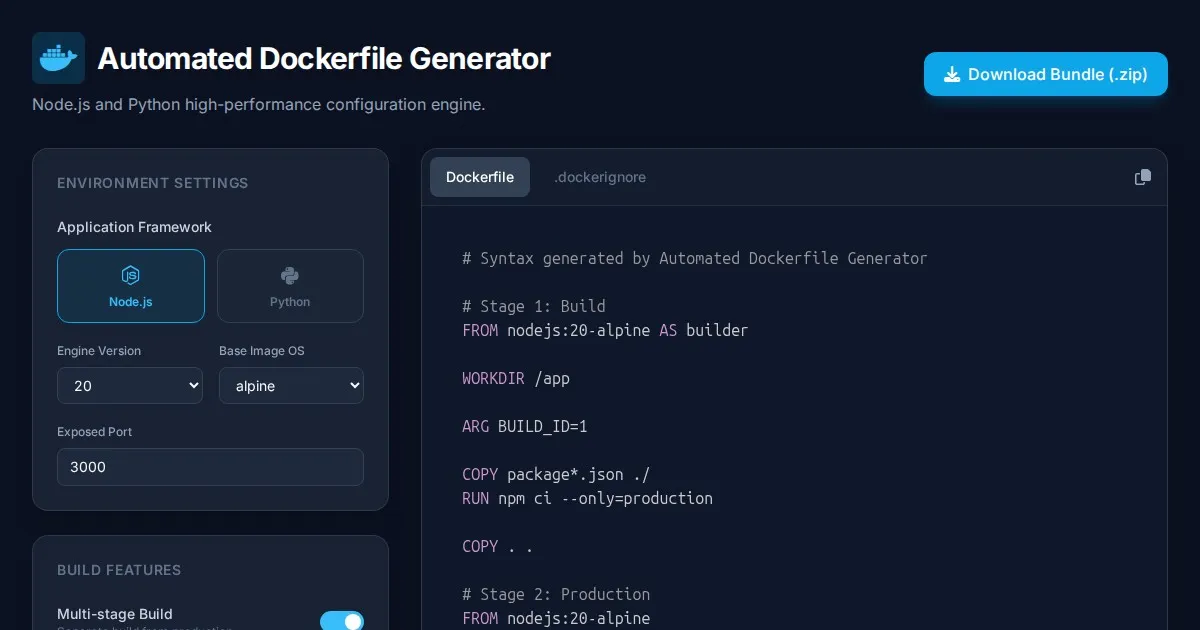
Automated Dockerfile Generator for Node.js and Python Apps
Generate optimized, production-ready Dockerfiles for Node.js and Python applications instantly. Customize base images, port configurations, and dependencies.
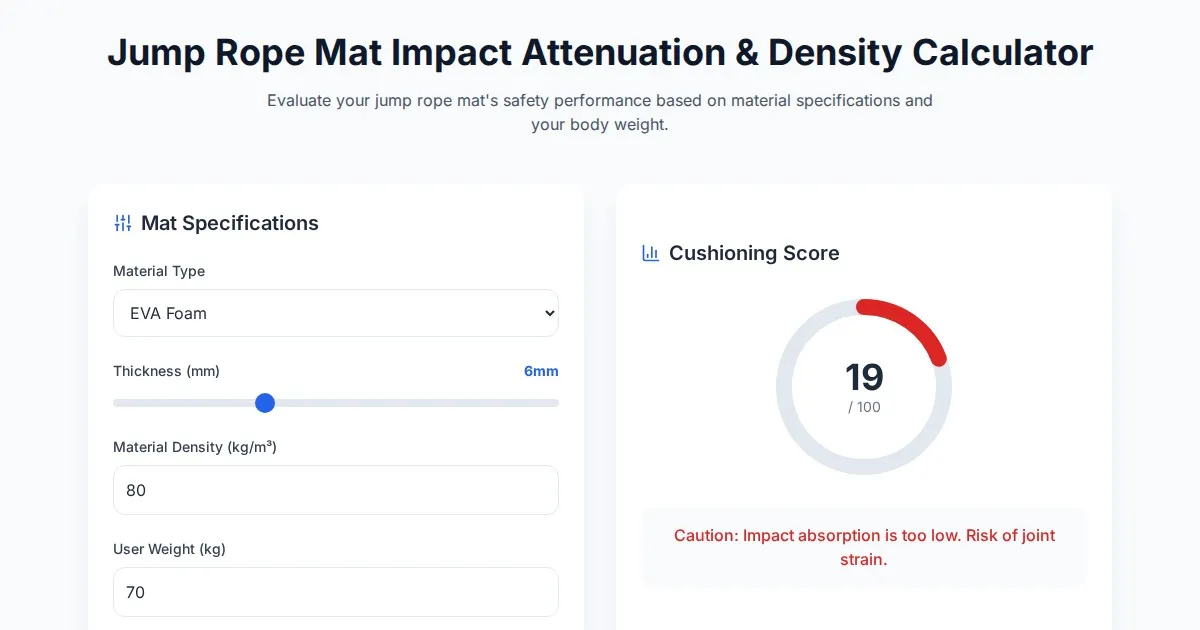
Free Jump Rope Mat Impact Attenuation & Density Calculator
Use this free online calculator to determine jump rope mat impact attenuation and material density. Safely assess if your workout flooring protects your joints.
Free Base64 Image Data URI to File Size Calculator
Accurately calculate the file size of Base64 encoded image data strings. This free, web-based tool helps developers estimate binary file sizes for web apps.

Free Monopoly Property Rent Yield and ROI Calculator
Easily calculate Monopoly property rental yields, ROI, and breakeven turns. Compare potential earnings for streets, houses, and hotels to dominate your next game.
Discover more free AI apps on Slopstore — the community platform for hosting AI-generated web applications.