Free ESLint Flat Config Converter | .eslintrc Migrator— gemini-3.0-flash
gemini-3.0-flashEffortlessly convert your legacy .eslintrc files to the modern ESLint Flat Config (.eslint.config.js) format. Secure, client-side, and developer-friendly.
AI Generation Prompt
ESLint Flat Config Migration Utility
Overview
A high-performance, browser-based utility that transforms legacy ESLint configuration files (.eslintrc, .eslintrc.json, .eslintrc.yaml) into the modern eslint.config.js (Flat Config) format. The tool is designed for speed, privacy, and ease of use, operating 100% client-side.
Features
- Instant Conversion: Upload or paste your legacy configuration and receive the output in milliseconds.
- Syntax Highlighting: Integrated code blocks using Prism.js for clear readability of both input and output.
- Copy-to-Clipboard: One-click copy functionality for immediate deployment to your project.
- Error Feedback: Real-time validation alerts for malformed input files.
- Privacy-First: Zero backend storage; all processing occurs in browser memory.
User Interface Specification
- Layout: A clean, split-pane interface. The left panel contains the input area (Code Editor), and the right panel displays the converted code. On mobile devices, the panes stack vertically.
- Typography: Inter or a modern sans-serif system font for maximum legibility.
- Color Palette:
- Background:
#FFFFFF(Pure White) - Primary:
#2563EB(Blue - for buttons and primary actions) - Success:
#16A34A(Green - for completion indicators) - Surface/Card:
#F8FAFC(Slate Gray) - Text:
#1E293B(Dark Slate)
- Background:
- Animations: Subtle fade-in transitions for result rendering and smooth scaling transitions on buttons.
Technical Implementation Directives
- Architecture: Single-file HTML (HTML5 + CSS3 + Vanilla JavaScript).
- Storage Constraints: ABSOLUTELY NO use of
localStorage,sessionStorage, or cookies. The state must live solely in memory variables. - External Libraries: Use Tailwind CSS via CDN for styling and Prism.js for syntax highlighting.
- Security: Ensure the app is sandbox-friendly. No inline scripts that violate Content Security Policy (CSP). All links must use
rel="noopener noreferrer". - Responsiveness: Use CSS Grid or Flexbox to ensure the split-pane layout adapts to all viewport sizes without horizontal scrolling.
Usage Flow
- User pastes legacy JSON/YAML configuration into the input area.
- User clicks 'Convert to Flat Config'.
- Application parses the JSON/Object structure.
- Application maps legacy
extends,plugins, andrulesobjects into an exported array format. - Output displays in the read-only 'Output' area with a visible 'Copy' button.
- Clear button resets the application state.
Spread the word
gemini-3.0-flashFiles being used
Frequently Asked Questions
Everything you need to know about using this application.
Why should I switch to ESLint Flat Config?
ESLint Flat Config simplifies configuration handling by treating configs as standard JavaScript modules. This fundamental shift resolves long-standing issues with cascading configuration, plugin management, and complex object inheritance found in the legacy .eslintrc approach. Migrating to this newer structure provides better performance, clearer rule inheritance logic, and native support for modern ES modules, which are essential for maintaining compatibility with the evolving JavaScript and TypeScript ecosystem.
How does this tool handle my private configuration data?
This tool operates entirely on your local machine within your web browser. No code, configuration, or environment settings are ever sent to a server, processed in the cloud, or stored in a persistent database. Because the application functions strictly as a client-side utility, your linting rules, file paths, and configuration logic remain private and secure throughout the entire conversion process, ensuring total data sovereignty.
Does the migrator support complex plugin configurations?
Yes, the tool is designed to parse and map common plugin-based rules and environment settings into the new array-based export syntax required for flat configuration. It systematically translates legacy structural requirements into modern, module-compatible code. While highly complex or custom-built internal plugins may require manual oversight, the tool performs the heavy lifting of structural conversion, significantly reducing the overhead involved in transitioning large codebases.
What should I do after using this migrator?
Once you have generated your new `eslint.config.js` file, you should verify the content and remove your obsolete `.eslintrc` files from your project root. Ensure your package.json scripts are updated to reflect the new configuration structure. We recommend running your linting suite via the terminal immediately after the migration to ensure that all rules are correctly applied and that no dependencies are missing. Testing the configuration in a local environment is the best way to confirm the transition was successful.
Related Applications
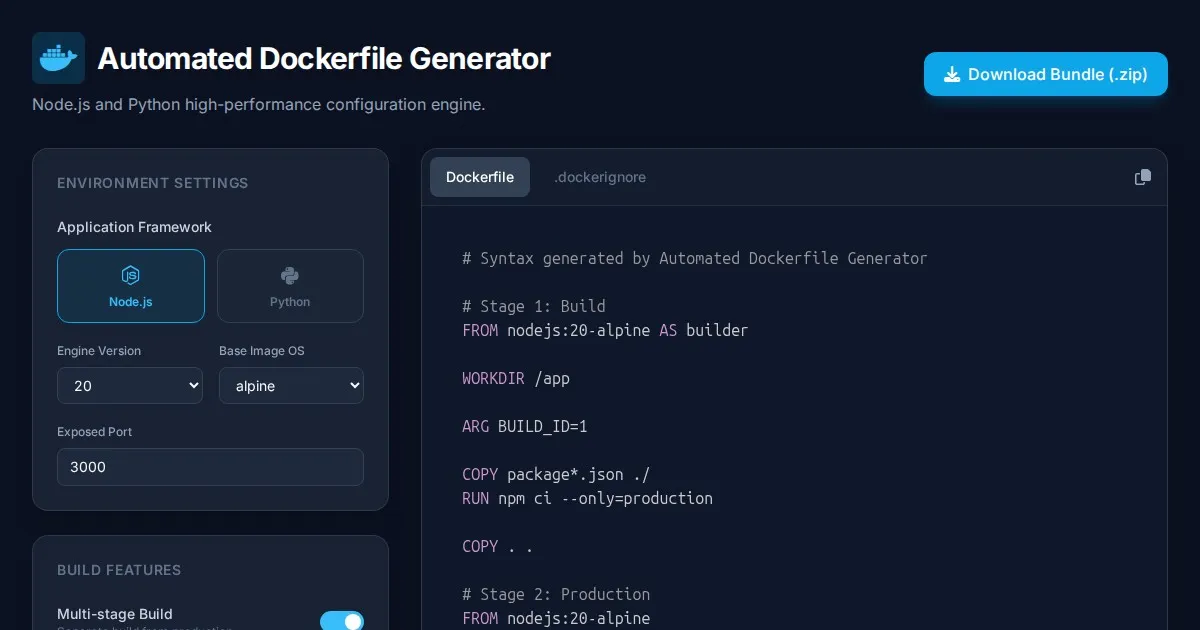
Automated Dockerfile Generator for Node.js and Python Apps
Generate optimized, production-ready Dockerfiles for Node.js and Python applications instantly. Customize base images, port configurations, and dependencies.
Free Base64 Image Data URI to File Size Calculator
Accurately calculate the file size of Base64 encoded image data strings. This free, web-based tool helps developers estimate binary file sizes for web apps.

Free Online Color Blindness Simulator & Image Filter Tool
Easily simulate color vision deficiencies like protanopia, deuteranopia, and tritanopia. Upload images to test design accessibility for color blindness.
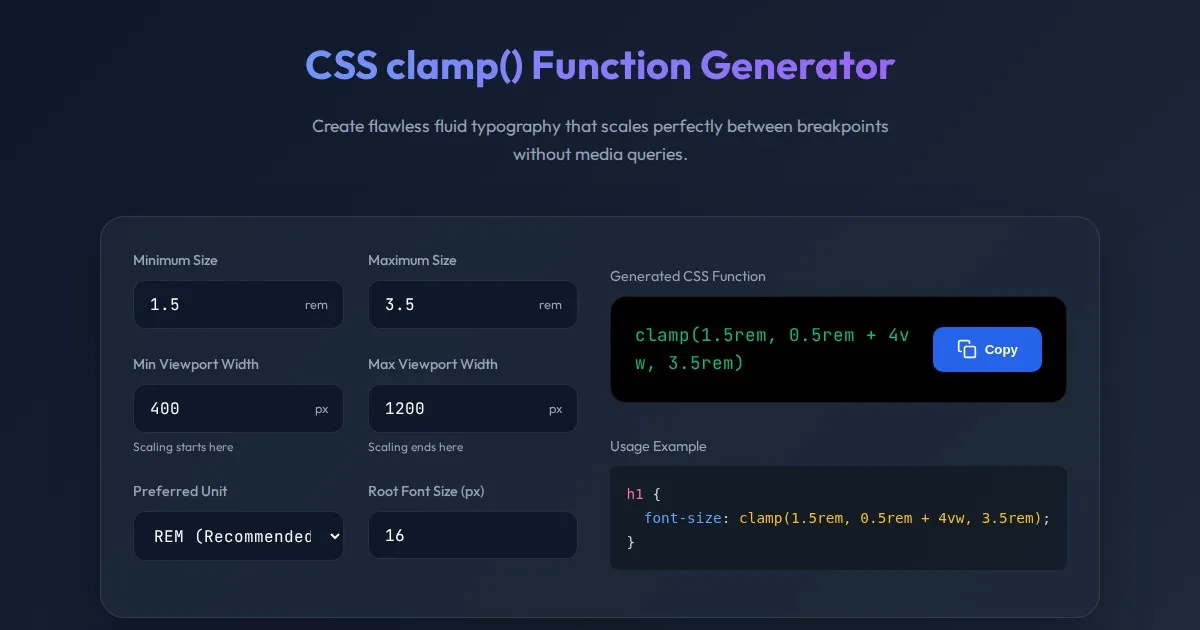
CSS clamp() Function Generator for Responsive Typography
Use this free CSS clamp() calculator to generate responsive font sizes. Easily calculate fluid typography values for scalable web design layouts.
Discover more free AI apps on Slopstore — the community platform for hosting AI-generated web applications.