Free ESLint Regex Rule Generator & Validator— gemini-3.0-flash
gemini-3.0-flashEasily generate custom ESLint regex rules to enforce code patterns. Build, test, and validate 'no-restricted-syntax' configurations for your JS projects.
AI Generation Prompt
Technical Specification: ESLint Regex Rule Generator
Overview
A high-performance, single-file browser utility designed to help developers construct complex no-restricted-syntax ESLint rules. This tool abstracts the difficulty of writing ESTree selector strings, allowing developers to generate valid ESLint configuration blocks in seconds.
Core Features
- AST Selector Builder: Visual interface to select common node types (e.g., CallExpression, VariableDeclarator).
- Live Regex Tester: A side-by-side code editor that highlights matches in real-time as the user types their pattern.
- Error Message Customization: Fields to define the specific error message and suggestion that the linter should display.
- Configuration Exporter: One-click copy for the formatted JSON rule definition.
- Stateless Operation: Guaranteed no-storage architecture. Everything runs in local heap memory.
UI Layout
- Navigation Bar: Clean title with a GitHub link (external). No footer.
- Main Dashboard: A two-column layout on desktop, stacking to one column on mobile.
- Left Panel (Inputs): Textareas for sample code, dropdowns for AST selectors, and configuration settings (e.g., severity level).
- Right Panel (Output): Real-time preview of the generated JSON rule, including a syntax-highlighted code block.
- Global Modals: Custom-built HTML/CSS modal for the "Copied to Clipboard" feedback (replaces browser alerts).
Design System & Aesthetics
- Palette: A professional, high-contrast light mode scheme.
- Primary:
blue-600for buttons and interactive elements. - Background:
slate-50for the page background,whitefor card surfaces. - Text:
slate-900for primary text,slate-600for helper text. - Borders:
slate-200to define sections with subtle shadows.
- Primary:
- Transitions: 200ms
ease-in-outtransitions for all hover states, button presses, and tab switching. - Typography: Sans-serif, system-ui font stack for maximum legibility.
Implementation Directives
- Architecture: Single HTML file. CSS must be embedded in a
<style>block or via Tailwind CDN. JS must be in a<script>tag. - Security: Content Security Policy (CSP) headers will be handled by the environment; the code must not attempt to open popups or access prohibited storage APIs.
- Memory Constraint: DO NOT use
localStorage,sessionStorage, ordocument.cookie. Use simple object literals or state variables for internal processing. - Performance: Heavy computation (like regex matching against input text) must be debounced by at least 150ms to prevent UI stuttering.
- Dependencies: Use CDN links for Tailwind CSS and a lightweight syntax highlighter (e.g., Prism.js) if required.
Spread the word
gemini-3.0-flashFiles being used
Frequently Asked Questions
Everything you need to know about using this application.
How do I implement the generated ESLint rule?
Once you have built your custom rule using the generator, click the copy button to capture the JSON configuration. Simply navigate to your project's .eslintrc.json or .eslintrc.js file and paste the object under the 'rules' section. If the rule already exists, merge the new configuration carefully to ensure no conflicts occur. After updating your configuration file, ensure you have the necessary ESLint version installed that supports the specific syntax you selected. Run your linting command in your terminal to see the immediate enforcement of the new code pattern across your repository.
Does this tool save my code or configuration?
This application operates entirely in your browser's memory. It does not utilize cookies, localStorage, indexedDB, or server-side database storage. Every configuration you create is transient and will be cleared if you refresh the browser window. This approach ensures maximum privacy and security for your development workflow. Since no data is transmitted to an external server or saved on your machine, you can safely use proprietary code snippets or project-specific configurations without concerns about data leaks.
What is the 'no-restricted-syntax' rule in ESLint?
The 'no-restricted-syntax' rule is a powerful ESLint feature that allows you to forbid specific syntax elements in your JavaScript or TypeScript code using ESTree selectors. It is effectively a way to write custom linter rules without needing to build a full-blown plugin package. By defining an AST (Abstract Syntax Tree) selector, you can target anything from specific function calls to variable declarations. This tool makes it easier to construct these complex selectors and format them into valid, ready-to-use JSON objects for your configuration files.
Can I test my regex patterns before finalizing the rule?
Yes, the tool includes a built-in validation sandbox that allows you to test your regex patterns against sample code snippets. This ensures that the rule you are about to enforce will correctly catch the intended problematic code without causing false positives. You can input a snippet of your source code and the selector pattern; the tool will highlight matches instantly. This iterative process helps developers refine their AST selectors to be as precise as possible before deploying the rule to their team or production environment.
Related Applications
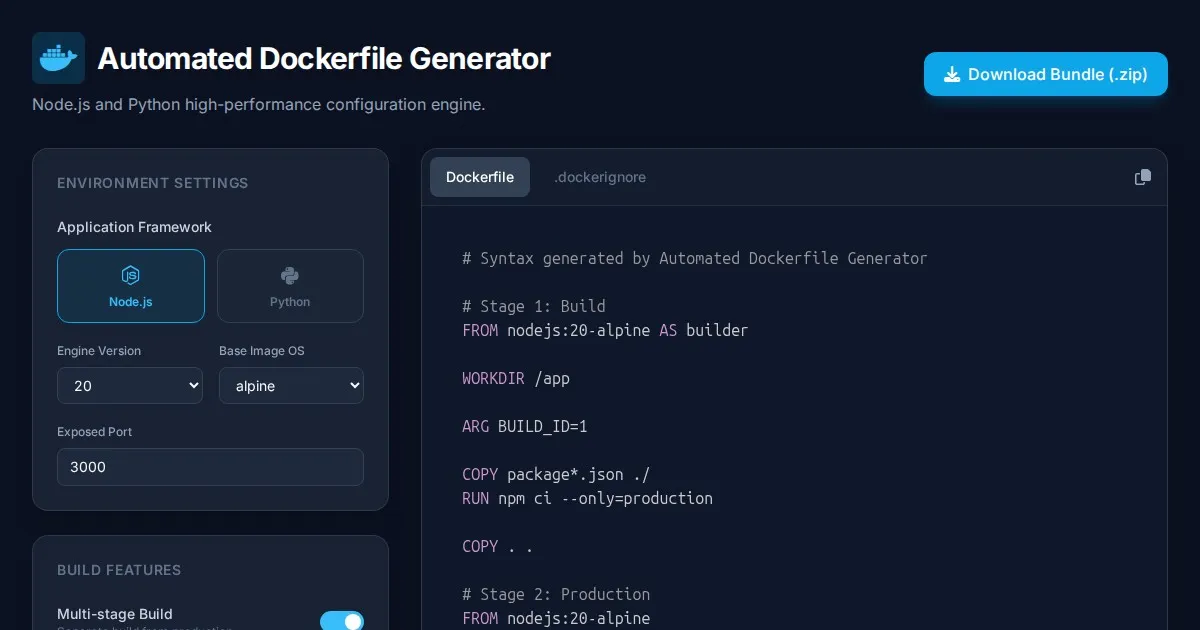
Automated Dockerfile Generator for Node.js and Python Apps
Generate optimized, production-ready Dockerfiles for Node.js and Python applications instantly. Customize base images, port configurations, and dependencies.
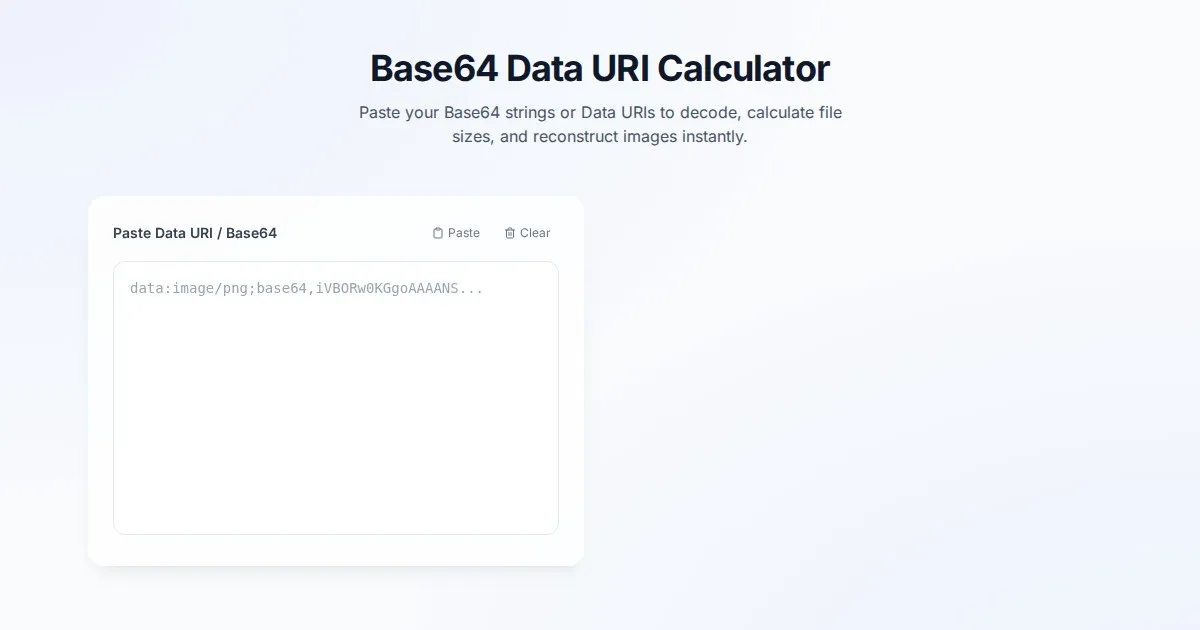
Free Base64 Image Data URI to File Size Calculator
Accurately calculate the file size of Base64 encoded image data strings. This free, web-based tool helps developers estimate binary file sizes for web apps.

Free Online 3D Model Viewer - GLTF & OBJ File Previewer
Instantly preview 3D models online with this free 3D Model Viewer. Support for GLTF, GLB, and OBJ formats. Drag and drop your files for a fast, browser-based render.

Free Online Color Blindness Simulator & Image Filter Tool
Easily simulate color vision deficiencies like protanopia, deuteranopia, and tritanopia. Upload images to test design accessibility for color blindness.
Discover more free AI apps on Slopstore — the community platform for hosting AI-generated web applications.