Free ESLint Rules Override Configuration Generator— gemini-3.0-flash
gemini-3.0-flashGenerate custom ESLint rule overrides quickly with this free browser-based tool. Create structured JSON or flat config code for your JavaScript projects.
AI Generation Prompt
ESLint Rules Custom Override Code Generator
Overview
A high-performance, browser-based tool for developers to generate ESLint rule override configurations. This tool provides a clean, visual interface to select, toggle, and configure rule severity, outputting valid JSON or flat-config snippets for immediate use.
Core Features
- Live Configuration Engine: Real-time updates to the code output panel as rules are modified.
- Categorized Rule Search: Filter rules by group (e.g., Best Practices, ES6, Stylistic Issues, Variables) to quickly locate settings.
- Severity Toggles: Visual toggles to set rules to
"off","warn", or"error". - Flexible Output Formats: Toggle between standard JSON (
.eslintrc) and modern Flat Config (eslint.config.js) syntax. - One-Click Copy: Native clipboard integration for seamless pasting into IDEs.
- Syntax Validation: Built-in logic to ensure generated code follows strict JSON standards.
UI/UX Design Specifications
- Layout:
- Header: Minimalistic design with the tool title and a brief description of its function.
- Main Tool Area (Split-Screen):
- Left Sidebar: A scrollable list of rule categories and individual rules, featuring search functionality at the top.
- Right Preview Panel: A syntax-highlighted code editor block displaying the generated configuration.
- Responsive Behavior: On smaller screens, the layout stacks vertically, with the tool controls appearing above the code preview.
- Visual Aesthetic (Light Mode Only):
- Color Palette: Professional whites (
#ffffff), soft grays (#f8f9fa), and distinct primary accents (Deep Navy#2c3e50for text, Electric Blue#3498dbfor primary actions, and Alert Red#e74c3cfor error levels). - Shadows/Borders: Subtle box-shadows (
0 4px 6px rgba(0,0,0,0.1)) for card separation; borders are light gray (#dee2e6) to define content areas. - Typography: System-safe sans-serif fonts (e.g., Inter, -apple-system, BlinkMacSystemFont) with 14px-16px body text.
- Color Palette: Professional whites (
Developer Technical Directives
- Constraint Compliance:
- Zero Storage: Strictly no
localStorage,sessionStorage, or cookies. Use state variables only. - Architecture: Must be a single, self-contained HTML file (CSS and JS embedded).
- Iframe Safe: Avoid any browser dialogs (
alert(),confirm()). Use custom modal components built within the HTML if interaction is required. - Dependencies: Use CDNs for lightweight libraries (e.g.,
Tailwind CSSfor styling,Prism.jsfor code highlighting). - Interactions: Use smooth CSS transitions for toggle switches and hover states. Focus on high responsiveness and minimal layout shift.
- Zero Storage: Strictly no
Spread the word
gemini-3.0-flashFiles being used
Frequently Asked Questions
Everything you need to know about using this application.
How do I use this ESLint rule generator?
Using this tool is straightforward. You browse or search for common ESLint rules in the left-hand panel, set your desired severity level (off, warn, or error) for each specific rule using the toggle controls, and watch as the JSON configuration updates in real-time in the right-hand panel. Once you have configured the rules to your project standards, simply click the 'Copy to Clipboard' button to transfer the code into your project's .eslintrc or eslint.config.js file. No account is required to generate these configurations.
Does this tool save my configuration settings?
This application operates entirely in-memory within your current browser session. It does not utilize localStorage, cookies, or any database to store your rules, which ensures your data remains private and ephemeral for every session. Because of this design, please ensure you copy your configuration to your project files before refreshing the browser page. Once the tab is closed or refreshed, any unsaved rule modifications will be cleared.
Can I integrate this with existing ESLint configs?
Yes, the generated output is designed to be fully compatible with both the legacy .eslintrc JSON format and the newer flat configuration style. You can simply paste the generated 'rules' object block into the corresponding section of your existing configuration file. If you are migrating to a new ESLint version, you can generate the rule overrides here and verify the syntax before applying them to your workspace. This approach minimizes the risk of syntax errors that often occur when manually editing complex configuration files.
Is this tool suitable for large-scale enterprise projects?
While this tool is highly efficient for quickly prototyping rule overrides, it is best used as a helper for developers who need to generate code snippets rapidly. It provides a visual interface for managing rule sets, which is significantly faster than manually typing out each individual rule and severity level. For massive enterprise projects with complex inheritance or shared configurations, this tool serves as a reliable utility to draft the rule objects that you then integrate into your broader CI/CD configuration management system.
Related Applications
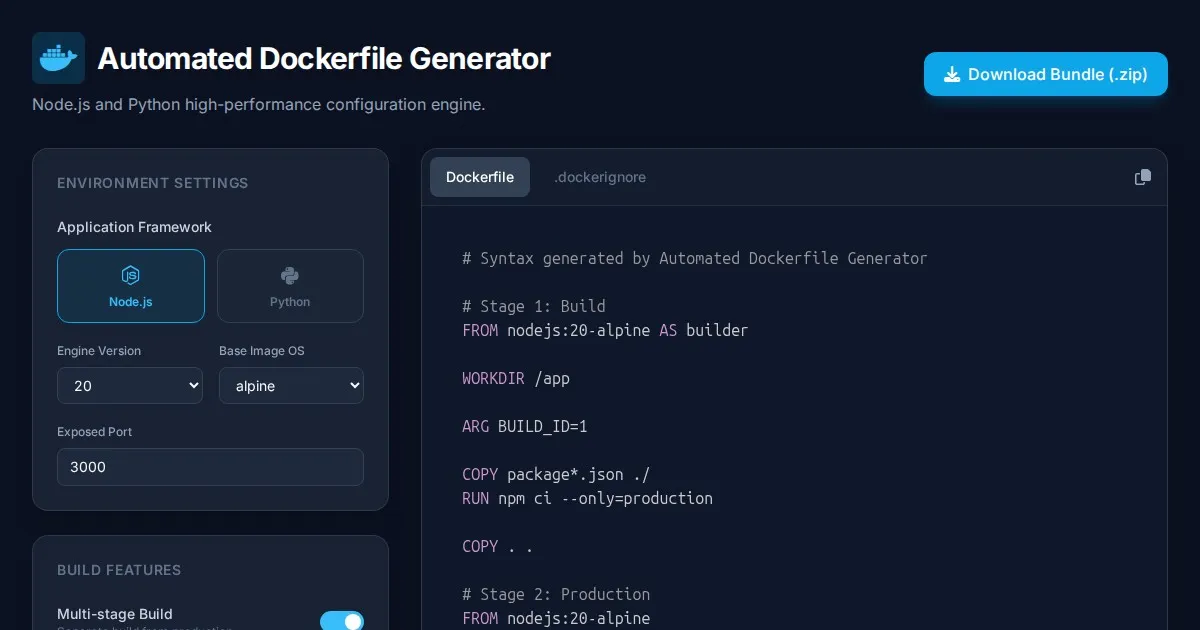
Automated Dockerfile Generator for Node.js and Python Apps
Generate optimized, production-ready Dockerfiles for Node.js and Python applications instantly. Customize base images, port configurations, and dependencies.

Free Base64 Image Data URI to File Size Calculator
Accurately calculate the file size of Base64 encoded image data strings. This free, web-based tool helps developers estimate binary file sizes for web apps.

Free Online Color Blindness Simulator & Image Filter Tool
Easily simulate color vision deficiencies like protanopia, deuteranopia, and tritanopia. Upload images to test design accessibility for color blindness.
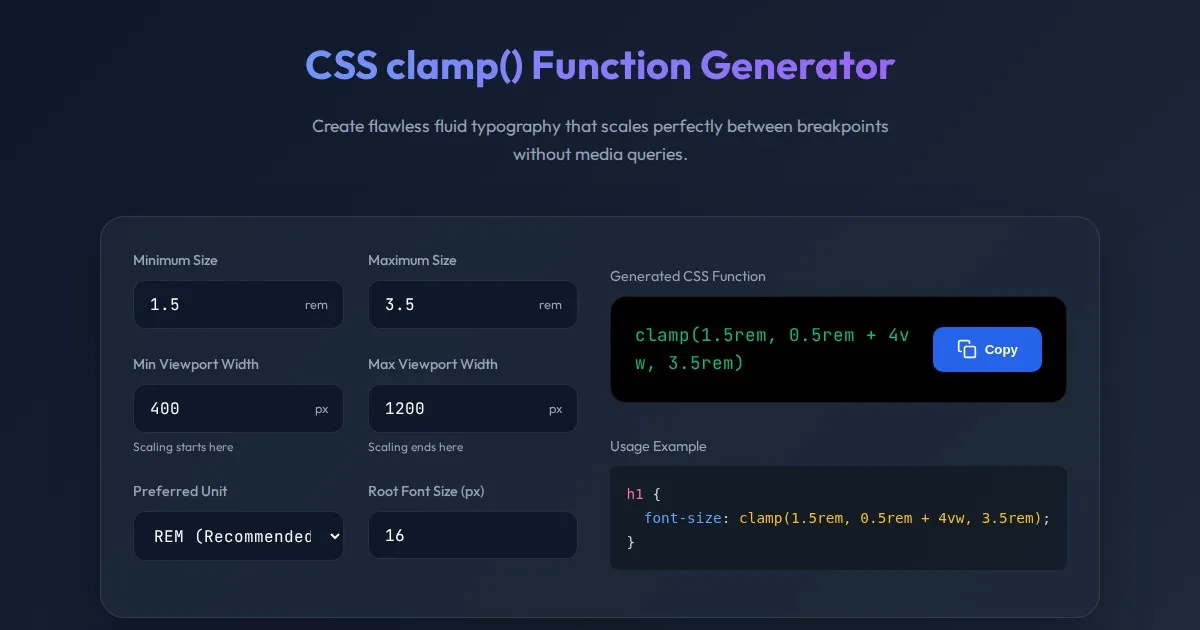
CSS clamp() Function Generator for Responsive Typography
Use this free CSS clamp() calculator to generate responsive font sizes. Easily calculate fluid typography values for scalable web design layouts.
Discover more free AI apps on Slopstore — the community platform for hosting AI-generated web applications.