Free Fiber Optic Critical Angle Calculator & Snell's Law Tool— gemini-3.0-flash
gemini-3.0-flashCalculate the critical angle for total internal reflection in fiber optics. Determine the numerical aperture and visualize light behavior with this free tool.
AI Generation Prompt
Fiber Optic Critical Angle & Numerical Aperture Calculator
Overview
A high-precision, browser-based physics utility designed for optical engineers and students to calculate the critical angle of incidence and Numerical Aperture (NA) for fiber optic waveguides. This tool visualizes the light ray interaction between the fiber core and cladding, providing instant feedback on optical performance.
Core Features
- Live Calculation Engine: Immediate, event-driven calculation of critical angle and NA as numerical inputs change.
- Dynamic SVG Visualization: A real-time, interactive diagram illustrating the core, cladding, and the angle of incidence relative to the normal line.
- Input Validation: Robust error handling that displays custom UI warnings if the core index is lower than or equal to the cladding index (as TIR is mathematically impossible in these scenarios).
- Precision Controls: Sliders and manual text inputs allowing for incremental adjustments to refractive indices.
- Responsive Design: Mobile-friendly layout that scales seamlessly from desktop viewports to narrow mobile devices.
UI/UX Specification
- Layout:
- Header: Simple, clean application title with a brief tagline.
- Input Section: Two primary input fields for Core Index (n1) and Cladding Index (n2) with descriptive labels.
- Visual Section: A central SVG drawing area depicting the light interface. The ray angle reacts to input changes.
- Result Section: A summary dashboard displaying the Critical Angle (degrees) and Numerical Aperture (unitless) in high-contrast typography.
- Aesthetic:
- Palette: Crisp white background (#FFFFFF), slate grey text (#334155), primary action accents in professional cobalt blue (#2563EB).
- Typography: System-sans font stack (Inter/system-ui) for maximum readability.
- Micro-interactions: Subtle transitions on hover for inputs and smooth CSS animations when updating calculation results.
Technical Implementation Directives
- Architecture: Pure Vanilla JavaScript, HTML5, and CSS3. Absolutely no build steps.
- Data Handling: State must be held in application memory (JS variables). No use of
localStorage,sessionStorage, or cookies to remain fully compliant with sandboxed iframe environments. - Styling: Utilize Tailwind CSS via CDN for rapid, consistent styling. Ensure no dark mode is implemented; force a bright, professional light-mode.
- Dependencies: Use standard libraries via CDN (e.g., Lucide icons, Tailwind) only if necessary.
- Security: Strict adherence to no-popup policy. All interactions must remain within the DOM (custom modal overlays for errors/info).
- Performance: High-performance SVG rendering for the ray tracing visual; prioritize hardware acceleration via CSS transforms.
Spread the word
gemini-3.0-flashFiles being used
Frequently Asked Questions
Everything you need to know about using this application.
What is the critical angle for total internal reflection in fiber optics?
The critical angle is the angle of incidence above which light is entirely reflected back into the medium with the higher refractive index, rather than passing into the medium with the lower refractive index. In fiber optic communications, this phenomenon is what allows light to travel through the core of the fiber without escaping into the cladding. When a light ray strikes the interface between the core and the cladding at an angle greater than this critical threshold, it experiences total internal reflection. This is a fundamental principle in telecommunications engineering, ensuring minimal signal loss over long distances.
How does this tool calculate the critical angle?
This tool utilizes Snell's Law to derive the critical angle based on the refractive indices of the core and the cladding. The formula used is θc = arcsin(n2 / n1), where n1 represents the refractive index of the core and n2 represents the refractive index of the cladding. By inputting these two specific refractive index values, the calculator automatically computes the inverse sine to provide the exact angle in degrees. It also calculates the Numerical Aperture (NA) by taking the square root of the difference of the squares of the refractive indices, providing a complete optical profile.
What is the significance of the Numerical Aperture (NA)?
Numerical Aperture is a dimensionless number that characterizes the range of angles within which the system can accept or emit light. It is essentially a measure of the light-gathering capability of an optical fiber, determining how efficiently it can couple light from a source like a laser or LED into the fiber core. A higher NA generally makes it easier to inject light into the fiber, but it can also increase signal dispersion, which limits the bandwidth. Engineers use this value to balance the trade-offs between coupling efficiency and the maximum data transmission capacity of the optical network.
Why is this web-based utility useful for optics professionals?
This tool provides a rapid, browser-based solution for quickly verifying the optical properties of fiber designs without needing specialized desktop simulation software or manual scientific calculators. Its lightweight design ensures it works instantly in any modern web browser. It is an essential resource for students, researchers, and network technicians who need to perform field verification or academic calculations on the fly. By focusing solely on the core calculation and visualization, it removes the complexity of larger simulation suites for everyday tasks.
Related Applications
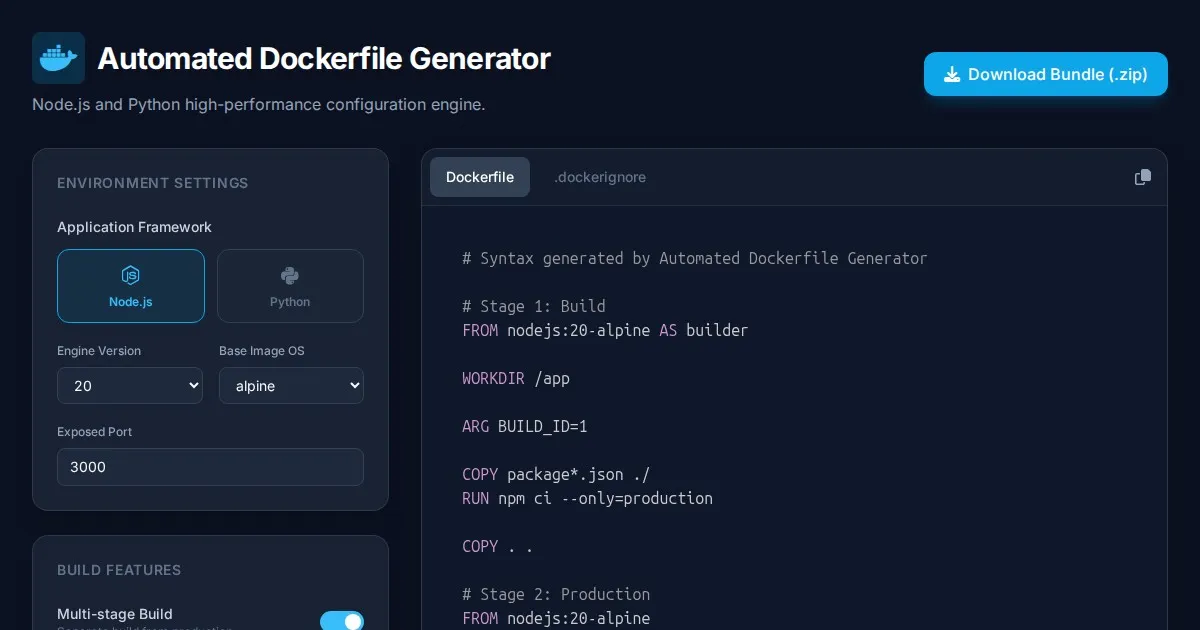
Automated Dockerfile Generator for Node.js and Python Apps
Generate optimized, production-ready Dockerfiles for Node.js and Python applications instantly. Customize base images, port configurations, and dependencies.
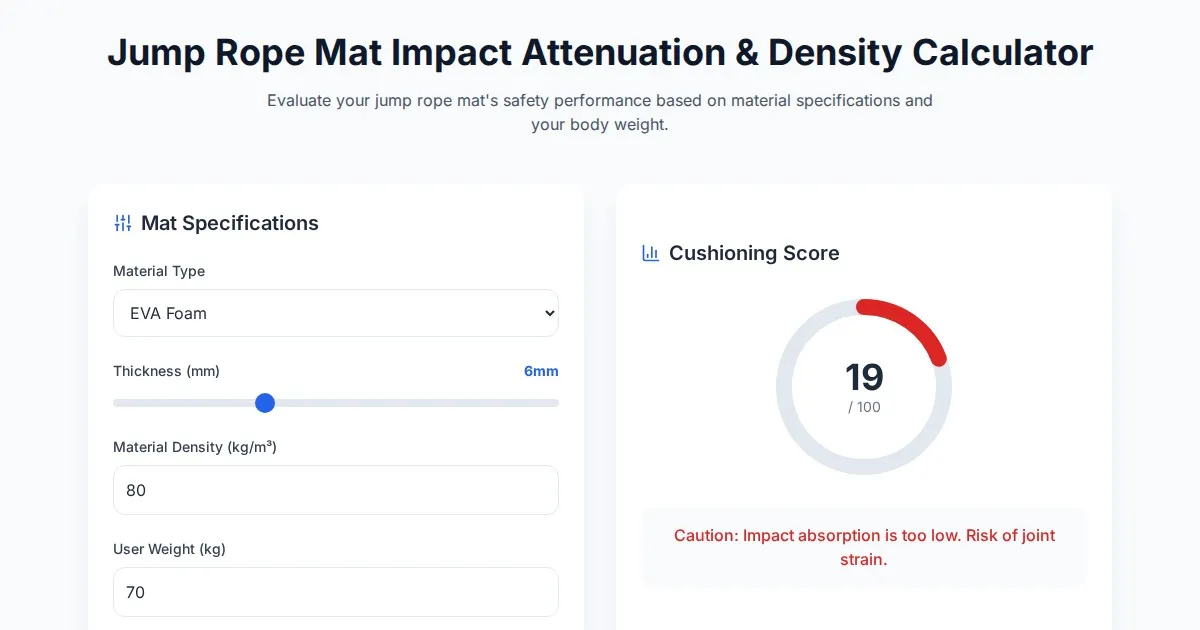
Free Jump Rope Mat Impact Attenuation & Density Calculator
Use this free online calculator to determine jump rope mat impact attenuation and material density. Safely assess if your workout flooring protects your joints.
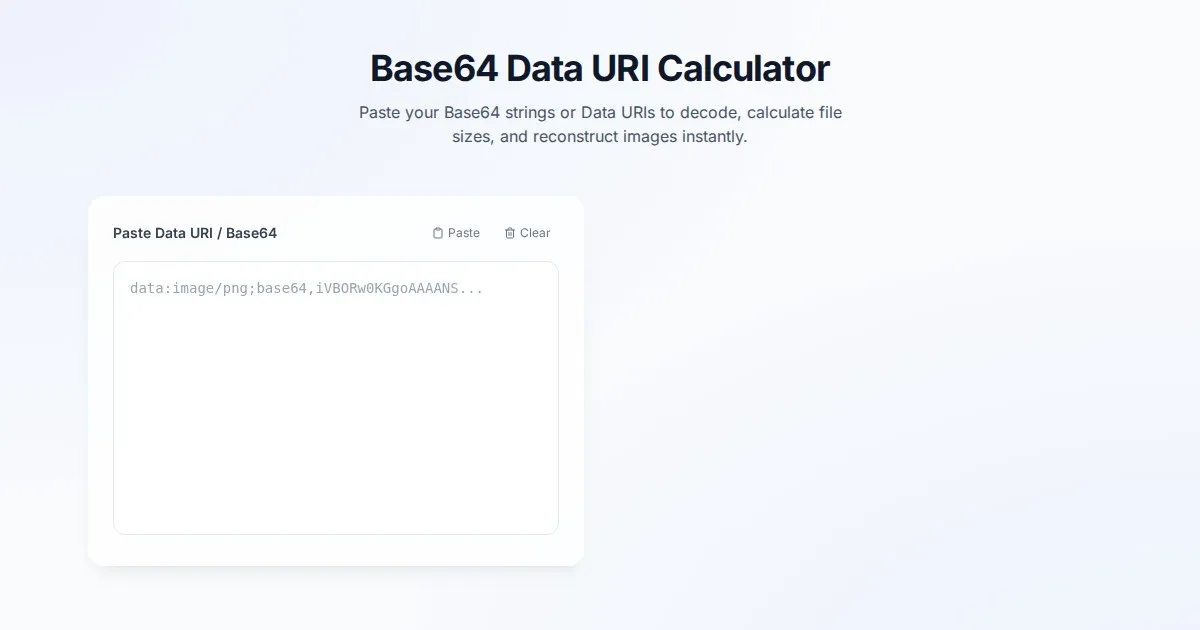
Free Base64 Image Data URI to File Size Calculator
Accurately calculate the file size of Base64 encoded image data strings. This free, web-based tool helps developers estimate binary file sizes for web apps.

Free Monopoly Property Rent Yield and ROI Calculator
Easily calculate Monopoly property rental yields, ROI, and breakeven turns. Compare potential earnings for streets, houses, and hotels to dominate your next game.
Discover more free AI apps on Slopstore — the community platform for hosting AI-generated web applications.