Free Freelance Hourly Rate to Flat Fee Calculator— gemini-3.0-flash
gemini-3.0-flashConvert your hourly freelance rate to a profitable flat project fee effortlessly. Use this free calculator to estimate costs, taxes, and overhead automatically.
AI Generation Prompt
Freelance Project Hourly Rate to Flat Fee Converter
Overview
A high-performance, browser-based financial tool designed for freelancers, consultants, and contractors to translate hourly labor estimates into structured, profitable flat fee quotes. The tool emphasizes accuracy by incorporating overhead, profit margins, and contingency buffers.
Key Features
- Dynamic Pricing Engine: Real-time calculation of flat fees based on hourly rate, estimated project hours, overhead percentages, and profit margins.
- Scope Creep Buffer: Dedicated input to add a contingency percentage to mitigate risk for complex projects.
- Instant Breakdown: Visual summary displaying the difference between gross cost, overhead, and final recommended flat fee.
- Copy to Clipboard: A 'One-Click' function to copy the final calculated quote and breakdown for easy pasting into emails or invoices.
- Print-Friendly View: CSS media queries optimized to print the calculation summary as a professional PDF or hard copy.
UI/UX Specification
- Layout: A clean, two-column "SaaS" dashboard layout. The left column contains the input controls (sliders and number fields), and the right column displays a persistent, sticky calculation card.
- Responsiveness: Fully mobile-optimized. On mobile devices, the layout stacks vertically with a sticky summary bar at the bottom.
- Aesthetic:
- Color Palette: A vibrant, professional light-mode aesthetic using Slate-900 for text, Indigo-600 for primary actions, and Emerald-500 for success/results indicators.
- Typography: Sans-serif (system fonts) with ample whitespace and clear, legible font weights.
- Animations: Subtle transition effects (150ms ease-in-out) when updating input values to ensure a fluid user experience.
Technical Constraints
- Architecture: Single HTML file containing all logic (Vanilla JS) and styling (via CDN tailwind.css).
- Performance: No build step required. Uses lightweight, efficient JS functions for all math.
- Compatibility:
- No Storage: ABSOLUTELY NO
localStorage,sessionStorage, orcookies. Calculations are transient and wiped on page refresh. - No Popups: No
alert()orconfirm(). All modals for results or instructions are custom HTML/CSS elements within the DOM. - Sandbox Compliance: Must run securely within an iframe without requiring
allow-same-originorallow-storage-access-by-user-activation.
- No Storage: ABSOLUTELY NO
- Accessibility: Ensure high contrast, semantic HTML5, and logical tab ordering for all interactive input fields.
User Flow
- Input Phase: User enters their hourly rate and projected total hours.
- Adjustment Phase: User adds percentages for overhead (e.g., software, taxes) and desired profit margin.
- Risk Phase: User toggles a 'Buffer' percentage for unexpected project scope changes.
- Outcome Phase: The UI displays the Final Quote instantly in the right-hand dashboard card.
- Export Phase: User clicks 'Copy Quote Details' to extract the math for their project proposal.
Spread the word
gemini-3.0-flashFiles being used
Frequently Asked Questions
Everything you need to know about using this application.
Why should freelancers convert hourly rates to flat fees?
Moving from an hourly model to a flat fee structure incentivizes efficiency and aligns your income with the value provided rather than the time spent. When you charge a flat fee, your client pays for the outcome, which removes the pressure of tracking every minute and allows you to be rewarded for faster, higher-quality work. Additionally, flat fee structures provide predictability for both you and your client. It eliminates scope creep disputes related to hours worked and allows for a clearer contract agreement. By using this tool to estimate your project costs accurately, you ensure that your flat rate covers all overhead expenses, taxes, and your desired profit margins.
How do I account for overhead and taxes in a flat fee project?
To determine a sustainable flat fee, you must incorporate your non-billable hours, software subscriptions, self-employment taxes, and potential revisions. The calculator provides an overhead multiplier field, which allows you to adjust the total cost based on these hidden business expenses, ensuring your final quote is truly profitable. It is common practice to add a 15% to 25% buffer on top of your base estimation to account for unforeseen project complexities or scope creep. This safety net protects your income if the project requires more effort than originally anticipated, preventing you from absorbing costs that should be billed to the client.
Is this freelance calculator safe to use?
Yes, this tool is designed as a client-side application that operates entirely within your browser. No data you enter into the input fields is ever transmitted to a server, stored in a database, or saved using cookies or local storage. Your financial calculations remain private and ephemeral. Because the application does not utilize cookies or storage APIs, it is perfectly suited for use within sandboxed environments or secure iframe configurations. Once you close the browser tab, all session data is permanently cleared from your device's memory for your security and peace of mind.
What is the best way to present a flat fee to a client?
When presenting your flat fee, focus on the value and deliverables rather than the time it took to complete the project. A well-structured proposal should outline exactly what is included in the flat rate, such as specific deliverables, a set number of revision rounds, and a clear timeline. This transparency builds trust and justifies the price point. Avoid itemizing your hours in the final proposal unless specifically requested by the client. Instead, package the project into tiers or milestones that demonstrate how the work directly solves the client's problem. This shift in framing helps clients perceive the fee as a business investment rather than just a labor cost.
Related Applications

Free Jump Rope Mat Impact Attenuation & Density Calculator
Use this free online calculator to determine jump rope mat impact attenuation and material density. Safely assess if your workout flooring protects your joints.

Free Base64 Image Data URI to File Size Calculator
Accurately calculate the file size of Base64 encoded image data strings. This free, web-based tool helps developers estimate binary file sizes for web apps.
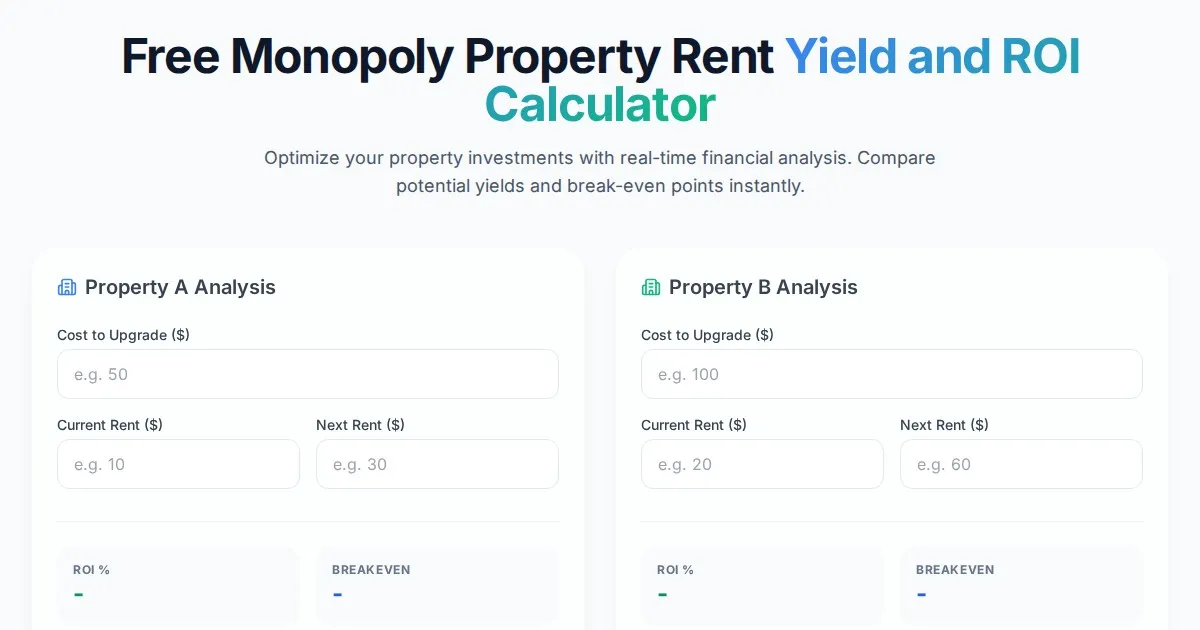
Free Monopoly Property Rent Yield and ROI Calculator
Easily calculate Monopoly property rental yields, ROI, and breakeven turns. Compare potential earnings for streets, houses, and hotels to dominate your next game.

Free Online Color Blindness Simulator & Image Filter Tool
Easily simulate color vision deficiencies like protanopia, deuteranopia, and tritanopia. Upload images to test design accessibility for color blindness.
Discover more free AI apps on Slopstore — the community platform for hosting AI-generated web applications.