Free Fuel Injector Sizing and Duty Cycle Calculator— gemini-3.0-flash
gemini-3.0-flashEasily calculate required fuel injector flow rates and duty cycles for your engine build. Free, accurate, and professional automotive performance tool.
AI Generation Prompt
Technical Specification: Precision Fuel Injector & Duty Cycle Calculator
1. Executive Summary
A high-performance, single-file browser application designed for automotive enthusiasts and engine builders. The tool allows users to input engine parameters—such as Target Horsepower, Number of Cylinders, and BSFC—to receive real-time, accurate calculations for required injector flow rates and duty cycles.
2. Feature Set
- Real-time Calculation Engine: Immediate results as values are adjusted (no submit button required).
- Advanced Input Controls: Sliders and numerical inputs for Target Horsepower, BSFC, and Number of Cylinders.
- Unit Conversion Logic: Toggle between standard (lb/hr) and metric (cc/min) flow ratings.
- Safety Gauge: A visual representation (progress bar) of the current duty cycle, color-coded (Green: Optimal, Yellow: Warning, Red: Critical).
- Presets: Quick-fill buttons for common engine types (e.g., Naturally Aspirated, Turbocharged).
- Responsive Design: Optimized for mobile viewing at the track or in the garage.
3. UI/UX Specification
- Aesthetic: Clean, professional "SaaS" aesthetic. Light mode only. Use crisp whites (
#ffffff), soft grays (#f8f9fa), and deep steel blues (#2c3e50) for text. High-contrast accent color (#3498db) for interactive elements. - Layout:
- Header: Simple, descriptive h1 title with a sub-heading.
- Main Tool Area: Two-column grid on desktop (Inputs on left, Results on right). Stacked on mobile.
- Result Cards: Large, prominent typography for the final calculated values.
- Animations: Subtle CSS transitions on hover for inputs and inputs updating the results container with a gentle fade-in effect.
4. Technical Guidelines
- Single File: All HTML, CSS, and JS must reside in one file.
- Storage: STRICTLY PROHIBITED. Do not use
localStorage,sessionStorage, or cookies. Keep all state in volatile memory objects. - Modals: Do not use
alert()orprompt(). Create a custom hiddendivoverlay for error messages or user confirmations. - Responsiveness: Use CSS Grid and Flexbox for fluid layouts. All inputs must be touch-friendly with a minimum hit target of 44x44px.
- External Libraries: Use reliable CDNs for any necessary libraries (e.g., Tailwind CSS for styling, Lucide icons for UI elements).
5. Implementation Roadmap
- Core Logic: Define the calculation functions (Fuel Flow = (HP * BSFC) / (Cylinders * MaxDutyCycle)).
- DOM Construction: Build the HTML structure with semantically correct tags.
- Styling: Apply the light-mode color scheme and responsive grid layout.
- Event Handling: Add event listeners to all input elements to trigger the re-calculation function on
inputevents. - Validation: Ensure input fields reject non-numeric values and handle edge cases (e.g., zero cylinders) gracefully.
Spread the word
gemini-3.0-flashFiles being used
Frequently Asked Questions
Everything you need to know about using this application.
What is the importance of fuel injector duty cycle?
Fuel injector duty cycle represents the percentage of time that an injector is open during a single engine cycle. A duty cycle that reaches 100% means the injector is open constantly, which is generally dangerous for the engine as it loses the ability to adjust the fuel mixture and can lead to lean conditions, causing severe engine damage. Most automotive tuners recommend keeping the maximum duty cycle between 80% and 85%. This buffer allows for variations in fuel pressure, voltage fluctuations, and unexpected high-load scenarios without starving the engine of necessary fuel. Monitoring this is a critical aspect of building reliable performance engines.
How do I calculate the required injector size for my engine?
To calculate the required injector size, you need to estimate your target horsepower, the number of cylinders, and the expected Brake Specific Fuel Consumption (BSFC). The formula typically takes these factors into account to determine how much fuel flow in pounds per hour (lb/hr) is required to support the desired power level. Once the total fuel flow is determined, the calculator applies the maximum duty cycle limit to ensure the injectors aren't pushed past their safe operating range. It is always recommended to slightly oversize your injectors to provide headroom for future modifications or potential performance increases.
What is BSFC in the context of fuel systems?
Brake Specific Fuel Consumption (BSFC) is a measure of the fuel efficiency of any prime mover that burns fuel and produces rotational power. It essentially describes how much fuel the engine consumes per unit of power produced per hour. It is a critical variable because it determines how much fuel volume the engine will demand at a specific horsepower level. Different engine types (naturally aspirated, turbocharged, or supercharged) have different typical BSFC values. For example, a naturally aspirated engine might have a lower BSFC, while a forced induction engine typically requires more fuel to maintain the correct air-fuel ratio and control combustion chamber temperatures under boost.
Is this calculator accurate for all types of engines?
This calculator provides a high-quality estimate based on standard mathematical formulas used by automotive engineers. It is accurate for standard gasoline-powered internal combustion engines including naturally aspirated, turbocharged, and supercharged configurations. The tool is designed to provide a solid baseline for your fuel system build. However, real-world conditions like fuel type (e.g., E85 vs. pump gas), fuel pressure, and specific intake temperatures can influence final results. Always verify your specific setup with a professional tuner to ensure the hardware selected is sufficient for the specific fuel density and pressures used in your unique application.
Related Applications
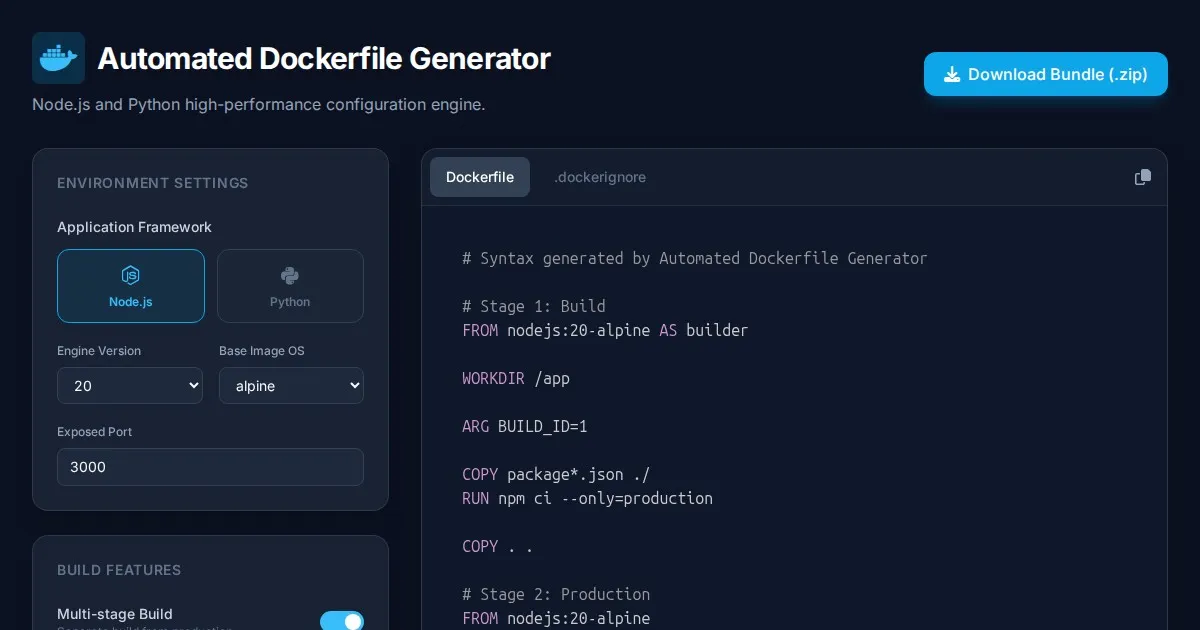
Automated Dockerfile Generator for Node.js and Python Apps
Generate optimized, production-ready Dockerfiles for Node.js and Python applications instantly. Customize base images, port configurations, and dependencies.
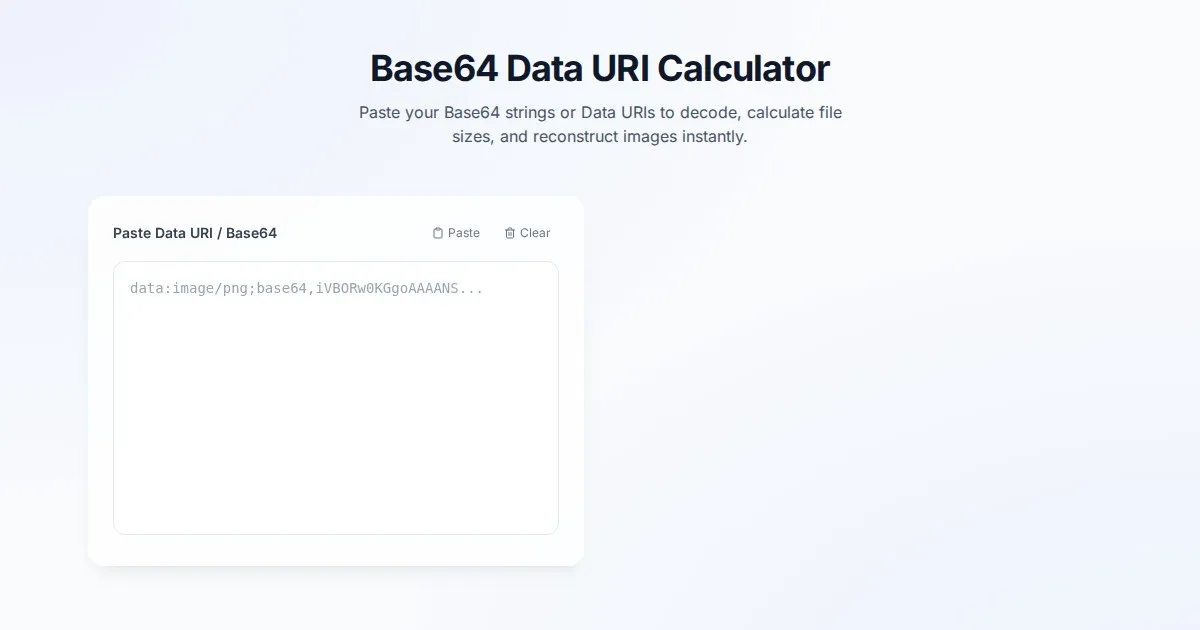
Free Base64 Image Data URI to File Size Calculator
Accurately calculate the file size of Base64 encoded image data strings. This free, web-based tool helps developers estimate binary file sizes for web apps.

Free Online Color Blindness Simulator & Image Filter Tool
Easily simulate color vision deficiencies like protanopia, deuteranopia, and tritanopia. Upload images to test design accessibility for color blindness.
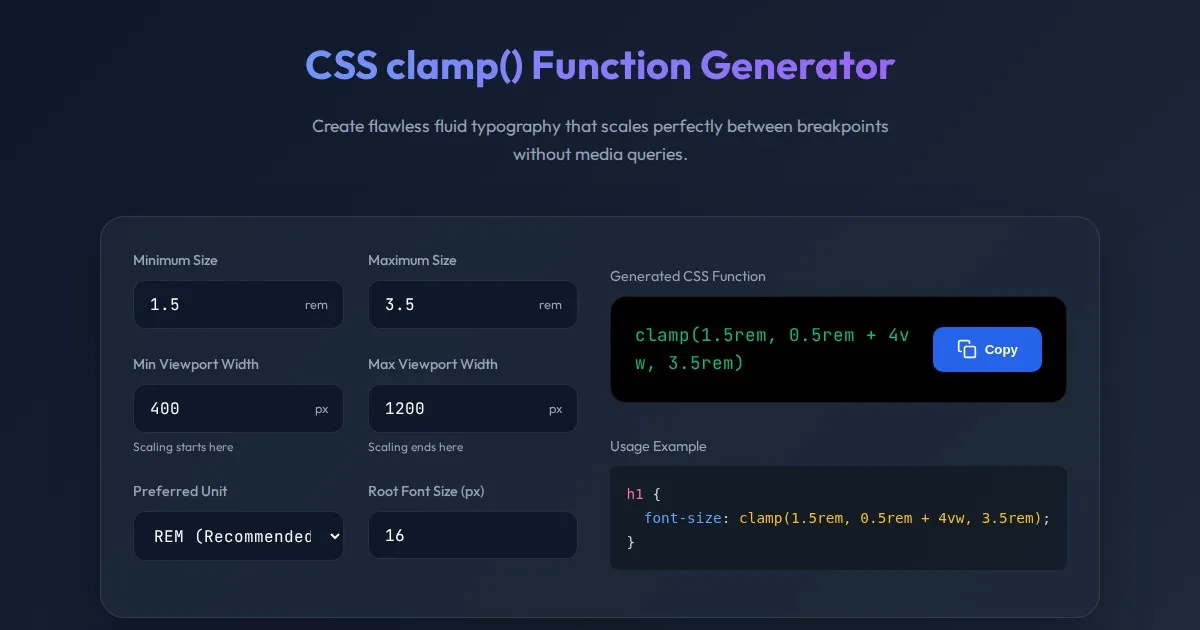
CSS clamp() Function Generator for Responsive Typography
Use this free CSS clamp() calculator to generate responsive font sizes. Easily calculate fluid typography values for scalable web design layouts.
Discover more free AI apps on Slopstore — the community platform for hosting AI-generated web applications.