Free Git Commit Hash Shortener & Collision Probability Calculator— gemini-3.0-flash
gemini-3.0-flashCalculate the probability of git commit hash collisions and determine the safest minimum length for your SHA-1 abbreviated hashes with this free utility.
AI Generation Prompt
Git Commit Hash Shortener & Collision Probability Calculator
A professional-grade, browser-based utility for developers to analyze Git SHA-1 hash safety and determine the optimal minimum character length for commit references. This tool prevents automation errors by calculating the mathematical risk of hash collisions based on repository size.
Core Features
- Live Collision Probability Analysis: Input the total number of commits in a project to see real-time collision probabilities for hash lengths 4 through 40.
- Hash Previewer: Instant visual feedback for a full 40-character SHA-1 hash being sliced to various lengths.
- Safety Scoring: A clear visual indicator (Green/Yellow/Red) showing if a chosen length is 'Safe', 'Risky', or 'Dangerous' for the current repository size.
- Responsive Interface: Clean, mobile-friendly design that works on tablets and desktop browsers without horizontal scrolling.
- Offline Capability: Operates entirely in-memory using JavaScript, ensuring zero data persistence and maximum privacy.
UI/UX Layout
- Header: A minimalist, high-contrast title with a sub-headline explaining the tool's purpose.
- Main Tool Area: A two-column layout (on desktop) or stacked (on mobile).
- Left Column: Input controls for 'Total Repository Commits' (number input) and 'Full Hash' (text input).
- Right Column: Interactive output card displaying 'Recommended Length' and a probability scale.
- Results Section: A table displaying hash lengths vs. collision probability, with highlight styling for the 'Optimal' length based on the current input.
- Modals: Custom implementation for 'Warning' alerts to avoid browser-native prompts.
Visual Design & Aesthetics
- Color Palette: Strictly light-mode. Background:
#F8FAFC(Slate 50), Primary Brand:#2563EB(Blue 600), Text:#1E293B(Slate 800), Success/Safe:#16A34A(Green 600), Warning:#EA580C(Orange 600). - Typography: Inter or System-UI sans-serif, ensuring legibility and a modern, professional look.
- Transitions: Subtle 200ms ease-in-out transitions for all input shifts and probability bar updates.
- Shadows: Soft, layered box-shadows on cards to create a sense of depth without using heavy borders.
Technical Constraints & Directives
- Architecture: Single HTML file containing all
<style>and<script>blocks. - Storage: NO
localStorage,sessionStorage, or cookies. Use local JS variables/state management for calculations. - Environment: Must remain fully functional within a sandboxed
<iframe>withnullorigin. Avoid any code that assumes origin-based storage access. - Dependencies: Use CDN-hosted Tailwind CSS for styling and FontAwesome/Lucide for icons to maintain a minimal, clean build footprint.
- Interaction: All modals and tooltips must be implemented using custom
<div>overlays withz-indexmanagement, notwindow.alert()orwindow.prompt().
Spread the word
gemini-3.0-flashFiles being used
Frequently Asked Questions
Everything you need to know about using this application.
What is the risk of Git commit hash collisions?
A Git commit hash collision occurs when two different commit objects generate the same abbreviated hash identifier. While SHA-1 is extremely robust, using an excessively short hash—such as only 3 or 4 characters—increases the mathematical probability that Git will not be able to uniquely identify the specific commit you intend to reference. By shortening your hashes too aggressively, you risk your automation scripts or command-line operations targeting the wrong commit, which can cause significant issues in large, high-velocity repositories. Understanding the relationship between hash length and repository size is essential for maintaining integrity.
How does this tool calculate collision probability?
This calculator uses the 'Birthday Paradox' statistical model, which is the standard method for estimating the likelihood of collisions in cryptographic hash functions. It factors in the number of objects (commits) in your repository against the number of possible values provided by the length of the shortened hash. As you increase the number of commits in a repository, the probability of finding a collision with a specific character length grows exponentially. Our tool provides a real-time safety assessment to help you choose a hash length that balances brevity with cryptographic uniqueness for your specific project scale.
Can I trust this tool with my private repository data?
Yes, this tool is designed with a 'Privacy First' approach. All calculations and logic are performed locally within your browser's memory using vanilla JavaScript. No data is ever sent to a server, processed via an API, or saved to any database. Because the application does not use cookies, local storage, or external databases, it is impossible for your repository information to leak. Once you close the browser tab, all processed inputs are immediately wiped from your system memory, making this safe for enterprise use.
Why is the recommended hash length different for my repositories?
The recommended length is dynamic because it depends entirely on the total number of commits in your git history. A repository with 100 commits is statistically much less likely to have a hash collision than a large enterprise repository with 500,000 commits. We calculate the minimum length required to keep the probability of collision below a negligible threshold (typically less than 1 in 100,000). You should always prefer the tool's suggestion for larger repositories to ensure that your automated CI/CD pipelines remain stable and collision-free.
Related Applications
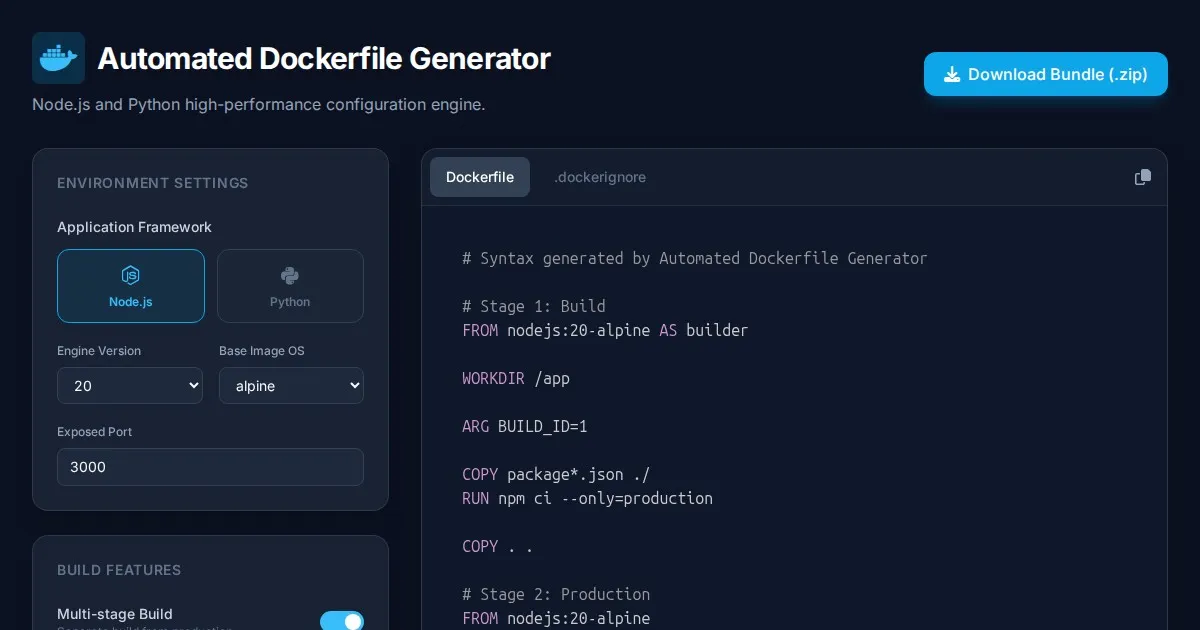
Automated Dockerfile Generator for Node.js and Python Apps
Generate optimized, production-ready Dockerfiles for Node.js and Python applications instantly. Customize base images, port configurations, and dependencies.
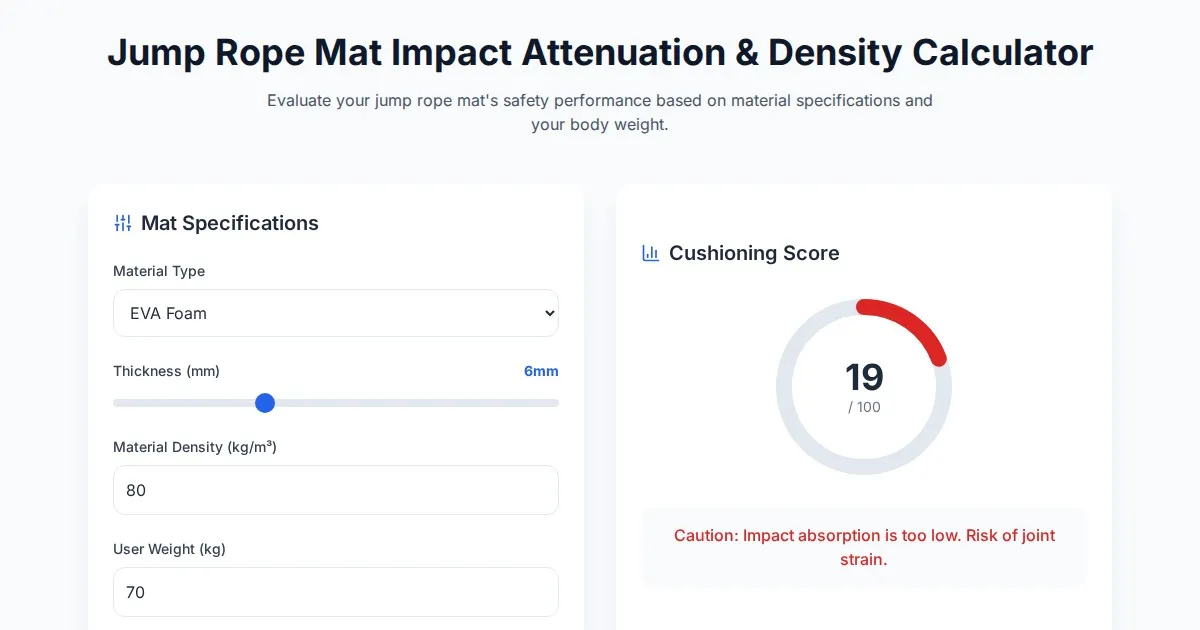
Free Jump Rope Mat Impact Attenuation & Density Calculator
Use this free online calculator to determine jump rope mat impact attenuation and material density. Safely assess if your workout flooring protects your joints.

Free Base64 Image Data URI to File Size Calculator
Accurately calculate the file size of Base64 encoded image data strings. This free, web-based tool helps developers estimate binary file sizes for web apps.

Free Online Color Blindness Simulator & Image Filter Tool
Easily simulate color vision deficiencies like protanopia, deuteranopia, and tritanopia. Upload images to test design accessibility for color blindness.
Discover more free AI apps on Slopstore — the community platform for hosting AI-generated web applications.