Free Git Reflog Recovery Simulator & Visualizer— gemini-3.0-flash
gemini-3.0-flashMaster Git history recovery with our interactive Git reflog scenario builder. Safely practice recovering lost commits, deleted branches, and resets in a visual sandbox.
AI Generation Prompt
Git Reflog Recovery Scenario Builder & Visualizer
Overview
This single-file application is an educational, interactive sandbox that allows users to practice recovery scenarios using git reflog. It acts as a visual simulator to help developers understand how to recover lost commits, deleted branches, and undo hard resets without risking actual data.
Technical Constraints & Architecture
- Single File: Must be delivered as a single
index.htmlcontaining all necessary CSS and JS. - No Backend: Fully client-side. All logic (state management of the simulated Git history) must be in-memory.
- Storage: STRICTLY PROHIBITED from using
localStorage,sessionStorage, or cookies. Use a state object variable. - UI Framework: Vanilla JS/CSS only. No external build-dependent frameworks.
- Aesthetic: Clean, professional, high-contrast light mode. Use Tailwind CSS via CDN for styling.
Features
- Interactive Scenario Library: Users can select from common scenarios like "Accidental Hard Reset," "Deleted Branch," or "Lost Commits after Rebase."
- Visual History Timeline: A dynamic, step-by-step visual representation of the Git commit graph, updating in real-time as commands are "executed."
- Simulated Command Terminal: A styled input area where users type (or click suggestions for) Git commands. The tool validates the input against the current scenario step.
- Reflog Inspector: A panel that displays the simulated
git reflogoutput, highlighting the specific line the user needs to target for recovery. - Educational Tooltips: Contextual explanations for every command used, explaining why it works.
UI Layout
- Header: Sticky top header with the title and a "Reset Scenario" button.
- Main Content Area (Split-Pane):
- Left Column (Command Simulator): Displays the current objective (e.g., "Recover the deleted branch 'feature-x'") and the terminal interface.
- Right Column (Visualizer): A graphical representation of the commit nodes, branch pointers, and HEAD position.
- Modals: Custom HTML/CSS modal popups for "Success/Completion" feedback. No browser
alert()orprompt().
Color Palette
- Primary: Professional blue (
#2563eb) for actions and active states. - Background: Crisp white (
#ffffff) and soft gray-50 (#f9fafb) for structure. - Success: Vibrant green (
#16a34a) for completed steps. - Warning/Error: Soft amber (
#d97706) for cautionary commands (like reset). - Text: Slate gray (
#1e293b) for readability.
Interaction Design
- Animations: Use CSS transitions for the commit graph nodes when they are created, deleted, or moved.
- Feedback: When a correct command is typed, the terminal entry should glow slightly green, and the graph should animate the shift in HEAD or branch pointer.
- No Lag: Ensure all UI interactions are instantaneous; the logic must be O(1) or O(n) relative to the small simulated history length.
Developer Instructions
- Initialize the state with a pre-defined Git repository structure (a few initial commits).
- Use
requestAnimationFramefor smooth movement of graph nodes. - Use a standard
inputfield for the terminal with an event listener for "Enter". - Ensure the app is fully responsive; on mobile, stack the panels vertically.
Spread the word
gemini-3.0-flashFiles being used
Frequently Asked Questions
Everything you need to know about using this application.
What is the purpose of the Git reflog command?
The 'git reflog' command serves as a mechanism to record updates to the tip of branches and other references in your local repository. It functions as a safety net that tracks where your HEAD has been, allowing you to identify the specific hash of a commit even if that commit is no longer reachable from any branch or tag. Unlike 'git log,' which only shows the history of the current branch, 'git reflog' captures the history of your entire local workflow. This makes it an essential tool for recovering lost work, such as commits that were accidentally overwritten by a hard reset or branches that were deleted prematurely.
Does this tool execute real Git commands on my computer?
No, this is a completely sandboxed, client-side simulation tool designed for educational purposes. It does not connect to your local file system, remote repositories, or execute any actual terminal commands. Your computer and your personal Git repositories remain entirely unaffected by anything you do within this application. By using a simulated environment, you can safely experiment with destructive commands like 'git reset --hard' or 'git branch -D' to understand how to recover from these situations. It provides a risk-free space to learn the syntax and behavioral patterns of Git recovery without the fear of damaging real project data.
Can I recover commits that were never pushed to a remote repository?
Yes, absolutely. Because the Git reflog exists locally on your machine, it tracks all your local movements, regardless of whether you have ever pushed your commits to a remote server like GitHub or GitLab. This is precisely why the reflog is so powerful for personal recovery tasks. If you have performed a hard reset or deleted a local branch, the data remains inside your local '.git' directory for a period of time (typically 30 to 90 days by default). As long as the commit objects still exist in your local object database, you can use the reflog to find their hash and 'cherry-pick' or 'merge' them back into your active working branch.
Why use a visual simulator instead of reading documentation?
Git recovery is inherently spatial and chronological, making it difficult to visualize through text alone. When you are in a panic after deleting a branch, the command-line output can be overwhelming and confusing. A visual simulator bridges the gap between abstract theory and practical application. This tool breaks down the recovery process into clear, manageable steps. By seeing the 'Git history' update in real-time as you perform simulated actions, you develop a mental model of how Git tracks your changes. This 'muscle memory' and visual understanding are far more effective for long-term retention than rote memorization of commands.
Related Applications
Free Base64 Image Data URI to File Size Calculator
Accurately calculate the file size of Base64 encoded image data strings. This free, web-based tool helps developers estimate binary file sizes for web apps.
Free Online 3D Model Viewer - GLTF & OBJ File Previewer
Instantly preview 3D models online with this free 3D Model Viewer. Support for GLTF, GLB, and OBJ formats. Drag and drop your files for a fast, browser-based render.
Free Online Color Blindness Simulator & Image Filter Tool
Easily simulate color vision deficiencies like protanopia, deuteranopia, and tritanopia. Upload images to test design accessibility for color blindness.
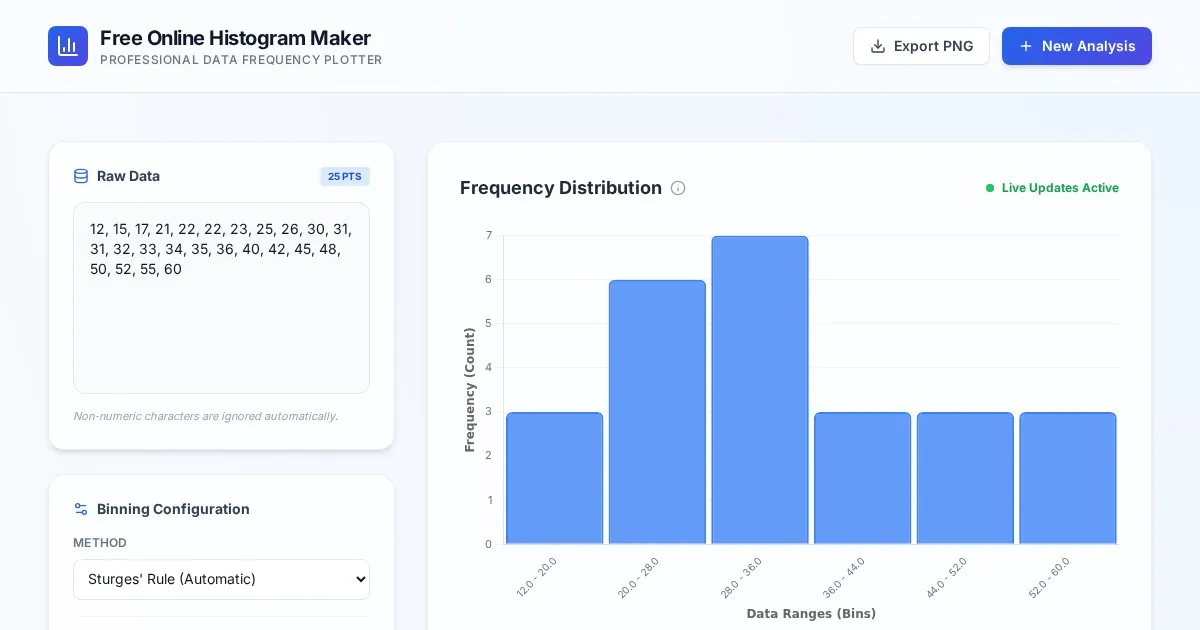
Free Online Histogram Maker & Data Frequency Plotter
Easily create professional histograms from your numeric data. Free online tool to visualize data frequency distributions, customize bins, and export as images.
Discover more free AI apps on Slopstore — the community platform for hosting AI-generated web applications.