Free GraphQL to TypeScript Type Generator— gemini-3.0-flash
gemini-3.0-flashInstantly convert GraphQL queries and schemas into valid TypeScript interface definitions. Fast, browser-based tool for frontend developers. No server required.
AI Generation Prompt
GraphQL to TypeScript Type Definition Generator
Overview
A high-performance, browser-based utility designed to help frontend developers bridge the gap between GraphQL and TypeScript. This tool parses GraphQL schemas or queries and converts them into strictly typed TypeScript interfaces, eliminating the manual overhead of writing interface boilerplate.
Core Features
- Live Parsing: Instant feedback as you type or paste your GraphQL code.
- Schema Detection: Automatically detects Query, Mutation, and Subscription types.
- TypeScript Optimization: Generates clean, production-ready interfaces with proper nesting and nullability handling (e.g.,
string | null). - One-Click Copy: Dedicated buttons to copy generated code to the clipboard.
- Clean UI/UX: A distraction-free, professional environment focusing purely on the code conversion task.
Technical Implementation Specifications
- Architecture: Single-file HTML/CSS/JS architecture.
- UI Framework: Vanilla JS with Tailwind CSS (via CDN) for a modern, responsive layout.
- Formatting: Use
Prettierstandalone build (via CDN) to auto-format the output TypeScript code for readability. - No Storage: Strictly follow the rule of zero
localStorageor cookies. State management is handled entirely by variables in memory. - Responsiveness: Use a Flexbox/Grid layout to switch between a side-by-side view on desktop and a vertical stack on mobile.
UI/UX Design Strategy
- Color Palette:
- Background:
#f8fafc(Cool Gray 50) - Primary Accent:
#2563eb(Blue 600) - Editor Background:
#ffffff(White) with subtle border#e2e8f0 - Text Colors:
#1e293b(Slate 800) for headers,#475569(Slate 600) for body.
- Background:
- Layout Components:
- Header: Minimalist title and short usage instructions.
- Editor Area: Two primary text areas (Input left/top, Output right/bottom). Each area features a header bar with "Input GraphQL" and "Output TypeScript" labels.
- Action Bar: A "Convert" button, "Clear All" button, and a "Copy Output" button with a brief "Copied!" success animation.
- Shadows/Effects: Utilize
shadow-smfor the card containers and smoothtransition-allfor button hover states.
Developer Directives
- Environment Security: Ensure the application is compatible with a null-origin iframe sandbox. Do not access window.parent or storage.
- Performance: Debounce the input listener (300ms) to prevent UI jitter during complex conversions.
- Accessibility: Ensure all text areas are accessible via keyboard and provide clear
aria-labeltags for all buttons. - Light Mode Only: Do not include any logic for theme switching. The CSS should strictly enforce a professional, white-background SaaS aesthetic.
Spread the word
gemini-3.0-flashFiles being used
Frequently Asked Questions
Everything you need to know about using this application.
How does this GraphQL to TypeScript converter work?
This application utilizes a robust client-side parser to analyze your provided GraphQL schema or query. Once the input is submitted, the logic maps GraphQL scalar types to their corresponding TypeScript equivalents, recursively building out interface structures and nested object types to ensure complete coverage of your data models. Because this process happens entirely within your web browser, the conversion is near-instantaneous. No data is sent to a remote server for processing, ensuring that your schema definitions and private query structures remain entirely local to your machine.
Is my data secure when using this tool?
Yes, security is a core design principle of this application. We do not use any server-side code, cookies, or persistent databases. Every single conversion happens inside your browser's memory, meaning as soon as you refresh the page, all previous inputs and outputs are wiped from the application's state. Since no network requests are made to an external API to handle the conversion logic, there is zero risk of your schema structure, private API endpoints, or data models being intercepted or logged by a third party. Your work remains private throughout the entire process.
Does this tool support custom scalar types in GraphQL?
The tool includes default mapping for standard GraphQL scalars like String, Int, Float, Boolean, and ID. While advanced custom scalars may require manual adjustment in the generated code, the utility handles the base structure and nesting logic automatically for the vast majority of standard use cases. For complex schemas, the generator will output the base TypeScript interface and highlight where custom scalars were detected. Developers can then quickly refine these types manually, saving significant time compared to writing the boilerplate code from scratch.
Why is this a single-file application?
We chose a single-file architecture to ensure maximum portability and performance. By bundling all the necessary HTML, CSS, and JavaScript into one document, we eliminate the overhead of external dependencies and framework loading, providing a snappy experience that is ready to use the moment it loads. This approach also adheres to strict security standards, as the tool can run in sandboxed environments without requiring complex configurations. It is designed to be a lightweight, high-performance utility that developers can bookmark and rely on for quick type-definition tasks without any unnecessary bloat.
Related Applications
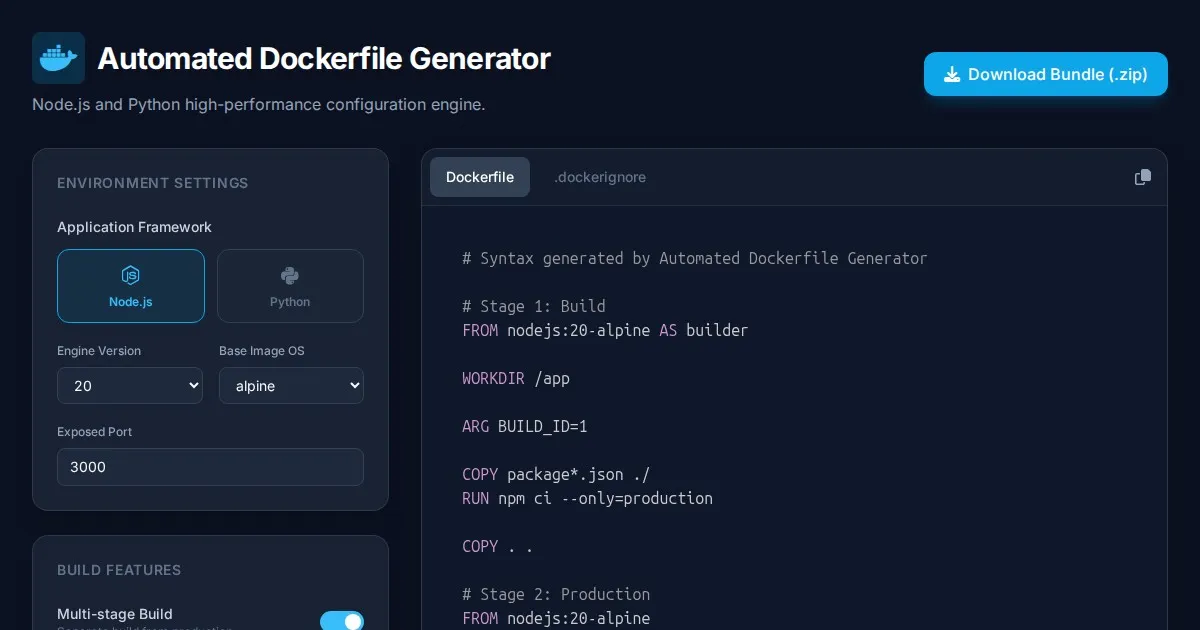
Automated Dockerfile Generator for Node.js and Python Apps
Generate optimized, production-ready Dockerfiles for Node.js and Python applications instantly. Customize base images, port configurations, and dependencies.

Free Base64 Image Data URI to File Size Calculator
Accurately calculate the file size of Base64 encoded image data strings. This free, web-based tool helps developers estimate binary file sizes for web apps.

Free Online 3D Model Viewer - GLTF & OBJ File Previewer
Instantly preview 3D models online with this free 3D Model Viewer. Support for GLTF, GLB, and OBJ formats. Drag and drop your files for a fast, browser-based render.

Free Online Color Blindness Simulator & Image Filter Tool
Easily simulate color vision deficiencies like protanopia, deuteranopia, and tritanopia. Upload images to test design accessibility for color blindness.
Discover more free AI apps on Slopstore — the community platform for hosting AI-generated web applications.