Free Guitar String Tension Calculator: Accurate Setup Tool— gemini-3.0-flash
gemini-3.0-flashCalculate guitar string tension using scale length, gauge, and pitch. This free, web-based tool helps guitarists achieve the perfect setup for any instrument.
AI Generation Prompt
Technical Specification: Precision Guitar String Tension Calculator
Overview
A high-performance, single-file browser application designed to calculate string tension for stringed instruments. The tool uses standard physics formulas ($T = (UW * (2 * L * F)^2) / 386.4$) to assist musicians in selecting optimal string gauges for specific scale lengths and tunings.
Core Features
- Dynamic Configuration: Supports 6, 7, and 8-string configurations.
- Real-Time Calculation: Instant updates of tension values (measured in lbs) as inputs change.
- Scale Length Inputs: Support for multiscale/fanned-fret calculations by allowing per-string scale length input.
- Tuning Library: Pre-set drop, standard, and open tunings with a custom option.
- Export/Share: Ability to copy the configuration summary to the clipboard.
- Responsive Design: Mobile-first layout that stacks inputs and tables gracefully.
UI/UX Design
- Layout:
- Header: Simple, descriptive H1 title and a brief subtitle.
- Control Panel (Sidebar/Top): Input fields for scale length, string count, and pitch selections grouped logically.
- Display Area: A clean, striped table displaying: String #, Pitch, Gauge, Tension (lbs), and Tension %.
- Summary Footer: A call-out box showing total instrument tension.
- Aesthetics:
- Palette: White background (#FFFFFF), Primary Blue (#2563EB) for accents, Slate Gray (#64748B) for secondary text, and light neutral gray (#F1F5F9) for table backgrounds.
- Shadows: Soft, subtle box-shadows on cards to lift them from the background.
- Animations: Micro-interactions (e.g., slight hover scales on input fields, smooth entry fades for updated results table rows).
Technical Implementation Constraints
- Architecture: Single
index.htmlfile containing all CSS (<style>) and JavaScript (<script>). - No Dependencies: Use pure Vanilla JS for state and DOM manipulation. No external frameworks.
- State Management: Use a simple JavaScript object
const appState = {...}to manage data in-memory. Do not uselocalStorageorsessionStorage. - Modals: Use
display: none/blocktoggles for any required dialogs (e.g., "About" or "Export results"). Nowindow.alert()orwindow.prompt(). - Iframe Compatibility: All elements must be responsive. Ensure CSS
max-widthproperties are used to prevent overflow within confined iframe environments. - SEO Metadata: Include meta tags in the
<head>for description and keywords.
Development Directives
- Validation: Implement input validation to ensure string gauges and scale lengths are numeric and within physical constraints.
- Performance: Keep the main loop simple. Perform calculations on-change rather than polling.
- Accessibility: Ensure high contrast ratios for text and keyboard navigability for all input fields.
- Browser Compatibility: Ensure flexbox/grid layout works in modern browsers without needing build-step transpilation.
Spread the word
gemini-3.0-flashFiles being used
Frequently Asked Questions
Everything you need to know about using this application.
How does the guitar string tension calculator work?
This tool utilizes standard acoustic and electric string physics to determine the tension exerted on the bridge and neck of your instrument. By inputting your specific scale length, individual string gauges, and desired tuning, the application processes the values using established tension formulas to provide an accurate output for each string. The real-time calculation engine immediately updates the results as you adjust any parameter, ensuring you can quickly experiment with different string gauges or tunings. This functionality allows musicians to balance their string tension across the entire fretboard, ensuring a consistent and comfortable playing experience without needing complex manual calculations.
Why is string tension important for my guitar setup?
String tension is one of the most critical factors in the playability and structural integrity of a guitar. Higher tension can make a guitar feel stiffer and more difficult to bend, while lower tension might lead to excessive fret buzz, poor intonation, and unstable tuning, especially when using drop tunings. By using this calculator, you can achieve a balanced tension profile, which helps maintain the natural curvature of the neck and reduces the risk of long-term damage caused by excessive strain. Achieving the correct tension balance ensures that the instrument stays in tune and responds consistently across all strings.
Can I calculate tension for 7-string or 8-string guitars?
Yes, this tool is fully designed to support extended range instruments, including 7-string and 8-string guitars. Users can simply select the number of strings they are using, and the interface will dynamically adjust to allow inputting data for the additional bass strings. Whether you are setting up a standard 6-string guitar for metal or a multiscale 8-string instrument, the application treats each string individually to provide accurate results. This flexibility makes it an essential utility for modern guitarists experimenting with different tunings and gauge combinations.
Does scale length affect the string tension significantly?
Scale length is a primary variable in string tension; a longer scale length requires more tension to reach a specific pitch, while a shorter scale length requires less. This calculator allows for precise scale length input, which is particularly useful if you are using a multiscale or fanned-fret guitar where each string may have a slightly different vibrating length. By accounting for scale length, the tool helps you determine if a particular gauge will be too tight or too loose on your specific instrument. This prevents common mistakes, such as choosing strings that are too thin for a baritone scale, which would otherwise result in a 'floppy' feel and poor tuning stability.
Related Applications
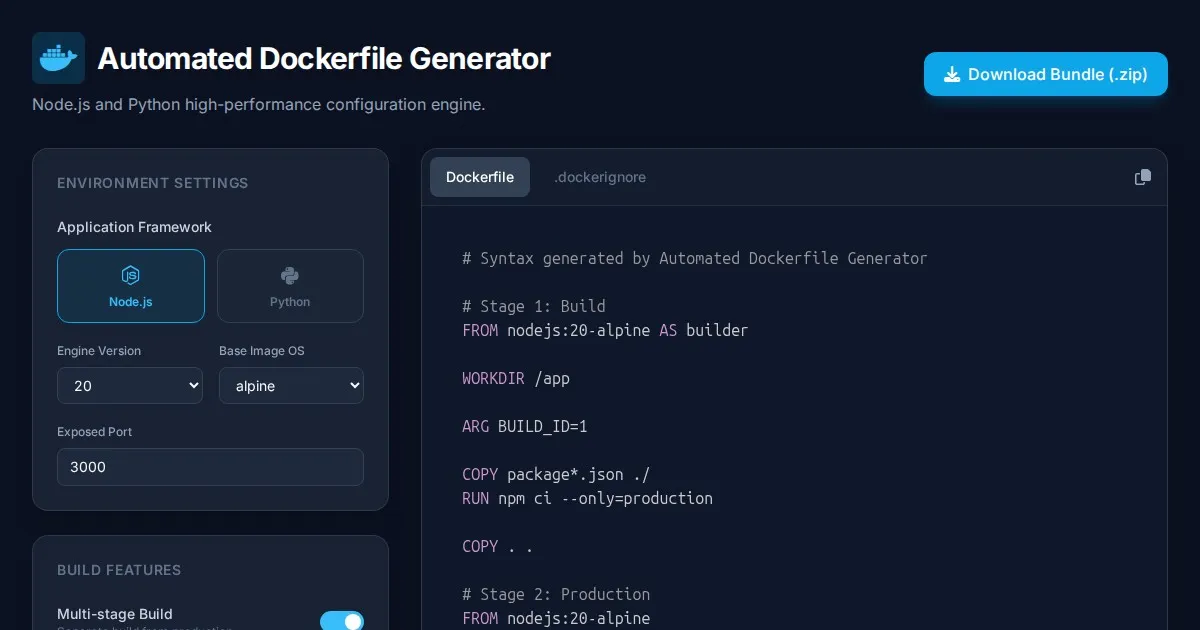
Automated Dockerfile Generator for Node.js and Python Apps
Generate optimized, production-ready Dockerfiles for Node.js and Python applications instantly. Customize base images, port configurations, and dependencies.
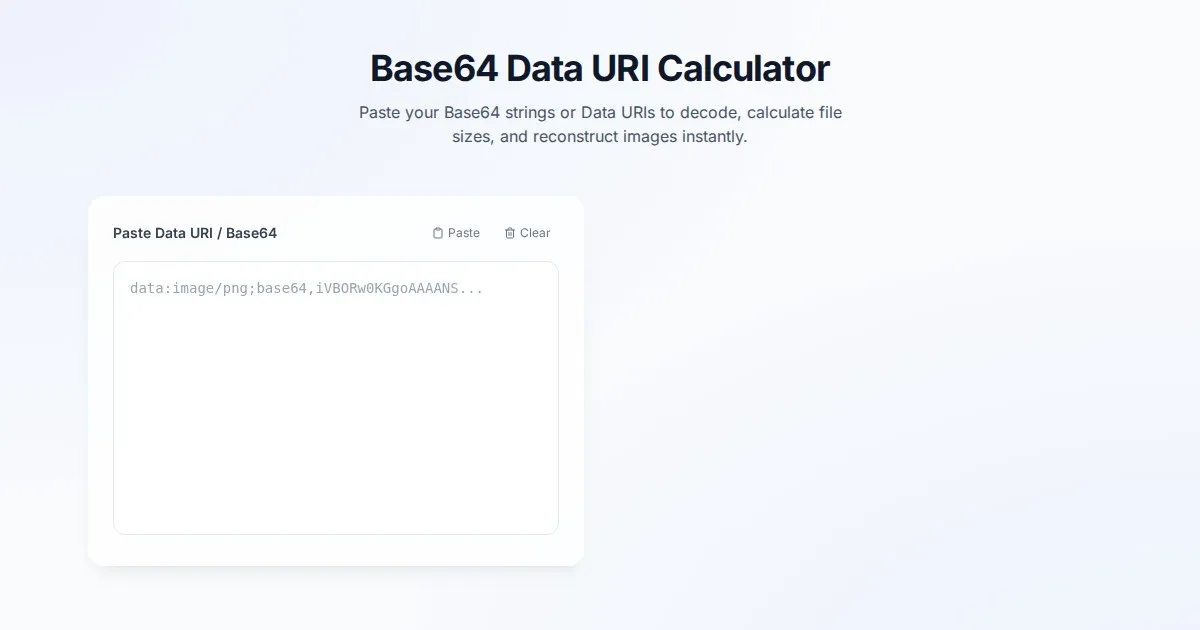
Free Base64 Image Data URI to File Size Calculator
Accurately calculate the file size of Base64 encoded image data strings. This free, web-based tool helps developers estimate binary file sizes for web apps.

Free Online Color Blindness Simulator & Image Filter Tool
Easily simulate color vision deficiencies like protanopia, deuteranopia, and tritanopia. Upload images to test design accessibility for color blindness.
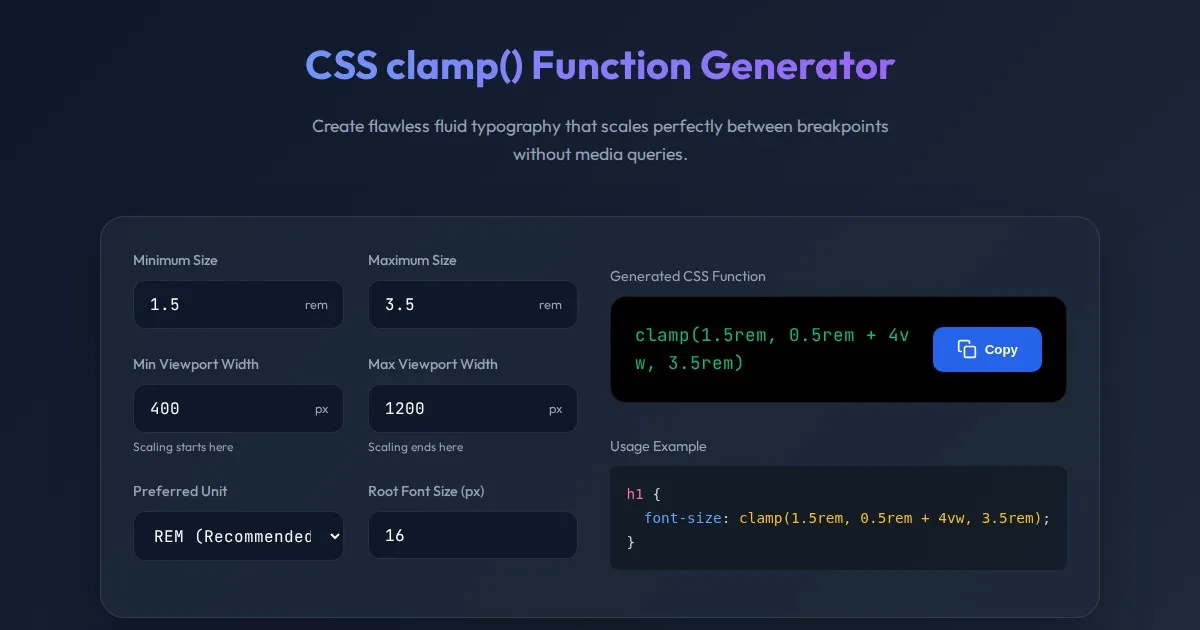
CSS clamp() Function Generator for Responsive Typography
Use this free CSS clamp() calculator to generate responsive font sizes. Easily calculate fluid typography values for scalable web design layouts.
Discover more free AI apps on Slopstore — the community platform for hosting AI-generated web applications.