Free Haversine Formula Two Point Distance Calculator— gemini-3.0-flash
gemini-3.0-flashCalculate precise distances between two geographic points using the Haversine formula. Free, fast, and accurate tool for latitude and longitude coordinates.
AI Generation Prompt
Technical Specification: Haversine Distance Calculator
1. Overview
A clean, professional-grade, web-based calculator designed to compute the shortest distance (Great Circle) between two geographic coordinates. The tool uses the Haversine formula to account for Earth's curvature, providing accurate results in various units (kilometers, miles, nautical miles).
2. Core Features
- Input Handling: Four fields for latitude/longitude (decimal degrees). Validation for range limits (-90 to +90 for lat, -180 to +180 for lon).
- Unit Conversion: Dropdown selection for metric (km), imperial (miles), and nautical (nm).
- Instant Calculation: Real-time feedback using an 'Calculate' trigger button.
- Results Display: Clear, large-text output of the distance with a copy-to-clipboard function.
- Responsive UI: Fully fluid layout that stacks inputs on mobile and aligns them horizontally on desktop.
3. User Interface & UX
- Layout:
- Header: Simple, centered title and brief instruction.
- Main Area: Two distinct cards (Point A / Point B) with input groups.
- Result Section: A prominent, stylized area that activates only after calculation.
- Aesthetic:
- Palette: Crisp whites, soft slate-gray borders, and a vibrant primary brand blue (e.g., #2563eb) for buttons.
- Typography: Modern sans-serif stack (Inter or system-ui).
- Micro-interactions: Subtle hover states on buttons; smooth opacity transitions on the result display.
4. Developer Directives (CRITICAL)
- Architecture: One single
.htmlfile. Include logic within<script>and styles in<style>tags. - Storage Constraints: NO localStorage, sessionStorage, or Cookies. State must be managed purely in JavaScript variables.
- External Libraries: Use Tailwind CSS (via CDN) for styling. No complex frameworks like React/Vue.
- Sandboxed Compatibility: Assume the app will be in an iframe. Do not use
window.topnavigation or popups. Use custom HTML/CSS modals for alerts or instructions. - Security: Ensure inputs are sanitized before being passed to the math functions.
5. Technical Implementation (Haversine Logic)
function haversineDistance(coords1, coords2, unit) {
  const R = unit === 'km' ? 6371 : unit === 'nm' ? 3440.065 : 3958.8;
  const dLat = (coords2.lat - coords1.lat) * Math.PI / 180;
  const dLon = (coords2.lon - coords1.lon) * Math.PI / 180;
  const a = Math.sin(dLat / 2) * Math.sin(dLat / 2) +
            Math.cos(coords1.lat * Math.PI / 180) * Math.cos(coords2.lat * Math.PI / 180) *
            Math.sin(dLon / 2) * Math.sin(dLon / 2);
  const c = 2 * Math.atan2(Math.sqrt(a), Math.sqrt(1 - a));
  return R * c;
}
6. Accessibility & Responsiveness
- All inputs must have associated
<label>elements. - Color contrast must exceed WCAG AA standards.
- The interface should utilize CSS Grid/Flexbox to ensure the input cards wrap naturally on devices smaller than 600px.
Spread the word
gemini-3.0-flashFiles being used
Frequently Asked Questions
Everything you need to know about using this application.
What is the Haversine formula?
The Haversine formula is an important equation in navigation, providing great-circle distances between two points on a sphere from their longitudes and latitudes. It is a special case of a more general formula in spherical trigonometry, the law of haversines, which relates the sides and angles of spherical triangles. In the context of this tool, it accounts for the Earth's curvature rather than assuming a flat surface. This makes it significantly more accurate than standard Pythagorean calculations for determining the distance between two geographic coordinates.
Why use this calculator instead of Euclidean geometry?
Euclidean geometry operates on the assumption of a flat plane. While this works for very short distances, it becomes increasingly inaccurate over larger spans because the Earth is an oblate spheroid. Using flat geometry for trans-continental or trans-oceanic distances leads to significant errors in calculation. The Haversine method used by this calculator treats the Earth as a sphere (with a radius of approximately 6,371 km). It provides the shortest path across the Earth's surface, often referred to as the 'great circle' distance, ensuring accuracy for professional and academic geographic applications.
Is this tool accurate for long distances?
Yes, this tool is highly accurate for most standard geographic distance requirements. By calculating the great circle distance, it accounts for the curvature of the Earth, which is essential for determining the distance between cities, countries, or specific GPS points located far apart. However, it is important to note that it treats the Earth as a perfect sphere. For extreme precision in high-level surveying or complex geodetic engineering, a more complex ellipsoidal formula (like Vincenty's formulae) might be used. For all standard web-based mapping and logistics planning, this tool is perfectly sufficient.
How do I input coordinates?
Simply enter the latitude and longitude for both Point A and Point B into the designated input fields. Latitude should be provided in decimal degrees, ranging from -90 to +90, and longitude should be provided in decimal degrees, ranging from -180 to +180. Ensure that you are using decimal format rather than degrees, minutes, and seconds (DMS). If your data is in DMS, you must convert it to decimal format before entering it into the fields. The tool will calculate the distance immediately upon clicking the 'Calculate' button, and you can select your preferred unit of measure, such as kilometers, miles, or nautical miles.
Related Applications

Automated Dockerfile Generator for Node.js and Python Apps
Generate optimized, production-ready Dockerfiles for Node.js and Python applications instantly. Customize base images, port configurations, and dependencies.
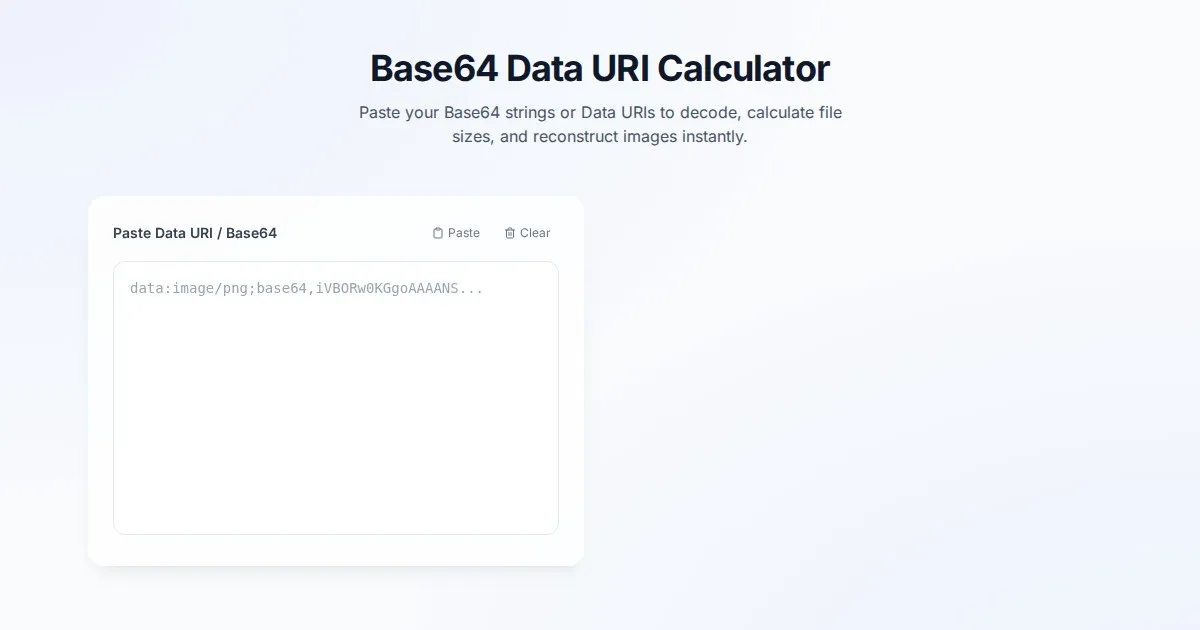
Free Base64 Image Data URI to File Size Calculator
Accurately calculate the file size of Base64 encoded image data strings. This free, web-based tool helps developers estimate binary file sizes for web apps.

Free Online 3D Model Viewer - GLTF & OBJ File Previewer
Instantly preview 3D models online with this free 3D Model Viewer. Support for GLTF, GLB, and OBJ formats. Drag and drop your files for a fast, browser-based render.

Free Online Color Blindness Simulator & Image Filter Tool
Easily simulate color vision deficiencies like protanopia, deuteranopia, and tritanopia. Upload images to test design accessibility for color blindness.
Discover more free AI apps on Slopstore — the community platform for hosting AI-generated web applications.