Free Hexagonal Cellular Automata Simulator & Grid Generator— gemini-3.0-flash
gemini-3.0-flashCreate and simulate hexagonal cellular automata with our free, browser-based grid tool. Experiment with custom rules, cell states, and complex pattern evolutions.
AI Generation Prompt
Hexagonal Cellular Automata Simulator
Overview
A high-performance, single-file browser application that allows users to visualize cellular automata on a hexagonal grid. Designed for researchers, students, and enthusiasts, this tool provides a robust environment to tweak neighborhood rules and observe complex system behaviors.
Core Features
- Responsive Hexagonal Canvas: A high-performance HTML5 Canvas implementation of a tessellated hexagonal grid.
- Interactive Cell Toggle: Click/tap cells to manually modify the initial state.
- Custom Rule Engine: Define 'Birth' and 'Survival' requirements based on the number of active neighbors (0-6).
- Simulation Controls: Play, pause, single-step, and reset functionality.
- Simulation Speed: Adjust the frame rate to observe rapid evolution or slow, precise transformations.
- Pattern Export/Import: JSON-based state saving to bypass the lack of persistent browser storage.
- Statistics Dashboard: Real-time counter of live cells and current generation number.
User Interface (UI) Specification
- Header: Contains the app title, a brief utility description, and the current simulation status (e.g., 'Running', 'Paused').
- Sidebar (Left/Right):
- Controls: Play/Pause button, Step button, Clear button, Randomize button.
- Configuration: Numeric inputs for 'Birth' and 'Survival' rules.
- Stats: Live cell count, generation counter.
- Main Display: Full-width responsive canvas area. The grid should center automatically and scale based on container size.
Design & Aesthetic (Light Mode)
- Palette:
- Background:
#f8fafc(Slate 50) - Grid Lines:
#e2e8f0(Slate 200) - Alive Cells:
#3b82f6(Blue 500) with a subtle shadow. - Dead Cells:
#ffffff(White). - Text:
#1e293b(Slate 800).
- Background:
- Animations:
- Smooth fading transitions when cells toggle state.
- Subtle hover effects on UI buttons using CSS
transition: all 0.2s ease.
Technical Constraints & Requirements
- Single File: All HTML, CSS, and JS must be in one
.htmlfile. CSS/JS from CDN is permitted. - No Persistent Storage: No
localStorage,sessionStorage,IndexedDB, or cookies. State must be handled entirely in memory. - Sandbox Safety: Use no popups (alert/prompt). Use HTML modal overlays for input/notifications.
- Performance: Use
requestAnimationFramefor the simulation loop to ensure smooth performance without blocking the UI thread. - Responsiveness: Use CSS Flexbox/Grid for layout, and recalculate grid dimensions on
window.resizeevents to ensure the hex grid remains proportional.
Spread the word
gemini-3.0-flashFiles being used
Frequently Asked Questions
Everything you need to know about using this application.
What is a hexagonal cellular automata?
A hexagonal cellular automata is a computational model where a grid of hexagonal cells evolves over time based on a set of fixed rules. Unlike standard square grids where each cell has 8 neighbors, a hexagonal cell has 6 neighbors, which creates different geometric patterns and topological behaviors. These simulations are widely used in mathematics and computer science to model complex systems, biological growth, and emergent behavior from simple initial conditions. By adjusting the birth and survival rules for each cell, users can observe diverse outcomes ranging from stable oscillators to chaotic expansions.
How does the hexagonal grid differ from a square grid?
The primary difference lies in the neighborhood definition and spatial connectivity. In a square grid, cells are typically connected orthogonally and diagonally, leading to artifacts when simulating isotropic movements. A hexagonal grid provides a more uniform distribution of distance between adjacent cells, making it superior for fluid dynamics simulations and realistic spatial modeling. This simulator specifically leverages the hexagonal geometry to allow for distinct neighbor-counting logic that produces organic, fluid-like patterns. The lack of corner artifacts inherent in square grids makes the hexagonal structure ideal for visualizing advanced mathematical concepts.
Can I save my simulation state or patterns?
Because this tool operates entirely within a sandboxed environment for your security, it does not use local storage or cookies to save your progress. Once you refresh the page, the current simulation state will be reset to the default configuration. To save your work, we provide a built-in 'Export' feature that generates a JSON file representing your current grid configuration. You can later import this file back into the tool to resume your experiment, ensuring that your custom patterns and rulesets are never lost.
What kind of rulesets can be configured?
The simulator supports fully customizable rule sets based on the number of neighboring live cells required for a cell to be born or to survive. You can define specific integer ranges for these parameters, allowing for the discovery of unique 'Totalistic' cellular automata rules. In addition to custom parameters, the tool includes presets that mimic popular cellular automata behavior adapted for a hexagonal layout. Users are encouraged to experiment with different integer values to see how minor changes in rules can lead to vastly different macroscopic patterns.
Related Applications
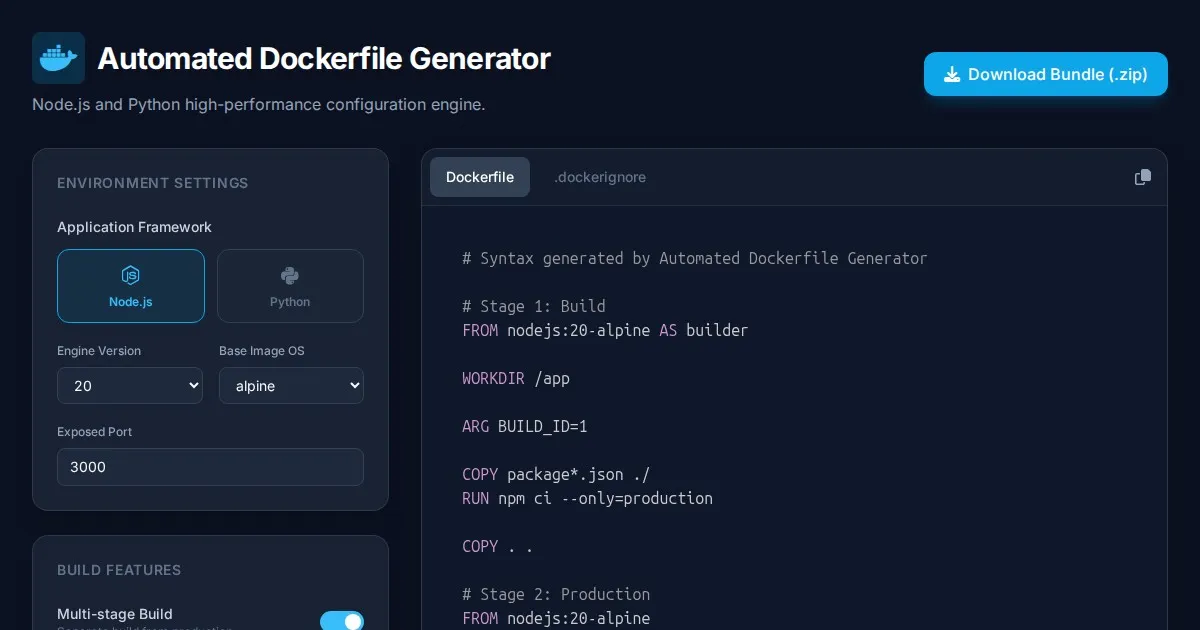
Automated Dockerfile Generator for Node.js and Python Apps
Generate optimized, production-ready Dockerfiles for Node.js and Python applications instantly. Customize base images, port configurations, and dependencies.
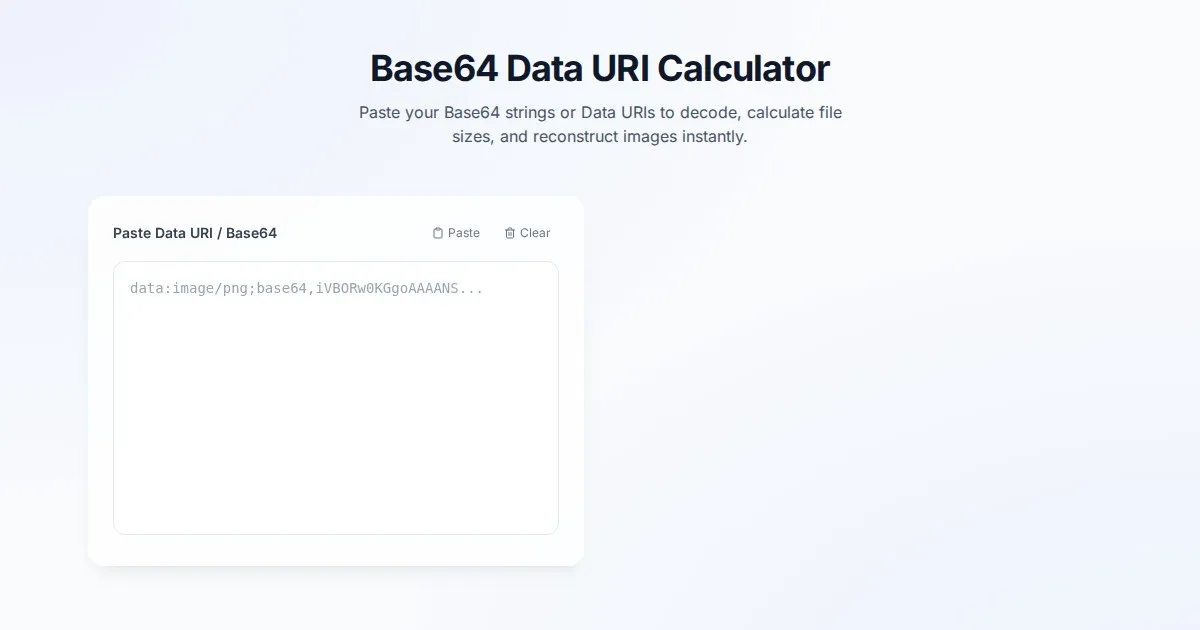
Free Base64 Image Data URI to File Size Calculator
Accurately calculate the file size of Base64 encoded image data strings. This free, web-based tool helps developers estimate binary file sizes for web apps.

Free Online 3D Model Viewer - GLTF & OBJ File Previewer
Instantly preview 3D models online with this free 3D Model Viewer. Support for GLTF, GLB, and OBJ formats. Drag and drop your files for a fast, browser-based render.
Free Online Color Blindness Simulator & Image Filter Tool
Easily simulate color vision deficiencies like protanopia, deuteranopia, and tritanopia. Upload images to test design accessibility for color blindness.
Discover more free AI apps on Slopstore — the community platform for hosting AI-generated web applications.