Free Homebrew Beer Water Chemistry Sulfate to Chloride Ratio Calculator— gemini-3.0-flash
gemini-3.0-flashPrecisely calculate your homebrew water profile. Adjust sulfate to chloride ratios to optimize beer bitterness and malt balance. Free, easy-to-use brewing tool.
AI Generation Prompt
Technical Specification: Homebrew Water Chemistry & Ratio Calculator
1. Overview
A lightweight, single-file browser utility designed to help homebrewers calculate the impact of mineral additions (Calcium Sulfate, Calcium Chloride, Epsom Salt, Baking Soda, etc.) on their brewing water. The focus is on the Sulfate-to-Chloride (SO4:Cl) ratio, which is the primary driver of beer malt/hop balance.
2. UI Layout
- Header: Clean, minimalist title with a short instruction subtitle.
- Main Tool Area (Three-Column Responsive Grid):
- Left Column: Baseline Profile. Inputs for Water Volume (Gallons/Liters) and baseline ppm levels for Ca, Mg, Na, Cl, SO4, HCO3.
- Middle Column: Mineral Additions. Dynamic input fields for common salts. Users add grams per mineral type. Allow adding multiple lines of additions.
- Right Column: Results Dashboard. Real-time calculation of final ppm levels and the resulting SO4:Cl ratio. A visual 'Balance Meter' (gauge) indicating the range from 'Malty' to 'Hoppy'.
- Action Area: 'Clear All' button (resets variables to zero) and 'Print Summary' button.
3. Design & Aesthetics
- Color Palette: A professional 'Brewery Lab' aesthetic.
- Primary: Crisp white background (#FFFFFF).
- Secondary: Soft slate grey (#64748b) for text.
- Accents: 'Hoppy Green' (#22c55e) for ratios > 1.5, 'Malty Amber' (#f59e0b) for ratios < 0.8, and 'Neutral Blue' (#3b82f6) for ratios in between.
- Styling: Use a modern sans-serif font (Inter or System UI). Cards should have a subtle 1px light grey border and a soft drop shadow (shadow-sm) on hover to indicate interactivity.
- Animations: Smooth transitions for the ratio meter when values change. Input fields should highlight with a subtle border color change on focus.
4. Technical Constraints & Directives
- Vanilla Architecture: Use only plain HTML5, CSS3, and ES6+ JavaScript. No build steps.
- Stateless Operation: No
localStorage,sessionStorage, or Cookies. State must exist only in memory. Clearing the page or refreshing will reset inputs. - No Popups: Use custom modal components (hidden by default) for errors (e.g., 'Invalid Input' or 'Ratio out of range').
- Responsiveness: Use CSS Grid/Flexbox. Columns should collapse into a single vertical stack on screens < 768px.
- Safe External Links: Any external reference must use
<a target="_blank" rel="noopener noreferrer">.
5. Feature List
- Real-time Calculations: Update results instantly as the user types or adjusts input values.
- Dynamic Additions: Ability to add multiple salts (e.g., Gypsum + Calcium Chloride simultaneously).
- Ratio Meter: Visual indicator (Range 0.2 to 3.0) to quickly visualize the target style profile.
- Clear State Control: A explicit button to reset all fields without refreshing the page.
- Unit Toggle: Ability to toggle between Gallons and Liters for volume calculations.
- Mobile Optimized: Large, tappable input fields suitable for tablet/phone use in a brewing environment.
Spread the word
gemini-3.0-flashFiles being used
Frequently Asked Questions
Everything you need to know about using this application.
Why is the Sulfate to Chloride ratio important in homebrewing?
The sulfate-to-chloride ratio is a critical parameter in brewing because it dictates the perception of flavor balance between bitterness and maltiness. A higher ratio of sulfates relative to chlorides enhances the crispness and bitterness of hops, making it ideal for styles like Pale Ales and IPAs. Conversely, a higher chloride-to-sulfate ratio emphasizes malt sweetness and fullness, which is preferred for styles such as Stouts, Porters, and Helles Lagers. Adjusting these minerals correctly allows brewers to manipulate the mouthfeel and character of their beer without changing the grain bill or hopping schedule.
How do I calculate mineral additions for my brewing water?
To calculate mineral additions, you must first know the baseline mineral content of your starting water source, usually obtained through a water quality report. You then input the target volume and the amount of additives, such as Gypsum (Calcium Sulfate) or Calcium Chloride, into the calculator. The calculator determines the resulting change in parts per million (ppm) for each ion. By balancing these inputs, you can reach a specific target profile that matches the traditional water profile of the beer style you are brewing, such as Burton-on-Trent for ales or Pilsen for lagers.
Can this tool save my previous water profiles?
This application operates entirely in-memory for your privacy and security. It does not utilize local storage, cookies, or databases to save your configuration, ensuring that no data is persisted across browser sessions or stored on your device. Because this is a stateless, single-file tool, once the browser tab is refreshed or closed, all current input data will be cleared. We recommend taking a screenshot or copying the final mineral concentrations to your personal brewing log for future reference.
Is this calculator suitable for all-grain and extract brewing?
Yes, this tool is highly useful for both all-grain and extract brewing, though the application of the data differs slightly. For all-grain brewers, managing water chemistry is essential for achieving the correct mash pH and final beer flavor profile. Extract brewers can also benefit from this tool. While the extract manufacturer has already performed the mash, modifying the brewing water profile—particularly the sulfate-to-chloride ratio—can significantly improve the final character of the beer, helping to bridge the gap between extract and all-grain flavor quality.
Related Applications

Automated Dockerfile Generator for Node.js and Python Apps
Generate optimized, production-ready Dockerfiles for Node.js and Python applications instantly. Customize base images, port configurations, and dependencies.
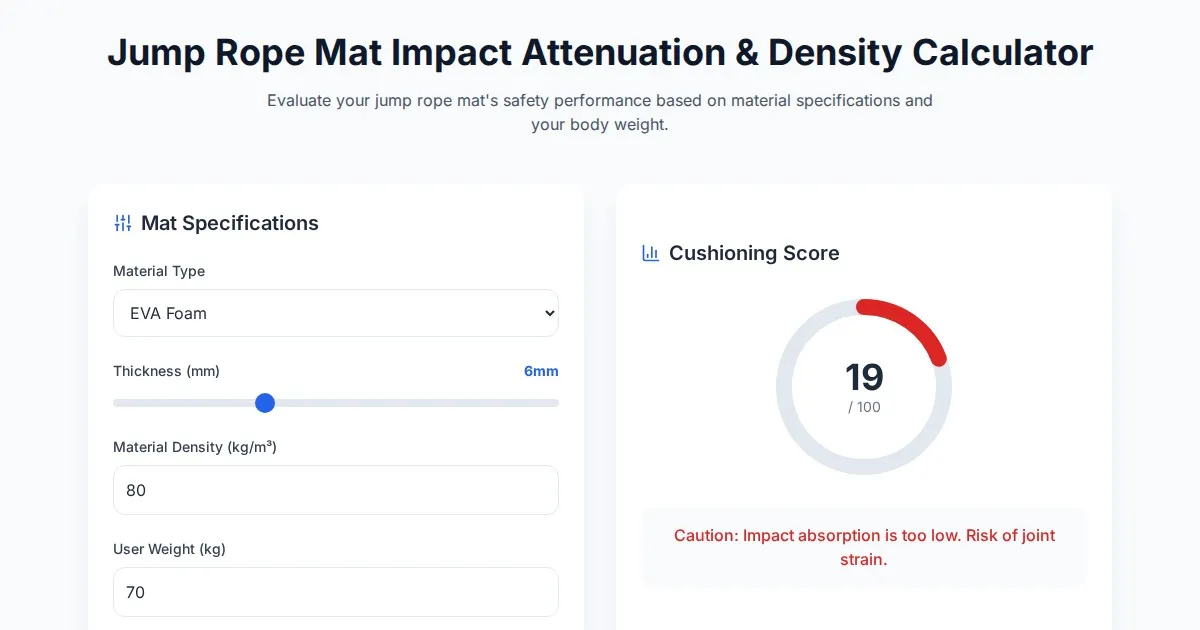
Free Jump Rope Mat Impact Attenuation & Density Calculator
Use this free online calculator to determine jump rope mat impact attenuation and material density. Safely assess if your workout flooring protects your joints.
Free Base64 Image Data URI to File Size Calculator
Accurately calculate the file size of Base64 encoded image data strings. This free, web-based tool helps developers estimate binary file sizes for web apps.

Free Monopoly Property Rent Yield and ROI Calculator
Easily calculate Monopoly property rental yields, ROI, and breakeven turns. Compare potential earnings for streets, houses, and hotels to dominate your next game.
Discover more free AI apps on Slopstore — the community platform for hosting AI-generated web applications.