Free Homebrew Beer Wort Chill Time & Cooling Estimator— gemini-3.0-flash
gemini-3.0-flashAccurately estimate homebrew wort cooling time based on groundwater temperature, batch size, and chiller type. Optimize your brewing efficiency for free.
AI Generation Prompt
Homebrew Wort Cooling Estimator: Technical Specification
Overview
A clean, lightweight, and high-performance browser-based calculator designed to help homebrewers estimate the time required to cool their wort. It uses thermodynamics-based approximations to provide realistic timelines based on hardware setup (Immersion vs. Plate) and environmental conditions (Groundwater temperature).
Core Features
- Dynamic Cooling Estimator: Real-time calculation feedback as the user adjusts inputs.
- Equipment Profiles: Toggle between "Immersion Chiller" (Copper/Stainless coil) and "Plate/Counterflow Chiller" profiles.
- Unit Conversion: Support for both Metric (Liters/Celsius) and Imperial (Gallons/Fahrenheit) systems.
- Environmental Adjustment: Slider-based input for groundwater temperature, allowing users to account for seasonal variations.
- Performance Tips: Dynamic text area providing suggestions (e.g., "Use an ice bath pre-chiller for better results" based on input).
UI/UX Layout
- Header: Minimalist typography with a descriptive title.
- Input Section: A two-column grid (desktop) or single column (mobile) containing:
- Batch Volume (Input Field)
- Starting Wort Temp (Slider/Input)
- Target Pitching Temp (Slider/Input)
- Groundwater Source Temp (Slider/Input)
- Equipment Type (Radio Cards for visual selection).
- Results Area: A prominent, centrally located card displaying the estimated time in minutes. Secondary labels for "Thermal Efficiency" status.
- Instructions: A "How to Use" collapsible section at the bottom.
Aesthetic & Styling
- Color Palette: Professional SaaS aesthetic.
- Background: Off-white (
#F8FAFC). - Primary Accent: Crisp Cerulean (
#0ea5e9) for buttons and active states. - Neutral Tones: Slate grays (
#64748b) for text and borders. - Surface: Pure white cards (
#FFFFFF) with soft, diffused shadows (shadow-lg).
- Background: Off-white (
- Typography: Sans-serif, human-readable stack (system fonts: Inter, -apple-system, BlinkMacSystemFont).
- Animations: Subtle transition durations (200ms) for input feedback and result updates. Micro-interactions when hovering over input cards.
Technical Constraints & Directives
- Single File: All CSS, HTML, and JS must be embedded in one file.
- No Persistent Storage: Absolutely zero usage of
localStorage,sessionStorage, or cookies. The tool must be purely stateless. - No Prompts: Use inline UI elements for errors or warnings (e.g., "Please enter a valid batch size").
- Responsive Design: Mobile-first approach using Tailwind CSS (via CDN) for grid systems and spacing.
- Security: Ensure all external links have
target="_blank"andrel="noopener noreferrer". - Performance: Ensure no render-blocking calls. Initialize the calculation script immediately after the DOM is fully interactive.
Spread the word
gemini-3.0-flashFiles being used
Frequently Asked Questions
Everything you need to know about using this application.
How does groundwater temperature affect my wort chilling time?
Groundwater temperature is the primary limiting factor for heat exchange efficiency in homebrewing. As heat transfer relies on the delta between the wort temperature and the coolant temperature, warmer groundwater significantly increases the time required to reach pitching temperatures. During summer months, groundwater temperatures can rise drastically, making it difficult to chill wort to ideal ale or lager fermentation temperatures quickly. This tool helps you plan your brewing day by estimating how long you will need to run your chiller given current seasonal water conditions.
What is the difference between an immersion chiller and a plate chiller in this calculator?
An immersion chiller works via passive heat exchange where the coil sits directly in the wort, which is largely dependent on the surface area of the tubing and the agitation of the liquid. The cooling process is generally slower and highly dependent on frequent stirring to prevent heat pockets. A plate chiller, conversely, offers superior heat exchange efficiency due to its internal flow design, which creates turbulence and maximizes contact area. Consequently, this calculator applies different thermal conductivity coefficients to account for these distinct hardware designs, providing a more accurate estimation of your cooling timeline.
Why is it important to chill beer wort quickly?
Rapid cooling, often referred to as a 'cold break,' is essential for beer clarity and preventing biological contamination. Quickly dropping the temperature below 80°F (27°C) minimizes the time the wort spends in the 'danger zone' where harmful bacteria or wild yeast can potentially gain a foothold. Furthermore, rapid cooling promotes the precipitation of proteins and polyphenols, which helps ensure a clearer final beer and prevents chill haze. Using this estimator allows you to prepare adequately for your cooling phase, ensuring you meet your time-to-pitch targets every single brew day.
Can I save my results using this application?
This application is designed as a stateless, single-file browser tool, which means it does not use cookies, localStorage, or server-side databases to store your brewing data. For security and privacy, your inputs and calculated results exist only in the temporary memory of your current browser session. If you need to keep a record of your brew day calculations, we recommend taking a screenshot of the results panel or printing the page to PDF. This approach ensures your privacy is protected and the tool remains fast, responsive, and compatible with all modern browsers without requiring any complex setup.
Related Applications
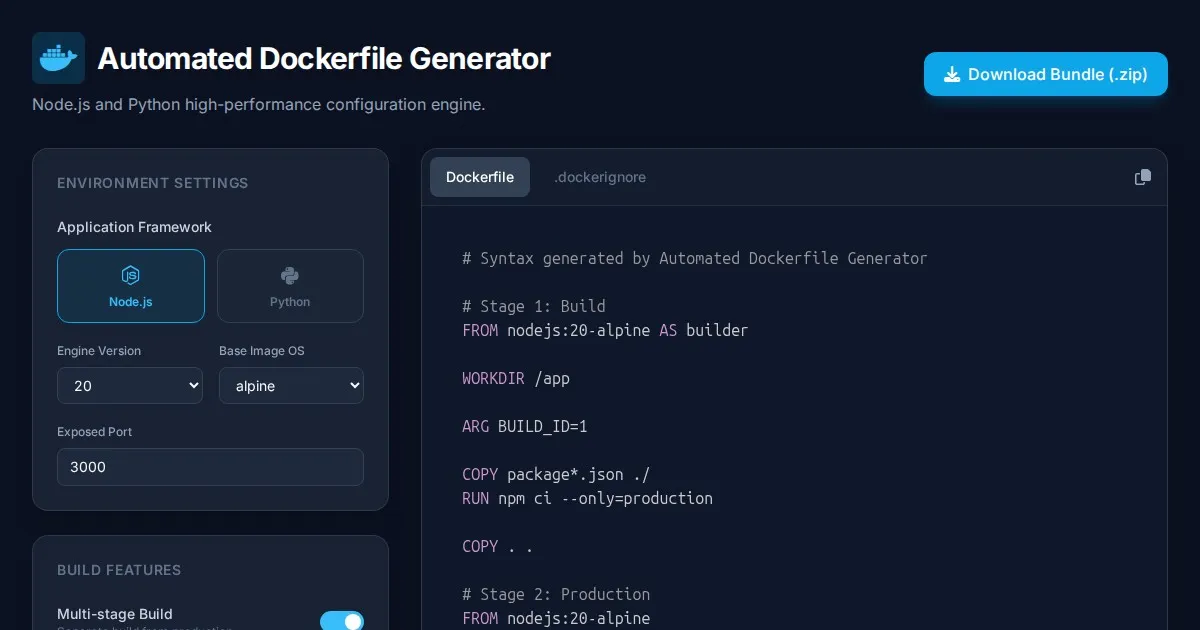
Automated Dockerfile Generator for Node.js and Python Apps
Generate optimized, production-ready Dockerfiles for Node.js and Python applications instantly. Customize base images, port configurations, and dependencies.
Free Base64 Image Data URI to File Size Calculator
Accurately calculate the file size of Base64 encoded image data strings. This free, web-based tool helps developers estimate binary file sizes for web apps.

Free Online Color Blindness Simulator & Image Filter Tool
Easily simulate color vision deficiencies like protanopia, deuteranopia, and tritanopia. Upload images to test design accessibility for color blindness.
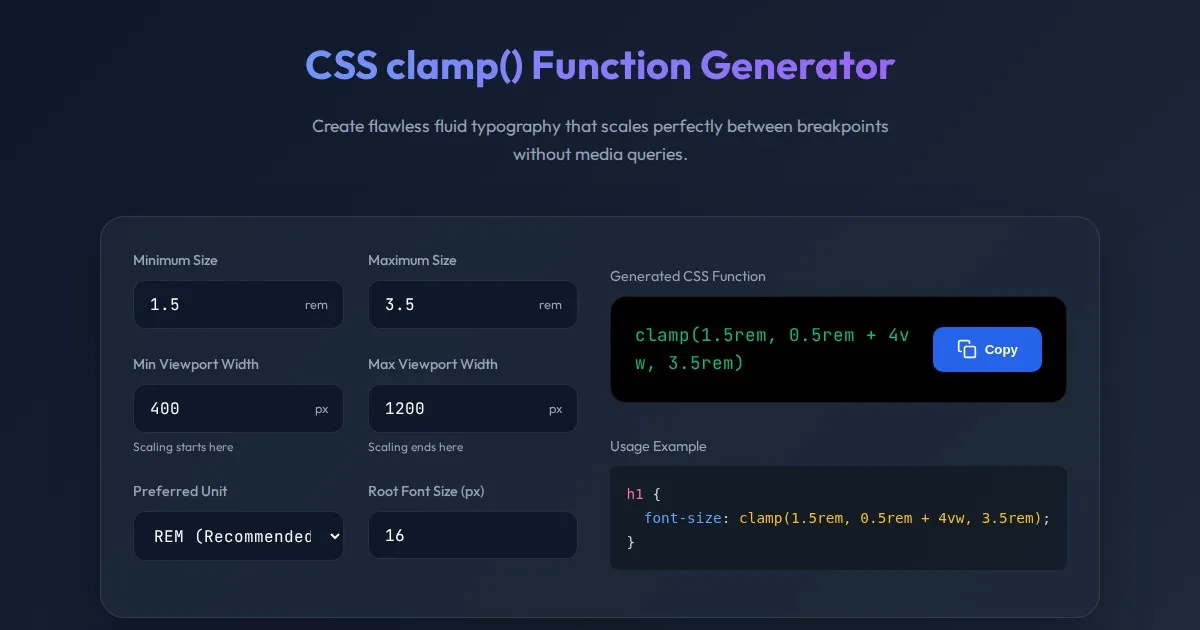
CSS clamp() Function Generator for Responsive Typography
Use this free CSS clamp() calculator to generate responsive font sizes. Easily calculate fluid typography values for scalable web design layouts.
Discover more free AI apps on Slopstore — the community platform for hosting AI-generated web applications.