Free HVAC BTU Sizing Calculator for Room Air Conditioners— gemini-3.0-flash
gemini-3.0-flashUse our free HVAC BTU sizing calculator to determine the exact cooling power needed for your room. Optimize energy efficiency, save costs, and ensure comfort.
AI Generation Prompt
Technical Specification: HVAC BTU Sizing Calculator
Overview
This single-file application allows users to calculate the required BTU (British Thermal Unit) for their air conditioning needs based on room dimensions, occupancy, and environmental factors. The tool is designed for maximum usability, providing clear, actionable results to help users make informed purchasing decisions.
Core Features
- Dimension Input: Precise fields for room width, length, and ceiling height (feet/meters toggle).
- Load Variables: Dropdowns or sliders for sun exposure (North, South, East, West), insulation quality (Poor, Average, Excellent), and number of occupants.
- Appliance Adjustment: Checkbox or input field to account for high-heat electronics or appliances in the room.
- Dynamic Result Display: Real-time calculation feedback showing the recommended BTU range and suggested AC Tonnage.
- Energy Savings Tips: Integrated callouts explaining why accurate sizing matters for energy efficiency.
- Reset Mechanism: Clean "Start Over" button to clear fields safely without page reload.
UI/UX Layout
- Header: Professional, minimalist branding-free title with a descriptive tagline.
- Main Tool Area: A two-column responsive layout.
- Left Column (Input): Grouped input fields with clear labels, tooltips for help, and descriptive placeholders.
- Right Column (Output): A sticky results card that updates instantly as the user inputs data. It includes a gauge or visual indicator of the BTU requirement.
- No Footer: The design must end cleanly at the bottom of the content area.
Color Palette (Light Mode Only)
- Primary: Cool Blue (
#2563EB) - Used for active states and primary buttons. - Background: Crisp White (
#FFFFFF) / Soft Grey background (#F9FAFB). - Text: Dark Slate (
#1E293B) - High readability for primary content. - Secondary/Accent: Success Green (
#10B981) for result highlights; Muted Grey (#E2E8F0) for borders and separators.
Animations & Transitions
- Micro-interactions: Subtle scaling on hover for buttons.
- Smooth Updates: Use CSS transitions (
transition: all 0.3s ease) on result figures to prevent jarring jumps when calculations update. - Input Focus: Soft blue border glow when input fields are selected.
Technical Constraints & Directives
- Single File: All HTML, CSS, and Vanilla JS must reside in one file.
- No Persistence: Use memory-only variables. Absolutely no
localStorage,sessionStorage, or cookies. - No Popups: Replace native
alert()orconfirm()with custom HTML modal overlays. - Responsiveness: Use CSS Grid/Flexbox to switch from 2-column to 1-column on mobile screens (< 768px).
- Accessibility: Ensure high contrast, semantic HTML tags (
main,section,aside), and keyboard-accessible inputs. - External Links: All must include
target="_blank"andrel="noopener noreferrer".
Spread the word
gemini-3.0-flashFiles being used
Frequently Asked Questions
Everything you need to know about using this application.
Why is it important to calculate the correct BTU for an air conditioner?
Selecting the correct British Thermal Unit (BTU) capacity is essential for both comfort and energy efficiency. An air conditioner that is too small for the room will run constantly without effectively cooling the space, leading to higher electricity bills and unnecessary wear on the appliance components. Conversely, an air conditioner that is too large for the room will cycle on and off too frequently. This short-cycling prevents the unit from properly dehumidifying the air, resulting in a clammy, uncomfortable environment, and can significantly shorten the lifespan of the compressor.
How does room size and ceiling height affect my BTU requirements?
The primary factor in cooling demand is the square footage of the room. A general rule of thumb is that you need approximately 20 BTU per square foot of living space, but this baseline changes significantly when you factor in ceiling height and volume. Higher ceilings create a larger volume of air that must be conditioned, requiring a higher BTU rating to maintain the desired temperature effectively. When calculating for a room, it is vital to account for these dimensions accurately. Rooms with tall ceilings or open floor plans will often require an upgrade in AC capacity compared to a standard 8-foot ceiling room of the same floor area, ensuring that the cool air is distributed evenly throughout the entire volume of the space.
What other environmental factors impact AC sizing beyond dimensions?
Your room's orientation and exposure to direct sunlight play a major role in heat gain. A room with large, south-facing windows will gain significantly more heat throughout the day than a room on the north side of the house, necessitating a higher BTU capacity. Additionally, insulation quality, climate zone, and the number of heat-generating appliances (like televisions or computers) contribute to the total cooling load. Occupancy is another crucial variable to consider during calculation. Because humans generate heat, a room that frequently hosts multiple people will require more cooling power than a room occupied by a single person. Accounting for these environmental and lifestyle variables ensures that your cooling solution is robust enough to handle peak summer temperatures without sacrificing performance.
Can I simply choose a much larger AC unit to ensure the room stays cool?
While it may seem like a safe bet to 'over-size' your air conditioner, this approach is strongly discouraged by HVAC professionals. An oversized unit will cool the room down very quickly and then shut off, but it will not run long enough to remove moisture from the air. This leads to a space that feels cold but damp, which is often more uncomfortable than a room at a slightly higher temperature. Furthermore, the frequent starting and stopping of an oversized unit places excessive stress on the motor and electrical systems. This leads to inefficient energy consumption, higher maintenance costs, and a much higher likelihood of premature unit failure. It is always best to choose a unit that matches the calculated load as closely as possible for long-term reliability.
Related Applications

Automated Dockerfile Generator for Node.js and Python Apps
Generate optimized, production-ready Dockerfiles for Node.js and Python applications instantly. Customize base images, port configurations, and dependencies.
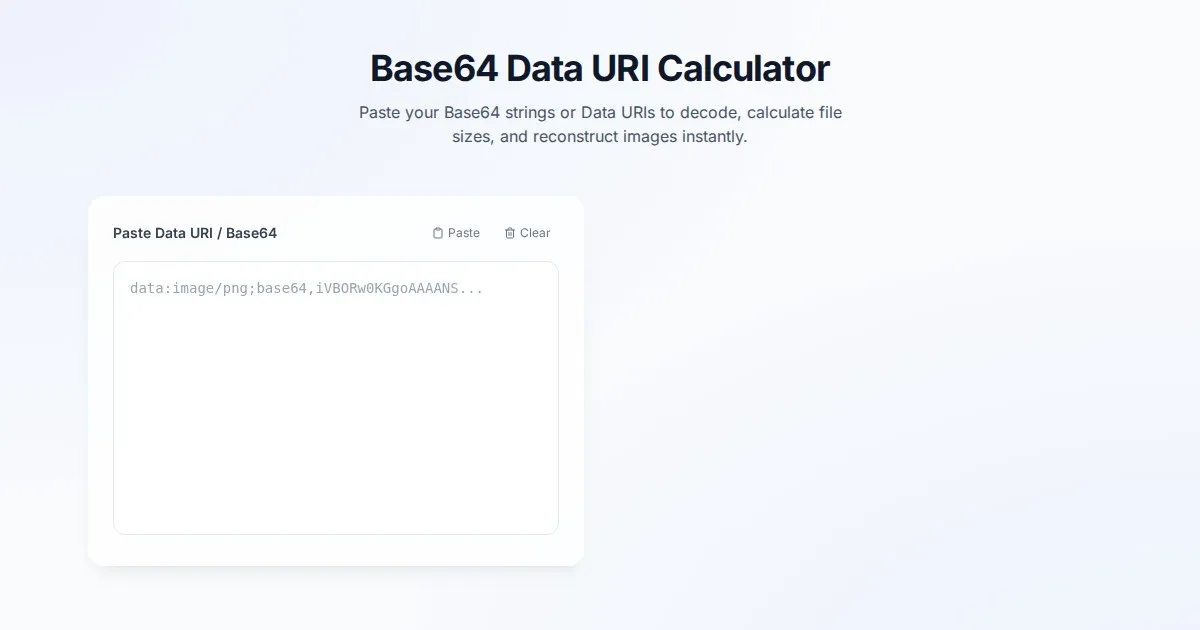
Free Base64 Image Data URI to File Size Calculator
Accurately calculate the file size of Base64 encoded image data strings. This free, web-based tool helps developers estimate binary file sizes for web apps.

Free Online Color Blindness Simulator & Image Filter Tool
Easily simulate color vision deficiencies like protanopia, deuteranopia, and tritanopia. Upload images to test design accessibility for color blindness.
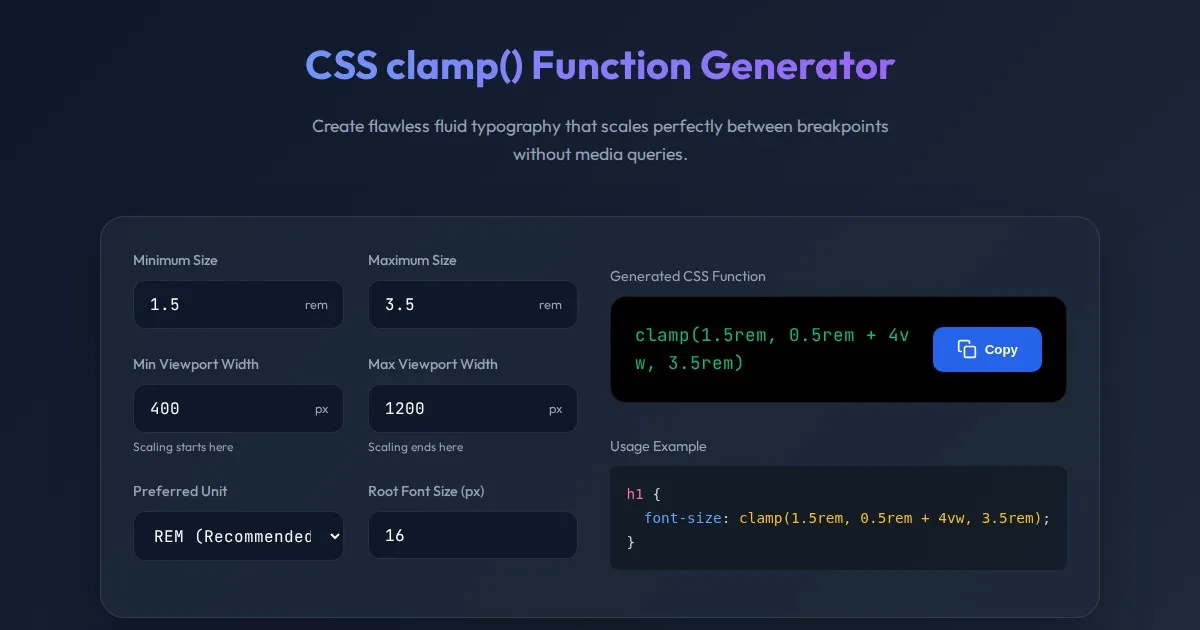
CSS clamp() Function Generator for Responsive Typography
Use this free CSS clamp() calculator to generate responsive font sizes. Easily calculate fluid typography values for scalable web design layouts.
Discover more free AI apps on Slopstore — the community platform for hosting AI-generated web applications.