Free Image to Braille ASCII Art Converter— gemini-3.0-flash
gemini-3.0-flashConvert your images into Braille ASCII art characters instantly. Free, client-side tool to transform photos into text-based visuals for terminals and code.
AI Generation Prompt
Free Image to Braille ASCII Art Converter
Overview
A high-performance, browser-based utility that transforms images into high-resolution Braille character art. The tool operates exclusively on the client side using HTML5 Canvas and JavaScript, ensuring privacy and speed.
Technical Architecture
- Single File: All HTML, CSS, and JS contained in one file.
- Frameworks: Vanilla JS, no external build dependencies.
- State Management: In-memory objects only. No
localStorage,sessionStorage, or cookies. - Compatibility: Sandboxed iframe compatible (no
alert,prompt, orconfirm).
Core Features
- Drag-and-Drop Uploader: Intuitive zone for dropping images or file browsing.
- Real-time Conversion: Instant preview of the conversion as settings change.
- Adjustment Controls:
- Width Slider: Adjust the output character width (e.g., 40-200 characters).
- Contrast/Threshold: Adjust the sensitivity of the pixel-to-braille conversion.
- Invert: Toggle between white-on-black and black-on-white visual styles.
- Utility Buttons:
- "Copy to Clipboard": One-click copy for the generated Braille string.
- "Download .txt": Save the output as a plain text file.
- "Reset": Clear all settings and the image.
UI/UX Design
- Layout:
- Header: Clean title and brief description.
- Main Tool Area: Split-screen layout. Left side: Upload and Control panel. Right/Bottom: Live display of the Braille art.
- Results Area: A scrollable
textareawith afont-family: monospacestyling for perfect alignment.
- Visual Style:
- Colors: White (#FFFFFF) primary background, Light Gray (#F3F4F6) for cards, Slate Blue (#4F46E5) for call-to-action buttons, Dark Charcoal (#1F2937) for text.
- Shadows: Subtle, modern soft shadows for UI cards (0 4px 6px -1px rgba(0, 0, 0, 0.1)).
- Animations: Smooth opacity transitions when revealing the generated text and gentle hover effects on buttons (transform: translateY(-2px)).
Development Guidelines
- Responsiveness: Use CSS Grid and Flexbox. Ensure controls stack vertically on small screens and sit side-by-side on desktop.
- Performance: Process image data via
CanvasRenderingContext2D.getImageData()to perform pixel-by-pixel analysis efficiently. - Safety: Ensure all external icons (if any) or font imports are loaded via
httpsCDNs. - No Popups: Implement any notifications (e.g., "Copied to clipboard!") via non-intrusive UI toasts that fade in and out.
Spread the word
gemini-3.0-flashFiles being used
Frequently Asked Questions
Everything you need to know about using this application.
How does the image to Braille conversion work?
This tool utilizes the Unicode Braille Patterns block (U+2800 through U+28FF). An image is analyzed by breaking it down into a grid of 2x4 pixel blocks. Each unique combination of active and inactive pixels within that grid corresponds to a specific Braille character, allowing for a much higher resolution representation than standard ASCII characters. The algorithm processes the brightness of each pixel relative to a chosen threshold. When a pixel meets or exceeds the intensity required, that specific dot within the Braille character is 'lit' or active. This results in a highly detailed, greyscale-like image constructed entirely from standard Unicode text.
Can I use the output on social media or messaging platforms?
Yes, the generated output is plain Unicode text, which means it is compatible with any application that supports monospaced fonts and Unicode character sets. Whether you are creating art for Discord, Twitter, or code comments, the Braille output maintains its structure as long as you paste it into a field that does not force variable-width font rendering. For the best results, always ensure that the platform you are pasting into utilizes a fixed-width (monospace) font, such as Courier, Consolas, or Inconsolata. If variable-width fonts are used, the grid alignment will be broken, causing the image to appear distorted or scrambled.
Is my data uploaded to a server for processing?
Absolutely not. This tool is designed with a privacy-first, client-side architecture. All image processing, pixel analysis, and Unicode character generation happen entirely within your local web browser using the HTML5 Canvas API. Because no images are uploaded to a server, your privacy is fully protected and there is no risk of your photos being stored or viewed by third parties. You can disconnect your internet once the page loads and the tool will continue to function perfectly without any external requests.
Why does the image look stretched or distorted?
Distortion in Braille art is typically caused by line-height settings or character width differences in the display environment. Braille characters have a specific vertical aspect ratio; if your text editor or website adds extra padding between lines, the 'pixels' will appear vertically elongated compared to their width. To correct this, ensure the line height in your text editor is set to 1.0 or as close to the font size as possible. If the issue persists, try adjusting the 'width' settings in our converter to generate a narrower or wider character grid to better match the aspect ratio of your target display environment.
Related Applications

Automated Dockerfile Generator for Node.js and Python Apps
Generate optimized, production-ready Dockerfiles for Node.js and Python applications instantly. Customize base images, port configurations, and dependencies.
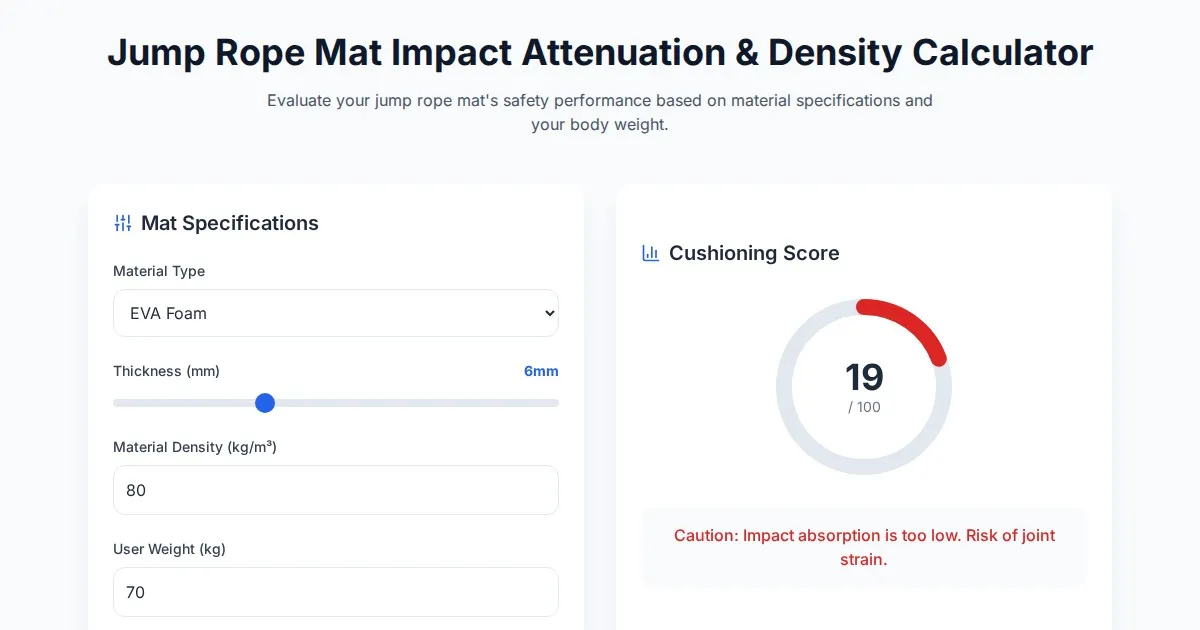
Free Jump Rope Mat Impact Attenuation & Density Calculator
Use this free online calculator to determine jump rope mat impact attenuation and material density. Safely assess if your workout flooring protects your joints.

Free Base64 Image Data URI to File Size Calculator
Accurately calculate the file size of Base64 encoded image data strings. This free, web-based tool helps developers estimate binary file sizes for web apps.
Free Online Color Blindness Simulator & Image Filter Tool
Easily simulate color vision deficiencies like protanopia, deuteranopia, and tritanopia. Upload images to test design accessibility for color blindness.
Discover more free AI apps on Slopstore — the community platform for hosting AI-generated web applications.