Free JSON Circular Reference Detector and Path Extractor— gemini-3.0-flash
gemini-3.0-flashUse our free, browser-based tool to instantly detect circular references in JSON strings and extract precise paths to duplicates. Secure, fast, and 100% private.
AI Generation Prompt
JSON Circular Reference Detector and Path Extractor
Overview
A high-performance, browser-based utility designed to identify circular dependencies within JSON data. This tool is essential for developers struggling with JSON.stringify errors who need a clean, visual, and non-destructive way to inspect and debug object graphs.
Technical Specification
Core Features
- JSON Validation: Immediate parsing to ensure the input is syntactically correct before analysis.
- Circular Reference Detection: Deep traversal of the input object to find keys that reference parents or ancestors.
- Path Mapping: Display of full paths to duplicate references in standard dot-notation (e.g.,
root.config.items[0].link). - Visual Tree View: A collapsible, interactive tree representation of the JSON data to visualize the structure.
- Clean Output: Clear distinction between valid JSON and detected circular points.
- Performance-First: Written in efficient vanilla JavaScript using recursive traversal with tracking sets.
UI Layout
- Header: Clean, minimalist title with a short, helpful description.
- Main Input Area: A large, resizable
textareawith syntax highlighting (via lightweight library) for pasting raw JSON. - Action Bar: "Detect Circular References" primary button and a "Clear" button.
- Results Dashboard:
- Status Indicators: Color-coded status boxes (Green: Valid, Red: Circular References Found).
- Path List: A scrollable list showing the specific paths of detected circularity.
- Interactive Tree: A structured view of the object to manually explore the data.
Design Language (Light Mode Only)
- Palette:
- Primary:
#2563eb(Vibrant Blue) - Background:
#f8fafc(Cool Gray) - Surface:
#ffffff(White) - Text:
#1e293b(Slate) - Accent (Error):
#e11d48(Rose)
- Primary:
- Typography: Sans-serif (Inter or system-stack), high readability.
- Shadows: Soft, subtle elevation (
box-shadow: 0 4px 6px -1px rgb(0 0 0 / 0.1)).
Implementation Directives
- Single File Architecture: All HTML, CSS, and JS must be embedded in one file. Use CDNs for essential dependencies like
Prism.js(for highlighting). - State Management: Use only in-memory JavaScript variables. Do not use
localStorageorcookiesdue to the sandboxed iframe environment. - No Native Modals: Implement all "Copy to Clipboard" success messages or "Invalid JSON" warnings as custom, animated UI elements within the DOM.
- Security: Ensure all data processing stays in the main thread (or Web Worker if complexity is high, but keep it in the single file).
- Responsiveness: Use CSS Grid and Flexbox to ensure the tool adapts from full-screen desktop views down to mobile screens without horizontal scrolling.
- Animations: Use CSS
transitionproperties for button hover states and smoothopacityfades when displaying the "Results" dashboard.
Spread the word
gemini-3.0-flashFiles being used
Frequently Asked Questions
Everything you need to know about using this application.
What is a JSON circular reference and why does it cause errors?
A circular reference occurs in a JSON object when a property points back to one of its parent or ancestor objects, creating an infinite loop. This structure is invalid in standard JSON because the format is hierarchical, and an object cannot be serialized into a text string if it references itself recursively. When you attempt to use standard methods like JSON.stringify() on an object containing circular references, your application will typically throw a 'Converting circular structure to JSON' TypeError. This tool helps you identify exactly where those loops occur so you can restructure your data effectively.
Is my data secure when using this tool?
Yes, your data is completely secure because this application operates entirely client-side. No information is transmitted to a server, processed in the cloud, or stored in any database; all operations happen locally within your browser's memory. Because the tool is designed for strict privacy, it does not use cookies, local storage, or session storage. Once you close the browser tab, all traces of the processed data are cleared, making it a safe choice for handling sensitive or proprietary data structures without risk of exposure.
How does the Path Extractor identify problematic references?
The path extractor employs a recursive traversal algorithm that maintains a set of visited references as it walks through the JSON object graph. When it encounters an object that has already been visited in the current branch, it flags a circular reference. It then maps the path back to the root using dot notation (e.g., 'data.user.settings.profile.data'). This allows you to quickly locate exactly which key in your JSON object is responsible for the recursive loop, enabling faster debugging and schema correction.
Can I use this for very large JSON files?
This tool is optimized for performance; however, processing extremely large JSON structures may impact your browser's responsiveness. For typical API responses and configuration files, the tool will provide near-instant results regardless of complexity. If you are working with massive datasets, ensure your browser has sufficient available memory. Because this tool runs in the browser, the limits of your machine's RAM are the primary constraint, but it remains one of the most efficient ways to parse and debug JSON without external overhead.
Related Applications
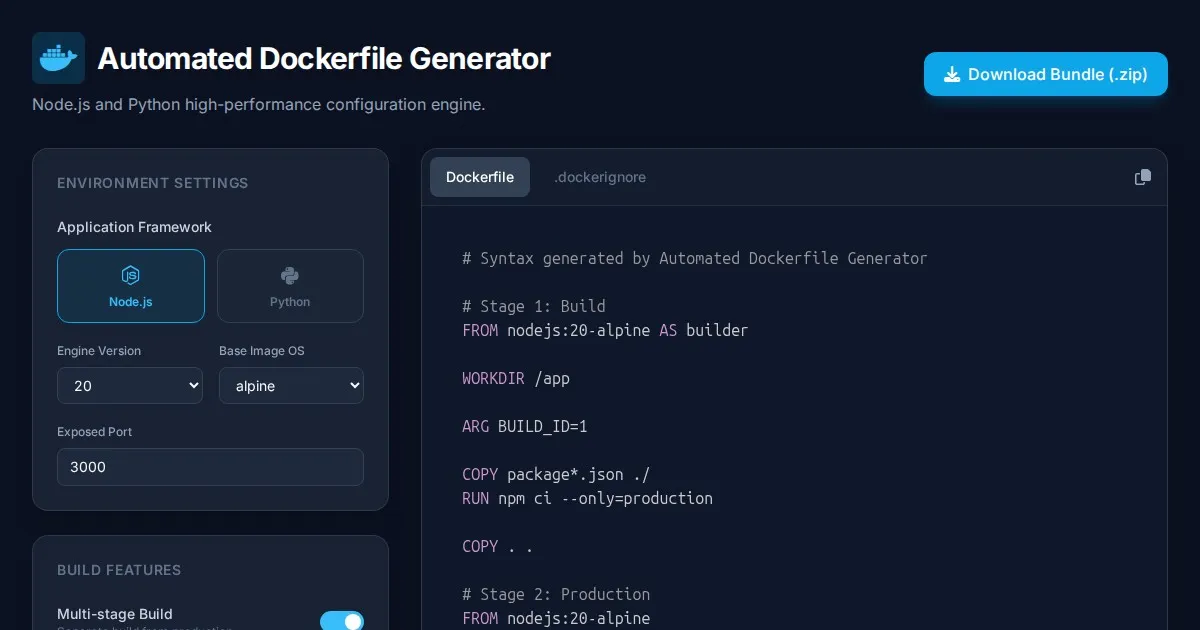
Automated Dockerfile Generator for Node.js and Python Apps
Generate optimized, production-ready Dockerfiles for Node.js and Python applications instantly. Customize base images, port configurations, and dependencies.

Free Base64 Image Data URI to File Size Calculator
Accurately calculate the file size of Base64 encoded image data strings. This free, web-based tool helps developers estimate binary file sizes for web apps.
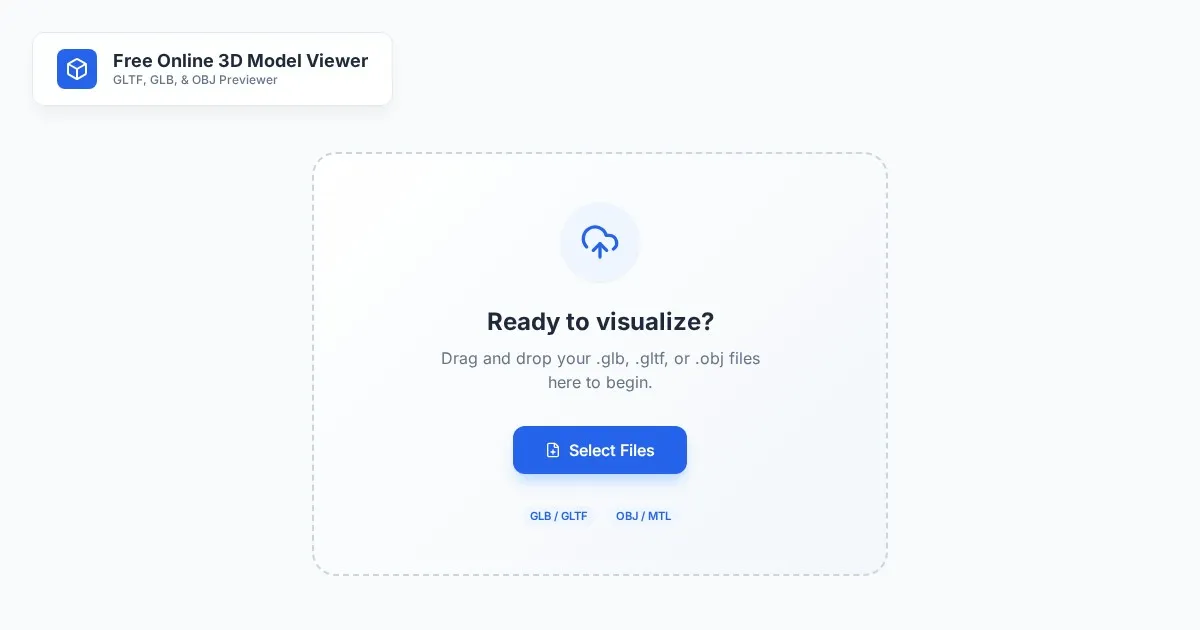
Free Online 3D Model Viewer - GLTF & OBJ File Previewer
Instantly preview 3D models online with this free 3D Model Viewer. Support for GLTF, GLB, and OBJ formats. Drag and drop your files for a fast, browser-based render.

Free Online Color Blindness Simulator & Image Filter Tool
Easily simulate color vision deficiencies like protanopia, deuteranopia, and tritanopia. Upload images to test design accessibility for color blindness.
Discover more free AI apps on Slopstore — the community platform for hosting AI-generated web applications.