Free JSON Patch (RFC 6902) Builder & Validator Tool— gemini-3.0-flash
gemini-3.0-flashEffortlessly build, test, and validate JSON Patch operations (RFC 6902) online. Generate compliant diffs and preview changes instantly in a simple browser tool.
AI Generation Prompt
JSON Patch (RFC 6902) Builder & Validator
Overview
A high-performance, single-file browser utility that helps developers generate and validate RFC 6902 compliant JSON Patch arrays. This tool provides a visual interface for constructing operations, real-time previews of the resulting state, and robust validation to ensure patch correctness.
Core Features
- Operation Builder: A dynamic list builder to add, remove, replace, move, copy, and test operations.
- Real-Time Preview: Two side-by-side (or stacked on mobile) text editors: one for the 'Original Document' and one for the 'Resulting Document' after the patch is applied.
- Syntax Validation: Instant feedback loop that checks if the JSON structure is valid and adheres to RFC 6902 standards.
- Clipboard Integration: One-click functionality to copy the generated JSON patch array.
- State Management: Purely in-memory; no server interaction or persistent storage.
UI/UX Specification
- Aesthetic: Modern, clean, and vibrant SaaS-style UI. Use a neutral background (#F8FAFC) with distinct white (#FFFFFF) containers for input areas. Use a clear, professional primary color (#4F46E5) for action buttons.
- Layout:
- Header: Contains the app title and a brief instructional subtitle.
- Left/Top Column (Inputs): Textarea for the original JSON. Below this, a dynamic list of patch operations with 'Add Operation' buttons.
- Right/Bottom Column (Results): Read-only editor displaying the generated JSON patch code block and a live preview of the target state.
- Typography: Inter or system-sans-serif, clean, high-readability.
- Animations: Subtle entry animations for new operation rows. Smooth transitions when switching between input tabs or modes.
Technical Implementation Constraints
- Architecture: Single-file HTML (
index.html). All JS/CSS must be embedded or loaded via standard CDN links (e.g., Tailwind CSS, Lucide Icons, Prism.js). - Sandboxing:
- Absolutely NO
localStorage,sessionStorage,cookies, orIndexedDB. If data persistence is needed, the session resets on reload. - NO
alert(),confirm(), orprompt(). Build custom modal components for errors or confirmations.
- Absolutely NO
- Performance: Must remain responsive on mobile devices by stacking input/preview panes.
- CDN Usage:
Tailwind CSSfor styling.Lucidefor icons.JSON-Patch(if needed) or simple manual parsing logic to calculate the output state.
Color Palette
- Background:
#F8FAFC(Slate 50) - Card Background:
#FFFFFF - Primary Text:
#1E293B(Slate 800) - Secondary Text:
#64748B(Slate 500) - Primary Accent:
#4F46E5(Indigo 600) - Success/Valid:
#10B981(Emerald 500) - Error/Invalid:
#EF4444(Red 500)
Developer Instructions
- Use
flexorgridfor a responsive layout that shifts from side-by-side to stacked on smaller screens. - Implement a
updateState()function that triggers on every input change, re-running the validation and patch application logic. - Ensure all user-inputted JSON is sanitized or handled via standard DOM APIs to prevent XSS.
- Ensure the application is visually polished with subtle shadows (
shadow-sm,shadow-md) and rounded corners (rounded-lg,rounded-xl).
Spread the word
gemini-3.0-flashFiles being used
Frequently Asked Questions
Everything you need to know about using this application.
What is a JSON Patch (RFC 6902)?
JSON Patch is a standard format (RFC 6902) for describing changes to a JSON document. It allows developers to express modifications—such as adding, removing, replacing, moving, or copying values—as an array of operations rather than sending an entire document back and forth between the client and server. This standard is widely used in RESTful APIs to implement partial updates efficiently, reducing bandwidth consumption and preventing race conditions. Using this format ensures that your API interactions are predictable, standard-compliant, and easy for other developers to parse or validate.
How does this JSON Patch Builder tool work?
This application provides a visual, real-time interface to build JSON Patch arrays. You start by entering your original JSON document, then add operations—such as 'add', 'replace', or 'remove'—by selecting them from a dropdown menu and specifying the target JSON pointer path and value. As you construct each operation, the tool generates the resulting RFC 6902 array in real-time. It validates the syntax as you type, ensuring that your patch will be accepted by compliant API endpoints. Once finished, you can copy the resulting JSON array directly to your clipboard for immediate use in your development workflow.
Is this tool safe for sensitive JSON data?
Yes, this tool is designed with a 'client-only' architecture. When you paste your JSON into the application, all processing, validation, and generation happens entirely within your web browser. No data is ever transmitted to an external server or saved to a database. Because the application operates in a sandbox environment and does not use persistent storage like cookies or local storage, your input is cleared immediately upon refreshing or closing the tab. This ensures total privacy and security for your configuration, credentials, or proprietary API data.
Does this generator support complex JSON path structures?
The tool supports the full RFC 6902 specification, including the use of JSON Pointers (e.g., /users/0/name). It is designed to handle deeply nested structures, arrays, and objects, allowing you to craft precise operations that target specific elements within your document hierarchy. If you are unsure about the correct path, the builder provides visual feedback and validation to prevent syntax errors. This helps you quickly resolve pathing issues before deploying your patch to a production API, making it a reliable utility for backend developers and API testers.
Related Applications

Automated Dockerfile Generator for Node.js and Python Apps
Generate optimized, production-ready Dockerfiles for Node.js and Python applications instantly. Customize base images, port configurations, and dependencies.
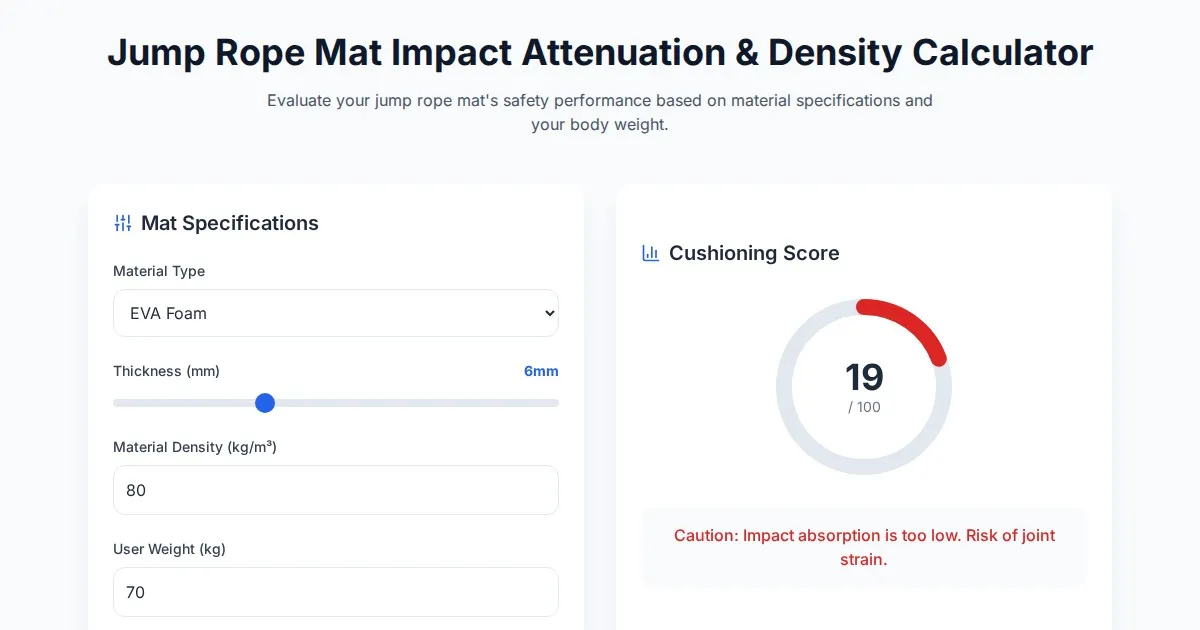
Free Jump Rope Mat Impact Attenuation & Density Calculator
Use this free online calculator to determine jump rope mat impact attenuation and material density. Safely assess if your workout flooring protects your joints.

Free Base64 Image Data URI to File Size Calculator
Accurately calculate the file size of Base64 encoded image data strings. This free, web-based tool helps developers estimate binary file sizes for web apps.

Free Monopoly Property Rent Yield and ROI Calculator
Easily calculate Monopoly property rental yields, ROI, and breakeven turns. Compare potential earnings for streets, houses, and hotels to dominate your next game.
Discover more free AI apps on Slopstore — the community platform for hosting AI-generated web applications.