Free JWT Expiration Timestamp Decoder & Date Converter— gemini-3.0-flash
gemini-3.0-flashDecode JWT 'exp' fields instantly with this free online tool. Convert Unix timestamps to human-readable dates for JSON Web Tokens securely in your browser.
AI Generation Prompt
Technical Specification: Browser-Based JWT Expiration Decoder
Overview
This single-file application is a specialized, client-side utility designed to decode JSON Web Token (JWT) expiration claims. It provides developers and system administrators with a fast, secure, and intuitive way to convert Unix timestamps to readable calendar dates.
Core Features
- Smart Input Detection: Automatically distinguishes between a full Base64Url-encoded JWT string and a raw numeric Unix timestamp.
- Real-Time Parsing: Instant decoding upon input. No "Submit" button required.
- Visual Feedback: Displays expiration status (Valid/Expired) using color-coded UI elements.
- Copy-to-Clipboard: Quick copy buttons for decoded data.
- Human-Readable Conversion: Converts Unix seconds into local date/time strings, UTC time, and "Time Until Expiration" countdown.
- Error Handling: Displays friendly, non-intrusive messages for malformed tokens or invalid inputs.
- Browser-Only Security: Zero server communication. All logic is executed via JavaScript within the user's browser.
UI/UX Design
- Aesthetic: Modern, "SaaS-clean" look. High usage of whitespace, subtle shadows, and soft corner radiuses (8px).
- Color Palette:
- Background: #F9FAFB (Cool Gray)
- Primary: #4F46E5 (Indigo)
- Surface: #FFFFFF (White)
- Text: #1F2937 (Dark Gray)
- Success/Valid: #059669 (Emerald)
- Error/Expired: #DC2626 (Red)
- Layout:
- Header: Minimalist title centered at the top.
- Main Area: A large, responsive textarea for inputs. Centered card design.
- Results Area: Grid or list view below the input showing
Timestamp,UTC Date,Local Date, andStatus.
- Animations:
- Subtle fade-in animations for result panels.
- Smooth hover transitions on buttons (scale 1.02, transition 0.2s).
Technical Implementation Constraints
- Single File: All HTML, CSS (Tailwind CDN), and Vanilla JS in one file.
- No Storage: Absolutely NO usage of
localStorage,sessionStorage, or Cookies. App must maintain state in-memory only. - Security: The app should set
Referrer-Policy: no-referrerandContent-Security-Policyvia meta tags if possible. - Dependencies: Use Tailwind CSS (via CDN) for styling. Icons can be pulled from a reliable CDN like Lucide or FontAwesome.
- Compatibility: Must be fully functional within a sandboxed iframe. This means avoiding
window.topaccess and any API that requires external communication. - Modals: Any confirmation or error alerts must be custom-built DOM elements hidden by default, toggled via JavaScript to ensure standard
alert()calls are not used.
Developer Instructions
- Use
atob()for Base64 decoding, ensuring proper handling of URL-safe characters by replacing-with+and_with/. - Do not use external frameworks. Use
document.getElementByIdorquerySelectorfor DOM manipulation. - Implement a responsive grid layout. On mobile, inputs should stack. On desktop, they can be side-by-side if necessary.
- Ensure all user-provided input is treated as text to prevent XSS. Use
.textContentinstead of.innerHTMLwhen displaying decoded claims.
Spread the word
gemini-3.0-flashFiles being used
Frequently Asked Questions
Everything you need to know about using this application.
What is the 'exp' claim in a JSON Web Token?
The 'exp' (expiration time) claim is a standard registered claim in a JWT that identifies the exact expiration time on or after which the JWT must not be accepted for processing. It is typically represented as a numeric value indicating the number of seconds since the Unix Epoch (January 1, 1970). When a server issues a token, it sets this claim to ensure the token remains valid only for a limited window. Our tool helps you instantly verify this value by converting the raw numerical format into a human-readable calendar date and time, allowing you to quickly check if a session is still valid.
Is it safe to use this JWT decoder online?
Yes, this tool is completely secure because all processing happens locally within your web browser. When you paste your JWT or timestamp, the data never leaves your computer, and no information is transmitted to any external server or backend database. Because we do not store, log, or track your input, you can safely decode tokens even in sensitive development environments. We adhere to a strict 'client-side only' policy to ensure your authentication tokens remain private and protected from unauthorized access.
How do I interpret the output of this tool?
Once you input a JWT or a raw timestamp, the tool parses the data and calculates several helpful metrics. You will see the original Unix timestamp, the converted local date and time based on your system settings, and the time remaining until the token expires. If the token has already expired, the tool will clearly indicate that the token is invalid and provide the duration since the expiration occurred. This helps developers debug authentication issues and verify token lifespans quickly without running CLI commands or using complex debugging tools.
Can this tool handle both JWT strings and raw timestamps?
Absolutely. This tool is designed with a smart-input feature that detects the format automatically. If you paste a full, Base64Url-encoded JWT string, the tool will automatically extract the payload, locate the 'exp' field, and decode it for you. Alternatively, if you have a raw numeric Unix timestamp from a database or log file, you can simply paste that number into the same input field. The application identifies the input type instantly and performs the conversion, providing a versatile solution for different stages of the development workflow.
Related Applications
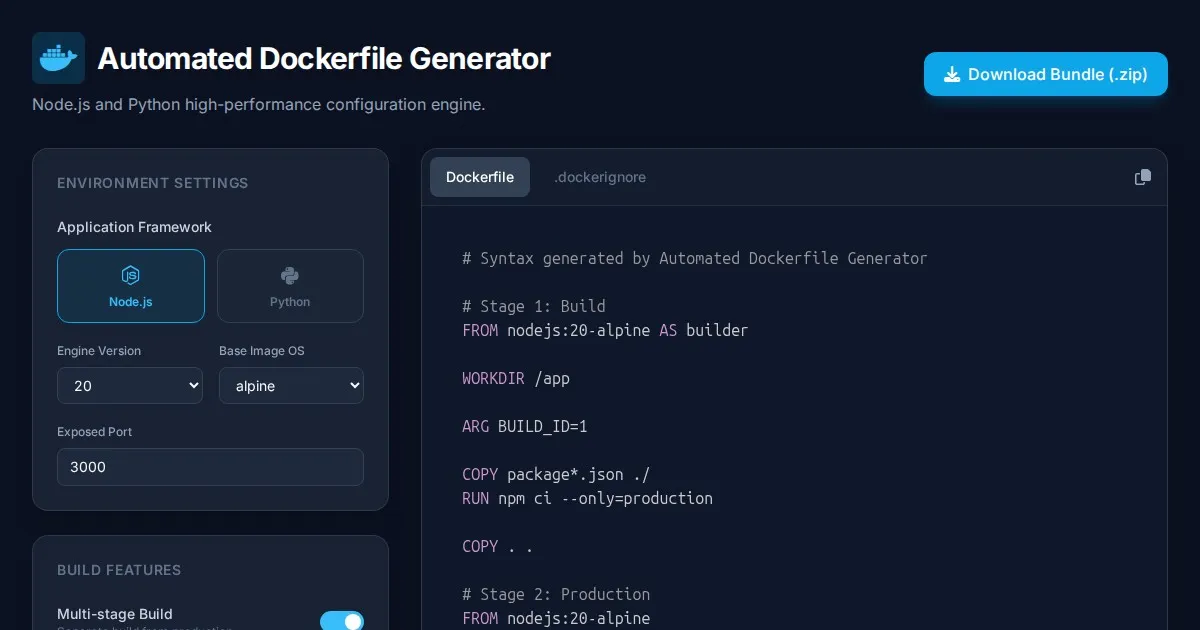
Automated Dockerfile Generator for Node.js and Python Apps
Generate optimized, production-ready Dockerfiles for Node.js and Python applications instantly. Customize base images, port configurations, and dependencies.

Free Jump Rope Mat Impact Attenuation & Density Calculator
Use this free online calculator to determine jump rope mat impact attenuation and material density. Safely assess if your workout flooring protects your joints.
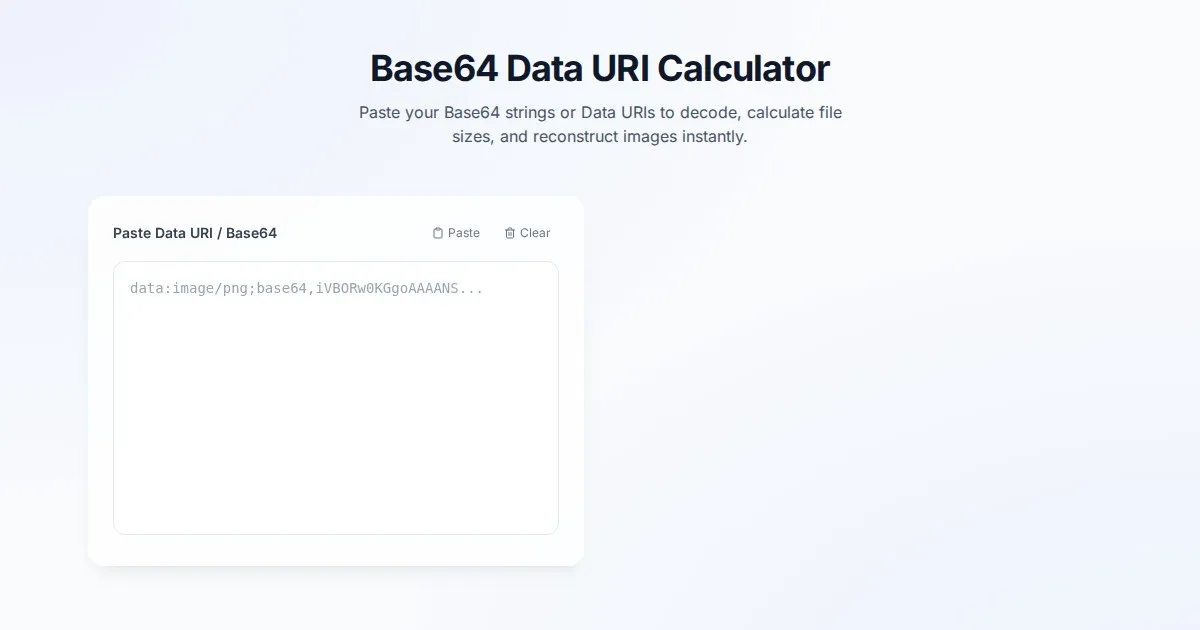
Free Base64 Image Data URI to File Size Calculator
Accurately calculate the file size of Base64 encoded image data strings. This free, web-based tool helps developers estimate binary file sizes for web apps.

Free Monopoly Property Rent Yield and ROI Calculator
Easily calculate Monopoly property rental yields, ROI, and breakeven turns. Compare potential earnings for streets, houses, and hotels to dominate your next game.
Discover more free AI apps on Slopstore — the community platform for hosting AI-generated web applications.