Free Koch Snowflake Perimeter & Fractal Geometry Calculator— gemini-3.0-flash
gemini-3.0-flashCalculate the perimeter and segment count of a Koch Snowflake fractal instantly. A free math tool for geometry students, educators, and fractal enthusiasts.
AI Generation Prompt
Koch Snowflake Perimeter & Fractal Geometry Calculator
Overview
A single-file, browser-based utility designed to calculate the perimeter, segment count, and growth factor of a Koch Snowflake fractal based on user-defined inputs. This tool provides instant mathematical insights into L-system iterations, perfect for students and educators.
Core Features
- Dynamic Calculation Engine: Real-time calculation of perimeter length based on user input (initial side length and iterations).
- Segment Counter: Displays the total number of line segments for the current iteration.
- Fractal Growth Factor: Shows the scaling factor (4/3 multiplier) per iteration.
- Visual Preview (Canvas): A responsive HTML5 Canvas rendering of the fractal based on the selected iteration (capped at a reasonable limit for performance, e.g., 6 iterations).
- Mathematical Explanation: A "How it works" section explaining the formula (P = 3 * s * (4/3)^n).
User Interface Specification
- Header: Simple, clean typography with a descriptive title.
- Input Section:
- Number input for "Initial Side Length" (Units: px/cm/in).
- Range slider (0-7) for "Number of Iterations".
- Results Area: A card-based layout featuring large, clear typography for the "Total Perimeter" result.
- Visualization Area: Centered container for the canvas, with a white background and subtle border.
Technical Constraints & Directives
- Environment: Single-file HTML5/Vanilla JS. No build process.
- Storage: Absolutely NO
localStorage,sessionStorage, or cookies. Maintain state in JS objects. - Sandboxing: Code must be compatible with a sandboxed iframe. No
alert(),confirm(), orprompt(). - Performance: Use
requestAnimationFramefor canvas updates to prevent UI blocking during re-renders. - Responsiveness: Use CSS Grid/Flexbox to ensure the layout stacks vertically on mobile and horizontally on desktop.
Design System & Aesthetics
- Palette:
- Primary:
#2563eb(Professional Blue) - Background:
#f8fafc(Off-white) - Text:
#1e293b(Dark Slate) - Cards:
#ffffff(White) with softbox-shadow(0 4px 6px -1px rgb(0 0 0 / 0.1)).
- Primary:
- Transitions: Use CSS
transition: all 0.3s easefor button hover states and slider changes. - Aesthetic: Minimalist, "SaaS-style" UI with ample whitespace (padding: 2rem).
Animation Specifications
- Number Counter: Use a simple JavaScript
setIntervalorrequestAnimationFrameto increment the result display numbers when the slider changes to provide a premium "counting" effect. - Canvas Draw: Smooth fade-in (CSS
opacityanimation) when the canvas redraws to avoid harsh flickering.
Spread the word
gemini-3.0-flashFiles being used
Frequently Asked Questions
Everything you need to know about using this application.
What is a Koch Snowflake?
The Koch Snowflake is a mathematical curve and one of the earliest fractal curves to have been described. It is constructed by taking an equilateral triangle and repeatedly adding smaller equilateral triangles to the middle third of each side, creating a shape with infinite perimeter but finite area. This calculator helps visualize and quantify the growth of the perimeter as the number of iterations increases. It is a fundamental example of how simple recursive rules in an L-system can produce complex, self-similar geometric patterns.
How is the Koch Snowflake perimeter calculated?
The perimeter of a Koch Snowflake is calculated based on the initial side length of the starting triangle and the number of recursive iterations applied. In each iteration, every line segment is replaced by four segments, each one-third the length of the previous segment. Mathematically, if the starting side length is 's' and the number of iterations is 'n', the formula is Perimeter = 3 * s * (4/3)^n. As 'n' approaches infinity, the perimeter of the Koch Snowflake also approaches infinity, despite the shape remaining contained within a finite area.
Can I use this tool for academic research or homework?
Yes, this tool is designed for educational purposes, including high school and university geometry courses. It provides accurate calculations that can be used to verify manual work or to generate data points for graphing the growth of fractal perimeters. Please note that this tool is client-side only, meaning your calculations are performed in your browser's memory and are not stored or transmitted to a server. It is a safe and reliable utility for quick geometric analysis.
Does the perimeter really become infinite?
Yes, theoretically, the perimeter of the Koch Snowflake increases indefinitely as you add more iterations. Because each iteration multiplies the total length of the boundary by 4/3, the limit of the sequence as n approaches infinity is indeed infinite. While physical representations will always have a limit based on the precision of the medium, the mathematical definition confirms that the boundary length grows without bound. This calculator demonstrates that growth using precise floating-point mathematics for each iteration level.
Related Applications
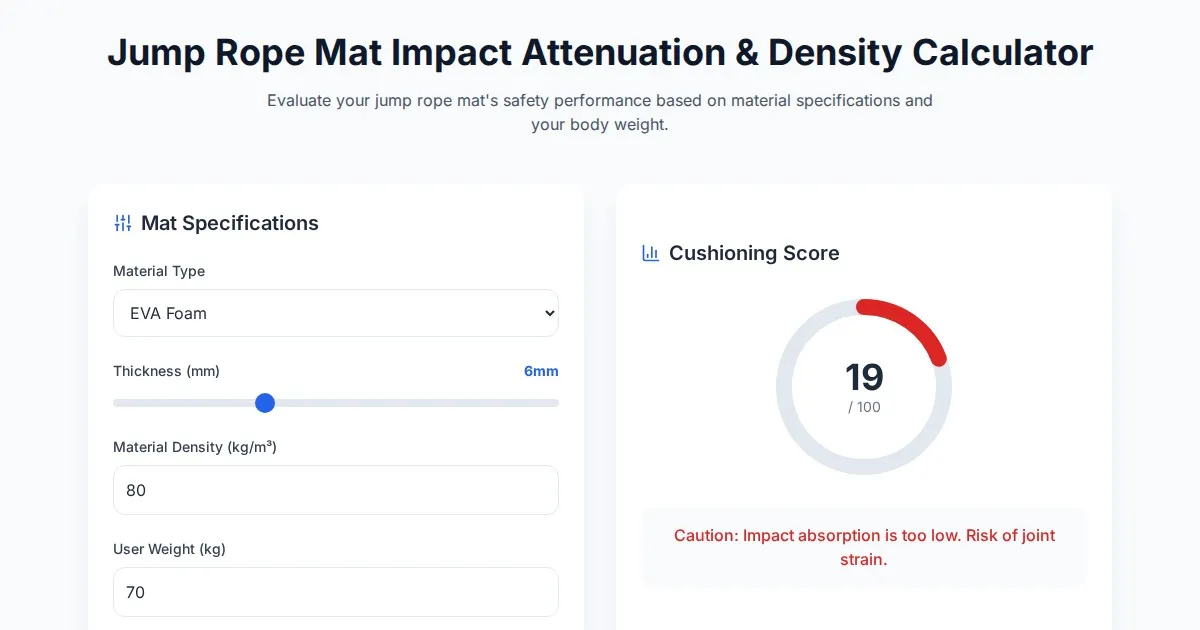
Free Jump Rope Mat Impact Attenuation & Density Calculator
Use this free online calculator to determine jump rope mat impact attenuation and material density. Safely assess if your workout flooring protects your joints.

Free Base64 Image Data URI to File Size Calculator
Accurately calculate the file size of Base64 encoded image data strings. This free, web-based tool helps developers estimate binary file sizes for web apps.

Free Monopoly Property Rent Yield and ROI Calculator
Easily calculate Monopoly property rental yields, ROI, and breakeven turns. Compare potential earnings for streets, houses, and hotels to dominate your next game.

Free Online Color Blindness Simulator & Image Filter Tool
Easily simulate color vision deficiencies like protanopia, deuteranopia, and tritanopia. Upload images to test design accessibility for color blindness.
Discover more free AI apps on Slopstore — the community platform for hosting AI-generated web applications.