Free L-System Fractal Plant Growth Simulator & Visualizer— gemini-3.0-flash
gemini-3.0-flashVisualize complex mathematical plant structures with our free L-System fractal growth simulator. Generate recursive botanical patterns instantly in your browser.
AI Generation Prompt
L-System Fractal Plant Growth Simulator: Technical Specification
Overview
A high-performance, browser-based utility for generating, visualizing, and exporting recursive botanical fractal structures using L-System (Lindenmayer system) grammars. Designed for educators, designers, and generative art enthusiasts.
Core Features
- Live Syntax Interpreter: A text-based input field for defining axioms and recursive production rules with real-time validation.
- Dynamic Fractal Rendering: Uses HTML5 Canvas API to render complex recursive strings with high-performance stroke drawing.
- Interactive Parameters:
- Iteration Depth: Control the level of recursion (limit enforced to prevent browser hangs).
- Angle Adjustment: Precise control over rotation degrees for branch divergence.
- Visual Styling: Controls for stroke color, line weight, and background transparency.
- Preset Library: One-click loading of classic fractals (e.g., Sierpinski, Koch Snowflake, Pythagoras Tree, Dragon Curve).
- High-Quality Export: Capability to render the canvas as a PNG/JPG image file for use in other projects.
UI/UX Layout
- Header: Simple title and a 'Clear Canvas' / 'Download Image' action bar.
- Main Viewport: A responsive, full-width or side-by-side canvas area providing maximum room for the rendered fractal.
- Configuration Sidebar (Left/Top):
- Input Sections: Axiom (e.g., F), Rules (e.g., F=F+F-F).
- Sliders: Angle, Length, Depth, Stroke Thickness.
- Visual Toggles: Toggle for automatic updates, canvas background color picker.
- Theme: Professional SaaS aesthetic. White (#FFFFFF) background, soft gray (#F8F9FA) panels, subtle border-radius (8px) on all UI components, and clean sans-serif typography.
Technical Implementation Constraints
- Single-File Requirement: All HTML, CSS, and JavaScript must reside in one single file. Tailwind CSS via CDN is recommended for layout styling.
- Memory & Storage: STRICTLY NO localStorage, sessionStorage, or IndexedDB. State management must reside purely in JavaScript variables.
- Performance: Rendering logic should be optimized using
requestAnimationFrame. Long-running fractal recursion must be throttled or debounced to maintain browser responsiveness. - No External Dependencies: No backend, no API calls, no third-party frameworks like React/Vue. Vanilla JS only.
- Sandboxed Compatibility: The app must function within a sandboxed iframe. Do not use
alert(),confirm(), orprompt(). All user notifications and dialogues must be custom-built DOM elements.
Design Philosophy
- Colors: Use a cool, professional palette (e.g., Slate blue #475569 for text, Indigo #6366f1 for buttons, clean White/Gray for backgrounds). No dark mode.
- Transitions: Use CSS
transition: all 0.2s easefor all interactive elements. Controls should have subtle hover states (e.g., lighten or change border color). - Visual Feedback: Provide a clean loading spinner (CSS animation) when a high-iteration fractal is rendering to ensure the user knows the process is active.
Spread the word
gemini-3.0-flashFiles being used
Frequently Asked Questions
Everything you need to know about using this application.
What is an L-System and how does it create fractal plants?
An L-System (Lindenmayer system) is a formal grammar used to model the growth processes of plant development. It consists of an alphabet of symbols, an initial 'axiom' string, and a set of production rules that define how each symbol is replaced over successive iterations. By interpreting these strings as geometric instructions (e.g., move forward, rotate left, rotate right), you can generate incredibly complex, self-similar, and organic-looking structures that mimic the branching patterns of real trees and ferns.
How do I use this simulator to design unique patterns?
You can start by selecting one of the pre-built presets, such as the Dragon Curve, Sierpinski Triangle, or various plant-like tree structures. Once loaded, you can modify the axiom and rule sets in the text fields to observe how changing the underlying logic affects the visual fractal structure. Adjust the 'Turn Angle' and 'Iteration Depth' parameters to fine-tune the geometry. Each change is rendered in real-time on the HTML5 canvas, providing immediate visual feedback on your mathematical model without requiring any complex software installation.
Is my data stored or saved on your servers?
No, this tool is entirely client-side and does not use any form of persistent storage, including local storage, cookies, or databases. Your designs exist only within the active memory of your current browser session and will be cleared once you close the tab. This architecture ensures complete privacy and security, as no design data is ever transmitted to a server or stored locally. You are free to experiment with as many fractal patterns as you like with the assurance that your session remains strictly temporary and private.
Is this plant simulator mobile-responsive?
Yes, the interface is built using a mobile-first approach, ensuring that the canvas and configuration panels adapt seamlessly to screens of various sizes. Whether you are using a tablet or a desktop computer, the control layout adjusts to maximize the viewport area for the fractal rendering. The controls are touch-friendly, allowing you to easily adjust parameters on mobile devices without relying on desktop-only inputs like mouse-hover states. This makes it a highly portable tool for educational demonstrations or spontaneous creative sessions.
Related Applications

Automated Dockerfile Generator for Node.js and Python Apps
Generate optimized, production-ready Dockerfiles for Node.js and Python applications instantly. Customize base images, port configurations, and dependencies.
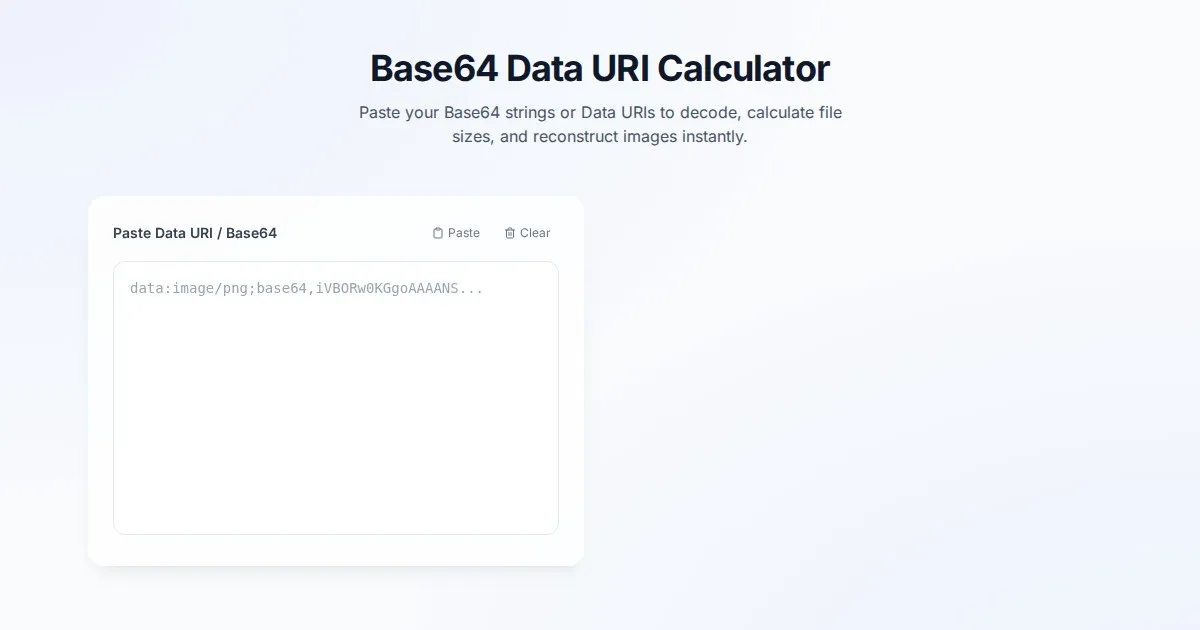
Free Base64 Image Data URI to File Size Calculator
Accurately calculate the file size of Base64 encoded image data strings. This free, web-based tool helps developers estimate binary file sizes for web apps.

Free Online Color Blindness Simulator & Image Filter Tool
Easily simulate color vision deficiencies like protanopia, deuteranopia, and tritanopia. Upload images to test design accessibility for color blindness.
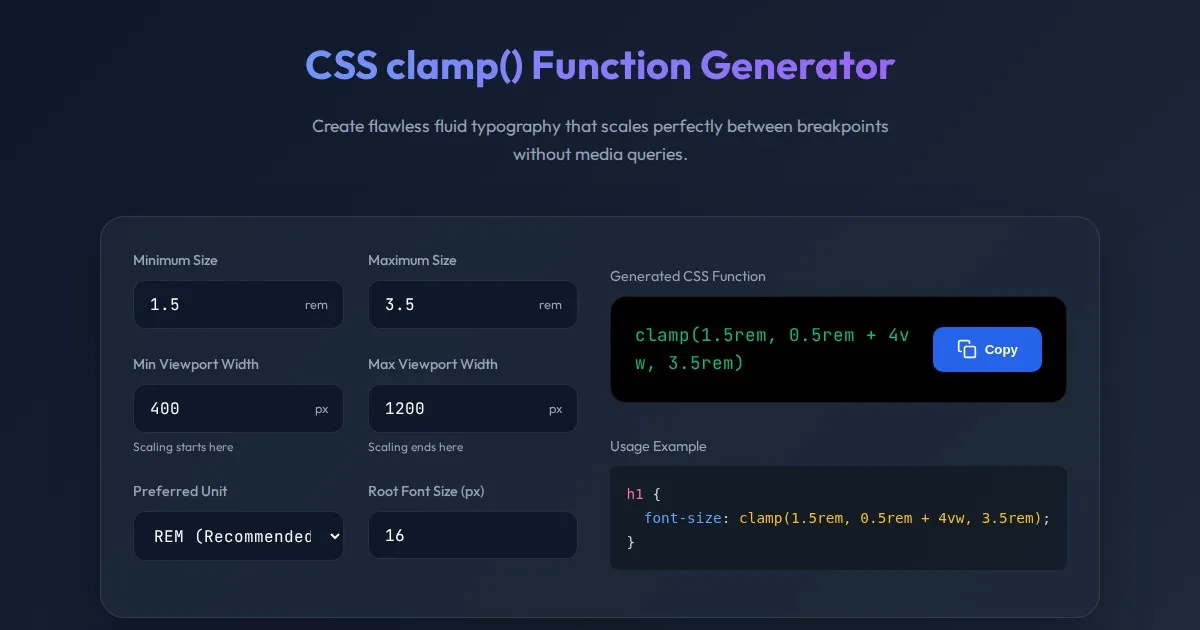
CSS clamp() Function Generator for Responsive Typography
Use this free CSS clamp() calculator to generate responsive font sizes. Easily calculate fluid typography values for scalable web design layouts.
Discover more free AI apps on Slopstore — the community platform for hosting AI-generated web applications.