Free Linux Chown Command Generator & Permission Syntax Helper— gemini-3.0-flash
gemini-3.0-flashGenerate precise Linux chown commands instantly. Ideal for system admins and developers managing file and directory ownership permissions with recursive support.
AI Generation Prompt
Linux Chown Command Generator: Technical Specification
1. Overview
A single-file, browser-based utility designed to help system administrators, DevOps engineers, and developers generate accurate Linux chown commands. The tool provides a clean, visual interface to construct complex ownership change strings with support for recursion, symbolic links, and verbose output flags.
2. Feature Set
- Live Command Construction: Real-time generation of the bash command string based on form inputs.
- Recursive Toggle: A simple checkbox to enable the
-R(recursive) flag. - Advanced Flag Support: Checkboxes for verbose (
-v), changes (-c), and quiet (-f) outputs. - Symlink Handling: Options to include
-hor-Hflags for managing symbolic links securely. - Smart Syntax Validation: Auto-formatting to ensure
user:grouporuser:groupstructure is valid. - One-Click Copy: A prominent "Copy to Clipboard" button with a visual success feedback state.
- Command Explainer: A dynamic panel that breaks down what the generated flags actually do in the context of the current selection.
3. UI/UX Layout
- Header: Contains a clean, professional title and a brief helper description.
- Form Section (Main):
- Grid layout (2 columns on desktop, 1 on mobile).
- Text inputs for "User" and "Group".
- Text input for "Path/Filename" (defaulting to current directory
/path/to/file). - Toggle switches for optional flags (Recursive, Verbose, Silent).
- Output Section:
- A prominent, dark-themed code block area (for contrast) displaying the final generated string.
- A clearly visible "Copy Command" button.
- Explanation Table: A small, beneath-the-fold reference table showing standard
chownflag definitions for quick lookup.
4. Design & Aesthetics
- Color Palette: Use a clean, vibrant "SaaS-light" theme: White background (
#ffffff), soft slate grays (#f1f5f9) for input backgrounds, and a primary "Action Blue" (#2563eb) for buttons. - Typography: System default sans-serif font stack (Inter/system-ui) for maximum legibility.
- Animations:
- Smooth hover scaling on the Copy button.
- Subtle fade-in transition when toggling recursive options.
- Toast notification animation (popup box) when the text is copied to the clipboard.
5. Technical Implementation Directives
- Architecture: Single HTML file including CSS and JS within
<style>and<script>tags. - Constraint Compliance:
- No Storage: Use in-memory state variables only. Do not use
localStorageorcookies. - No Branding: Ensure absolutely zero mention of third-party platforms or custom branding.
- Responsive Design: Use CSS Flexbox/Grid to ensure the interface is usable on smartphones, tablets, and desktops.
- Dependencies: Use Tailwind CSS CDN only for styling; no heavy frameworks like React or Vue.
- No Storage: Use in-memory state variables only. Do not use
- Security: All user input must be sanitized before being reflected in the UI to prevent XSS. The app will be executed in a sandboxed iframe, so ensure all scripts are strictly vanilla and self-contained.
- UX: Ensure the clipboard function handles errors gracefully using standard browser APIs.
Spread the word
gemini-3.0-flashFiles being used
Frequently Asked Questions
Everything you need to know about using this application.
How do I change the owner and group of a file in Linux using chown?
To change the owner and group of a file in Linux, you typically use the 'chown' command followed by the new user and group, separated by a colon, and the filename. The standard syntax is 'chown user:group filename'. This command requires root privileges if you are changing the ownership of a file that you do not already own, often necessitating the use of 'sudo' before the command. Our generator simplifies this process by allowing you to input the desired user, group, and path, instantly formatting the string for you to copy and paste. It automatically handles the syntax requirements, reducing the risk of typing errors when performing critical system administrative tasks.
What is the difference between chown and chmod?
The 'chown' command, short for 'change owner', is used to change the user or group ownership of a file or directory in Unix-like operating systems. It dictates who actually owns the object, which determines the highest level of access permissions available, such as who can modify or delete the file. Conversely, the 'chmod' command stands for 'change mode' and is used to modify the access permissions of a file or directory for the owner, group, and others. While 'chown' changes the 'who', 'chmod' changes the 'what'—specifically, whether a file can be read, written, or executed.
How do I change ownership recursively in Linux?
To change ownership of a directory and all of its contents, including subdirectories and files, you use the '-R' flag with the 'chown' command. This recursive option is essential when you need to transfer ownership of an entire project folder or a web server root directory to a different service user. Our tool includes a dedicated toggle for the recursive option, which immediately updates the generated command string. It also provides an option to handle symbolic links using the '-h' or '-H' flags, ensuring you have the precise command needed to prevent accidental changes to unintended files.
Can I change group ownership without changing the file owner?
Yes, you can change just the group ownership of a file without affecting the existing user owner. You can achieve this by using the 'chown' command with a colon prefix, such as 'chown :groupname filename', or by using the 'chgrp' command, which is specifically designed for changing group ownership. Using 'chown' is often more versatile in modern scripts, and our generator supports this specific use case by allowing you to leave the user field blank while specifying a group. This ensures you generate the correct, standardized command for group-only ownership updates without needing to remember complex shell syntax.
Related Applications
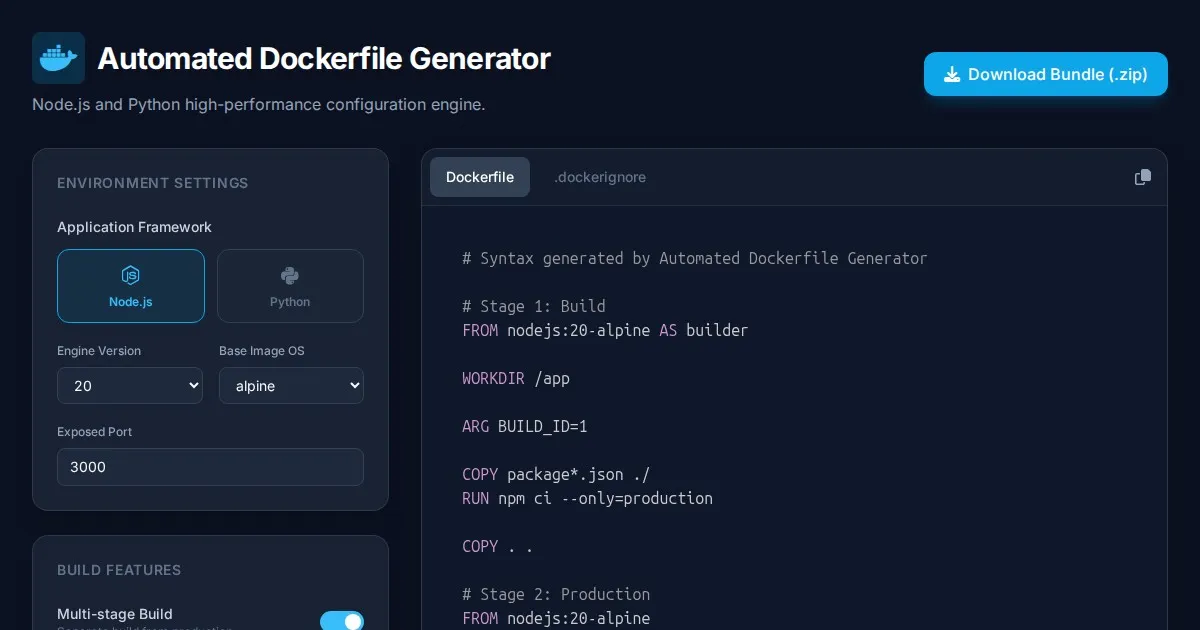
Automated Dockerfile Generator for Node.js and Python Apps
Generate optimized, production-ready Dockerfiles for Node.js and Python applications instantly. Customize base images, port configurations, and dependencies.
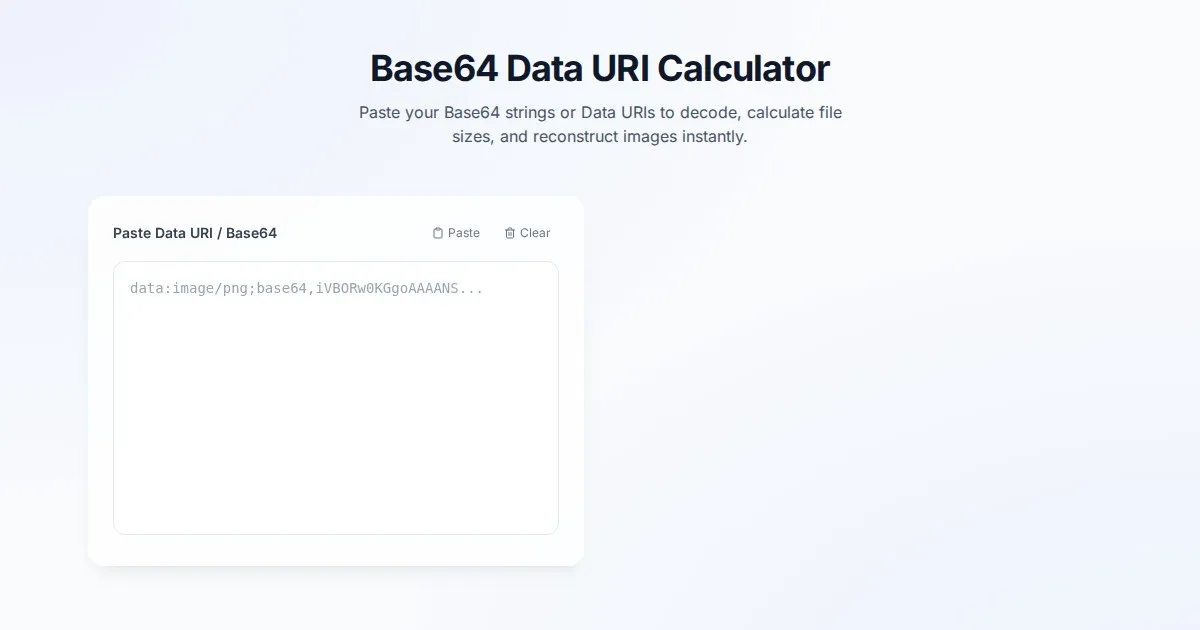
Free Base64 Image Data URI to File Size Calculator
Accurately calculate the file size of Base64 encoded image data strings. This free, web-based tool helps developers estimate binary file sizes for web apps.
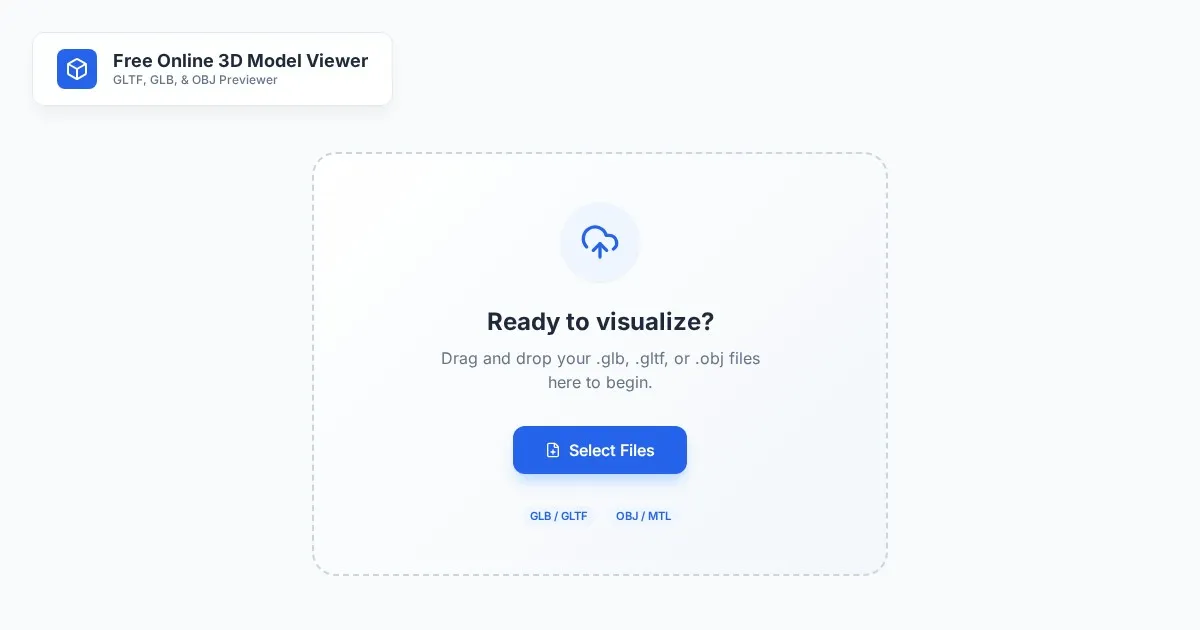
Free Online 3D Model Viewer - GLTF & OBJ File Previewer
Instantly preview 3D models online with this free 3D Model Viewer. Support for GLTF, GLB, and OBJ formats. Drag and drop your files for a fast, browser-based render.

Free Online Color Blindness Simulator & Image Filter Tool
Easily simulate color vision deficiencies like protanopia, deuteranopia, and tritanopia. Upload images to test design accessibility for color blindness.
Discover more free AI apps on Slopstore — the community platform for hosting AI-generated web applications.