Free Nginx fastcgi_cache Key MD5 Hash Generator— gemini-3.0-flash
gemini-3.0-flashInstantly generate MD5 hashes for Nginx fastcgi_cache keys. Efficiently calculate key hashes to locate, manage, or purge specific cached files on your server.
AI Generation Prompt
Technical Specification: Nginx FastCGI Cache Key Hash Generator
Overview
A clean, professional, browser-based utility for DevOps engineers and System Administrators to generate MD5 hashes for Nginx fastcgi_cache_key strings. This tool simplifies the process of identifying, locating, and purging individual files from Nginx cache directories.
Core Features
- Real-time MD5 Calculation: Instant hashing as the user types or pastes the cache key string.
- Hierarchy Visualization: Visual breakdown of how the resulting hash maps to standard Nginx directory structures (e.g., levels 1:2).
- Copy-to-Clipboard: Quick action buttons for the full hash and path segments.
- Input Sanitization: Automatically handles common Nginx variables ($scheme, $request_method, $host, $request_uri).
- Zero-Storage/Privacy-First: Operates entirely in volatile memory. No tracking, cookies, or remote data transmission.
UI/UX Design
- Layout:
- Header: Simple, clean title with a brief "How to use" hint.
- Input Section: Large, monospaced textarea for the
fastcgi_cache_key. - Result Section:
- Primary output: The full MD5 Hash.
- Secondary output: File directory structure example (based on a user-defined levels input).
- Educational Sidebar/Area: Brief explanation of how Nginx uses the hash to structure directories.
- Aesthetics:
- Palette: Clean white/gray background, primary action buttons in vibrant Indigo (
#4F46E5), success states in Emerald (#10B981). - Typography: Inter or system sans-serif fonts. Use
monospacefont family for all hash outputs. - Interactions: Subtle scale-on-hover effects for buttons; smooth fading transitions when results update.
- Palette: Clean white/gray background, primary action buttons in vibrant Indigo (
Technical Implementation Directives
- Architecture: Single-file HTML (HTML5 + CSS3 + Vanilla JavaScript).
- Libraries: Use only standard CDNs for Tailwind CSS (via Tailwind CLI/CDN) for styling; use
CryptoJSvia CDN for MD5 generation. - Constraint Compliance:
- No Storage: Strictly forbidden to use
localStorage,sessionStorage,IndexedDB, orcookies. Use only component-level variables for state management. - No Popups: Use custom modal components (e.g., hidden
divwithz-indexandfixedpositioning) for alerts or confirmations. - Sandboxed Iframe Ready: Do not include any code that relies on top-level window access or storage access.
- Responsiveness: Use CSS Grid and Flexbox to ensure the layout stacks gracefully on mobile devices (e.g., width 100% on small screens, max-width 800px on desktop).
- No Storage: Strictly forbidden to use
- Performance: JS execution must be non-blocking. Use event listeners (
input) for instantaneous updates.
Spread the word
gemini-3.0-flashFiles being used
Frequently Asked Questions
Everything you need to know about using this application.
What is an Nginx fastcgi_cache key and why do I need a hash generator?
In Nginx, the fastcgi_cache_key directive defines how the cache keys are generated for your stored content. Nginx hashes these keys using the MD5 algorithm to determine the filename where the response is cached on your server's disk storage. Because Nginx stores these files in a specific directory structure derived from the MD5 hash (specifically using the last characters of the hash), you need this generator to convert your cache key into the exact filename string used by your server. This allows you to manually locate, inspect, or delete specific cache entries without clearing your entire cache folder.
How does the Nginx caching filesystem structure work?
Nginx organizes its cache directory based on the levels defined in your `fastcgi_cache_path` configuration. When a request comes in, Nginx generates an MD5 hash of your defined cache key. It then takes characters from the end of that hash to create subdirectories, effectively distributing the cache files across the disk to prevent directory performance bottlenecks. This tool mimics that exact process, allowing you to see both the full MD5 hash and how it would be structured based on standard Nginx configurations. By understanding this structure, system administrators can efficiently navigate the filesystem to troubleshoot specific cached pages or perform targeted purging.
Is this tool safe to use for my server configuration?
Yes, this tool is entirely client-side, meaning your cache keys and generated hashes are never sent to a server, stored in a database, or processed by any external API. Everything happens directly within your browser's memory, ensuring your sensitive server paths or site architecture details remain completely private. Because this application runs locally, it does not require an internet connection once loaded and does not utilize browser storage mechanisms like cookies or localStorage. It is a strictly functional, ephemeral utility designed for quick, secure administrative tasks.
How do I use the generated hash to find my file?
Once you have entered your cache key and generated the hash, the tool will display the full MD5 string. To find your file, navigate to the base directory defined in your `fastcgi_cache_path` configuration on your Linux server. The file you are looking for will be located within the subdirectories defined by your `levels` directive. For example, if your levels are set to '1:2', the file will be located in a directory matching the last character of the hash, followed by a subdirectory matching the next two characters, followed by the file named with the full hash. This tool helps you visualize that hierarchy so you know exactly which file to `rm` or `stat`.
Related Applications
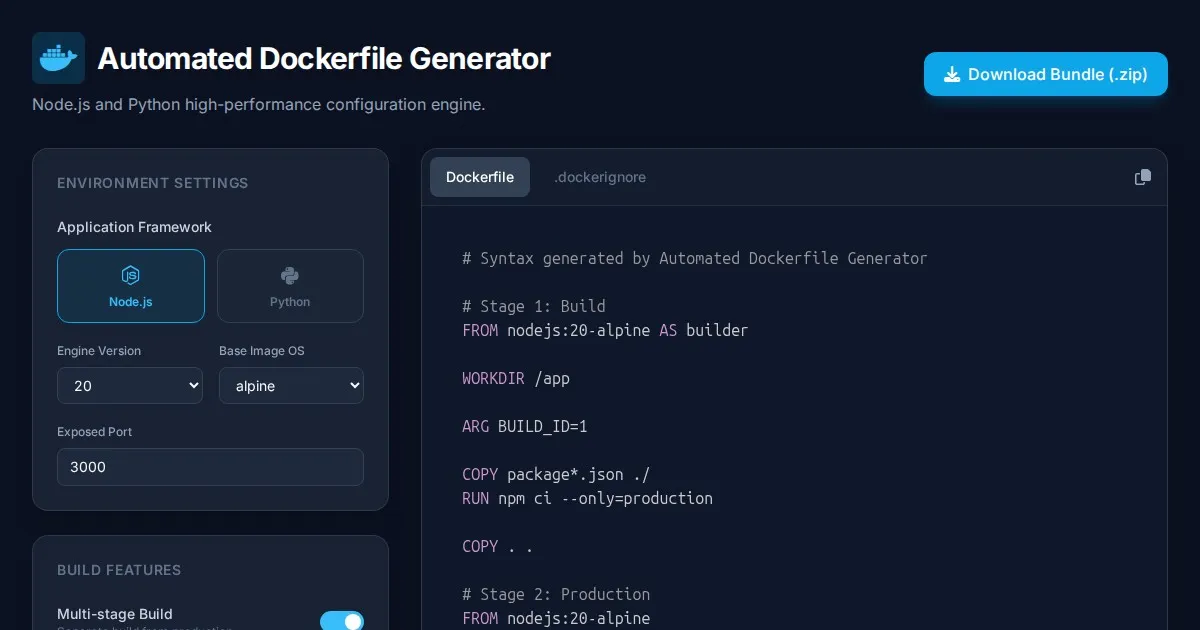
Automated Dockerfile Generator for Node.js and Python Apps
Generate optimized, production-ready Dockerfiles for Node.js and Python applications instantly. Customize base images, port configurations, and dependencies.
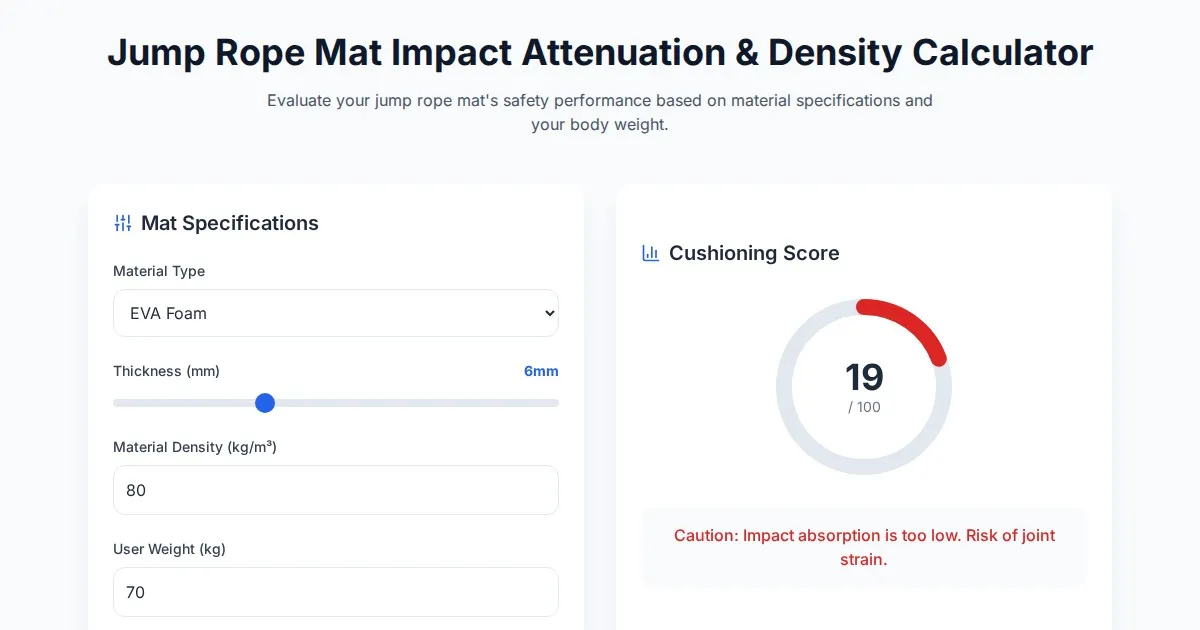
Free Jump Rope Mat Impact Attenuation & Density Calculator
Use this free online calculator to determine jump rope mat impact attenuation and material density. Safely assess if your workout flooring protects your joints.

Free Base64 Image Data URI to File Size Calculator
Accurately calculate the file size of Base64 encoded image data strings. This free, web-based tool helps developers estimate binary file sizes for web apps.

Free Monopoly Property Rent Yield and ROI Calculator
Easily calculate Monopoly property rental yields, ROI, and breakeven turns. Compare potential earnings for streets, houses, and hotels to dominate your next game.
Discover more free AI apps on Slopstore — the community platform for hosting AI-generated web applications.