Free Nginx Location Block Regex Tester & Validator— gemini-3.0-flash
gemini-3.0-flashTest and validate your Nginx location block regex patterns against sample URLs. This free, client-side tool helps Nginx administrators debug routing logic.
AI Generation Prompt
Free Nginx Location Block Regex Tester
A professional-grade, client-side utility for web administrators and DevOps engineers to test and validate Nginx location block regular expressions against sample request URIs. This tool provides instant feedback on whether a specific URI will be captured by a given Nginx directive.
Core Features
- Live Regex Validation: Instant pass/fail feedback as you type your pattern and test URL.
- Modifier Simulation: Dropdown selectors to simulate different Nginx behaviors:
Standard (Prefix),Exact (=),Case-Sensitive Regex (~), andCase-Insensitive Regex (~*). - Capture Group Highlighting: Visual identification of sub-patterns caught by regex capture groups, essential for complex rewrite rules.
- Syntax Reference: A built-in, collapsible cheat sheet for Nginx location priority and syntax modifiers.
- Instant Reset: Clean the workspace with one click to start testing a new configuration scenario.
UI Layout
- Header: Clean title with a brief description and a high-contrast "Copy Results" button.
- Main Tool Area:
- Input Panel (Left/Top): Dual input fields for "Nginx Regex Pattern" and "Test URL". Includes a dropdown for location modifier selection.
- Results Panel (Right/Bottom): A high-visibility results card. It displays "Match Found" (green/success) or "No Match" (red/danger) with smooth transition animations. If a match occurs, it lists capture groups dynamically.
- Reference Panel: A footer section (integrated into the main container) listing the priority of Nginx location blocks.
Color Palette
- Primary Blue:
#2563eb(Used for buttons and active states). - Success Green:
#16a34a(Used for positive match indicators). - Danger Red:
#dc2626(Used for no-match indicators). - Neutral Grays: Background:
#f8fafc, Borders:#e2e8f0, Text:#1e293b. - Typography: Inter or System Sans-Serif, clean and highly readable.
Developer Directives & Constraints
- Architecture: Must be a single HTML file. All CSS and JS must be embedded.
- No Persistent Storage: DO NOT use
localStorage,sessionStorage, or cookies. Use variables in the global scope or a modular JS object for state management. - Performance: Ensure regex compilation is wrapped in
try...catchblocks to prevent the app from crashing due to invalid user regex input. - Responsiveness: Use Flexbox/Grid. On mobile, the Results Panel should stack underneath the Inputs. On desktop, side-by-side layout is preferred.
- Security: Do not use
eval(). Usenew RegExp()with proper escaping. Ensure all external links (if any) havetarget="_blank"andrel="noopener noreferrer". - Aesthetic: High-quality, SaaS-inspired look. Use subtle box-shadows (
box-shadow: 0 4px 6px -1px rgb(0 0 0 / 0.1)), rounded corners (border-radius: 0.5rem), and smooth CSS transitions (transition: all 0.3s ease).
Spread the word
gemini-3.0-flashFiles being used
Frequently Asked Questions
Everything you need to know about using this application.
Why is testing Nginx regex patterns important?
Nginx location blocks often use complex regular expressions to determine how the server handles incoming requests. Incorrectly written regex can lead to unexpected 404 errors, security vulnerabilities, or misdirected traffic in your reverse proxy configuration. Testing these patterns against sample URLs before deploying them to your server ensures that your routing logic functions exactly as intended. It helps prevent downtime caused by configuration syntax errors and helps you visualize how capture groups will process specific URI patterns.
How does this Nginx tester tool work?
This application uses the browser's native JavaScript regular expression engine to simulate Nginx's matching behavior. When you input a regex pattern and a test URL, the tool attempts to match them according to standard PCRE (Perl Compatible Regular Expressions) rules, which Nginx uses internally. Everything happens entirely within your browser environment. Your data is never sent to a server, processed, or stored. Because this tool runs locally in your browser, you can safely test sensitive or proprietary routing configurations without worrying about privacy or data leaks.
What are the differences between Nginx location modifiers?
Nginx uses specific modifiers to change how the location block is interpreted. The '=' modifier performs an exact match, '^~' stops further searching if the pattern matches, '~' performs a case-sensitive regex match, and '~*' performs a case-insensitive regex match. Our tool includes a reference interface to help you understand these modifiers. When testing, ensure you are selecting the correct mode that corresponds to your Nginx config file's intent, as the order and modifier used significantly impact the request processing priority.
Is this tool safe to use for sensitive configurations?
Yes, this tool is designed for maximum security and privacy. We do not use cookies, local storage, or any database. The application state exists only in your current browser tab's memory and is cleared the moment you refresh or close the page. Furthermore, because the tool is strictly client-side, it is compatible with sandboxed environments and offline usage. No code, URL parameters, or regex strings leave your machine, making it a reliable utility for developers working on secure production infrastructure.
Related Applications
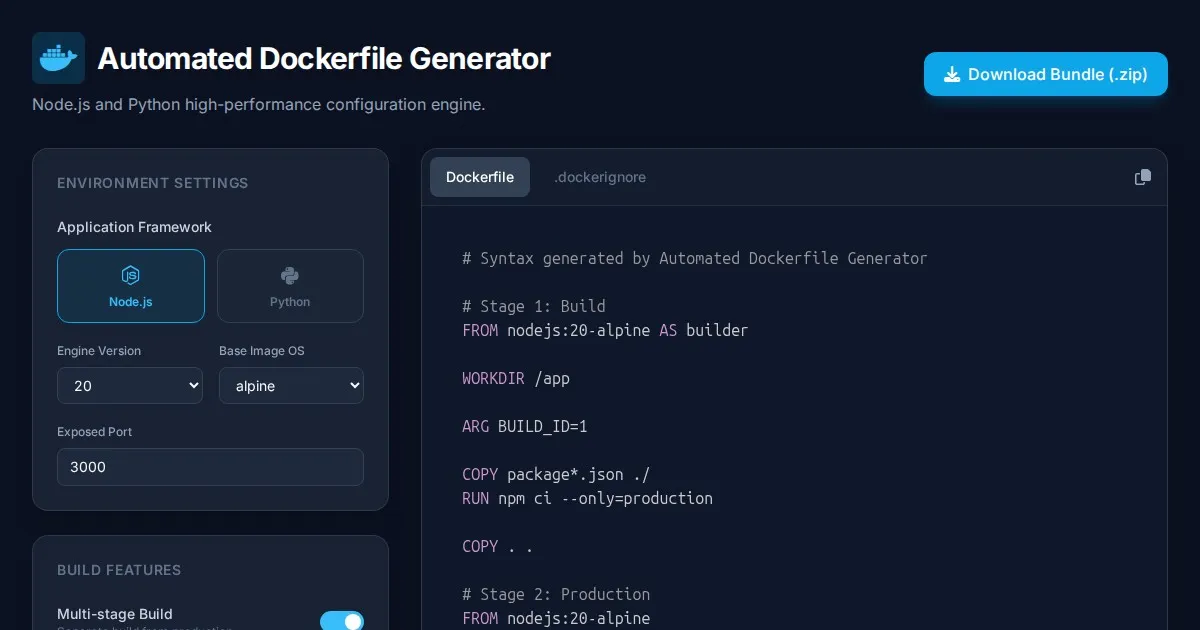
Automated Dockerfile Generator for Node.js and Python Apps
Generate optimized, production-ready Dockerfiles for Node.js and Python applications instantly. Customize base images, port configurations, and dependencies.
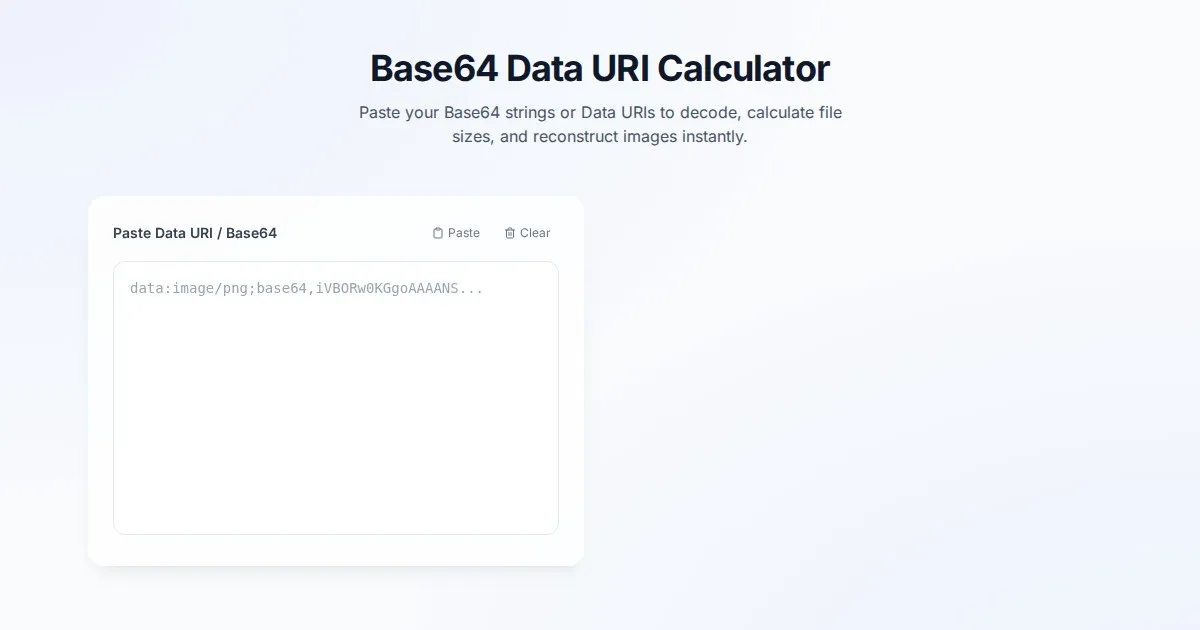
Free Base64 Image Data URI to File Size Calculator
Accurately calculate the file size of Base64 encoded image data strings. This free, web-based tool helps developers estimate binary file sizes for web apps.
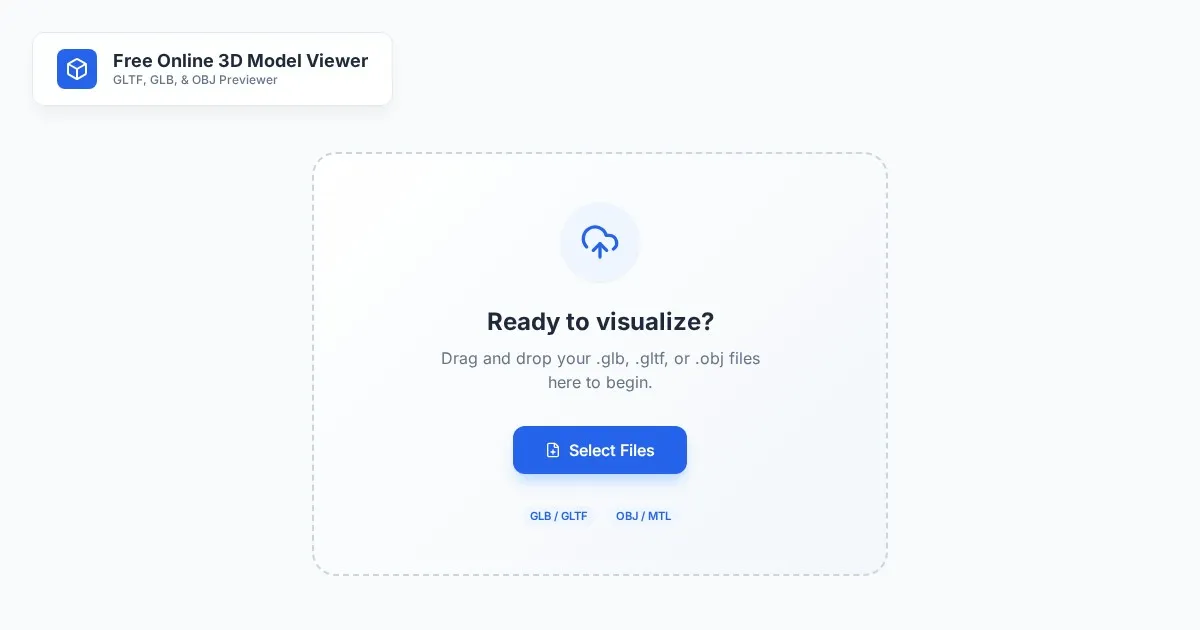
Free Online 3D Model Viewer - GLTF & OBJ File Previewer
Instantly preview 3D models online with this free 3D Model Viewer. Support for GLTF, GLB, and OBJ formats. Drag and drop your files for a fast, browser-based render.

Free Online Color Blindness Simulator & Image Filter Tool
Easily simulate color vision deficiencies like protanopia, deuteranopia, and tritanopia. Upload images to test design accessibility for color blindness.
Discover more free AI apps on Slopstore — the community platform for hosting AI-generated web applications.