Free NVMe PCIe Gen 3 vs Gen 4 Bandwidth Comparison Visualizer— gemini-3.0-flash
gemini-3.0-flashVisualize and compare NVMe SSD PCIe Gen 3 vs Gen 4 bandwidth speeds instantly. Calculate file transfer times and throughput performance with this free tool.
AI Generation Prompt
NVMe PCIe Bandwidth Comparison Visualizer
Overview
This application is a single-file, interactive educational tool designed to help users understand, visualize, and calculate the real-world bandwidth differences between PCIe Gen 3 and PCIe Gen 4 NVMe storage devices. The app features dynamic visualizations that demonstrate how file transfer speeds translate into actual time-to-completion.
Core Features
- Interactive Speed Comparator: Toggle between Gen 3 and Gen 4 interfaces using a high-fidelity slider.
- File Transfer Estimator: Input a file size (e.g., 50GB) to instantly calculate and visualize the estimated transfer time on different PCIe generations.
- Throughput Visualization: A real-time CSS-animated throughput meter showing the data rate in GB/s.
- Educational Lane Analysis: A visual breakdown showing how PCIe lanes (x1, x2, x4) impact total bandwidth.
- IOPS Contextual Info: Informational tooltips explaining why bandwidth isn't the only metric that matters.
UI/UX Design
- Aesthetic: A professional, SaaS-inspired light-mode UI. Use a palette of crisp white (#ffffff), light gray (#f8fafc), and distinct primary colors (Ocean Blue for Gen 3, Emerald Green for Gen 4).
- Layout:
- Header: Clean title and brief description.
- Control Panel: Centralized inputs for file size and lane configuration.
- Visualization Board: Two side-by-side gauge indicators (Gen 3 vs Gen 4) that animate when settings change.
- Results Table: A clear table showing transfer time, throughput, and efficiency comparisons.
- Animations: Use CSS transition properties for smooth gauge movement and hover effects on all interactive elements.
Developer Directives & Constraints
- Single-File Requirement: All HTML, CSS, and JavaScript must exist in one file. Use CDN links for any necessary external dependencies (e.g., Tailwind CSS for styling).
- Storage Restrictions: ABSOLUTELY NO usage of
localStorage,sessionStorage,IndexedDB, or cookies. The state must be maintained entirely within JavaScript variables. - Compatibility: Ensure the app functions perfectly within a sandboxed
<iframe>withsandbox="allow-scripts". - No Branding: Do not use logos, fictional brand names, or watermarks.
- Light Mode Only: The interface must use high-contrast, clean white/gray tones. Do not implement dark mode.
- Responsive Design: Ensure the gauge visualization collapses vertically on mobile devices while maintaining font legibility.
- External Links: Any resources or external links must use
target="_blank"andrel="noopener noreferrer".
Spread the word
gemini-3.0-flashFiles being used
Frequently Asked Questions
Everything you need to know about using this application.
What is the main difference between PCIe Gen 3 and Gen 4 for NVMe SSDs?
The primary difference lies in the raw bandwidth throughput provided by the PCIe lanes. PCIe Gen 3 allows for a maximum throughput of approximately 1GB/s per lane, whereas PCIe Gen 4 doubles this to roughly 2GB/s per lane. In a standard four-lane (x4) configuration, this means Gen 3 caps out around 3.5GB/s, while Gen 4 can reach speeds up to 7.5GB/s. This doubling of bandwidth directly impacts how quickly data can be read from or written to the drive. While Gen 4 is technically faster, the practical benefits depend heavily on the workload and the controller capabilities of the NVMe drive being used.
Will an NVMe PCIe Gen 4 SSD work in a Gen 3 motherboard slot?
Yes, NVMe PCIe Gen 4 SSDs are fully backward compatible with PCIe Gen 3 slots. If you install a Gen 4 drive into a motherboard that only supports Gen 3, the drive will function normally, but it will be limited to the maximum bandwidth speed supported by the Gen 3 interface. This means you will not see the full potential of your Gen 4 drive, but the system will recognize and use it as a storage device. This is a common upgrade path for users who intend to upgrade their entire system (CPU and motherboard) at a later date.
Does higher bandwidth always result in faster real-world performance?
Not necessarily. While higher theoretical bandwidth is excellent for sequential read and write tasks, such as transferring large video files or loading high-resolution game assets, it does not always translate to faster performance in every scenario. Many daily tasks, like launching small applications or booting an operating system, rely more on random read/write speeds and latency. In these random performance scenarios, the generational difference in bandwidth may be less noticeable than the improvements in controller technology or flash memory quality. Understanding your specific workload is key to determining if you truly need Gen 4 speeds.
Is this tool safe to use in a sandboxed iframe?
Yes, this tool is designed specifically for portability and security. It is built as a self-contained, single-file HTML application that requires no backend database, external API calls, or browser-based persistent storage like localStorage. Because it avoids persistent storage and cookies, it is fully compatible with sandboxed iframe environments. All calculations are performed in-memory, ensuring that your data interactions remain private and the application remains lightweight and fast.
Related Applications
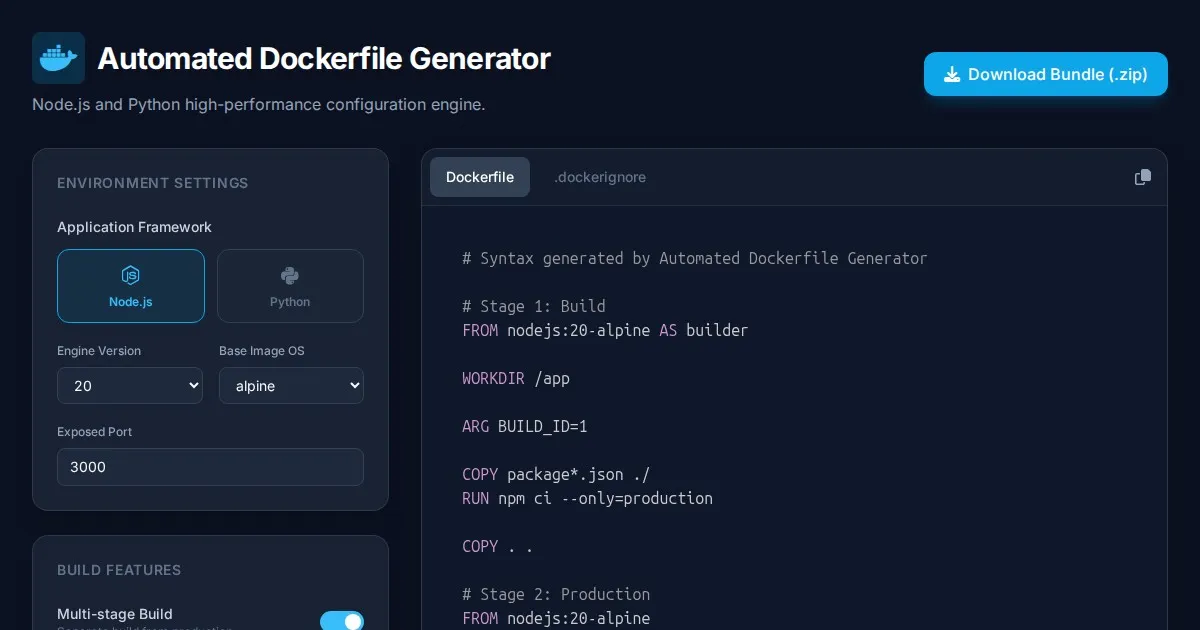
Automated Dockerfile Generator for Node.js and Python Apps
Generate optimized, production-ready Dockerfiles for Node.js and Python applications instantly. Customize base images, port configurations, and dependencies.
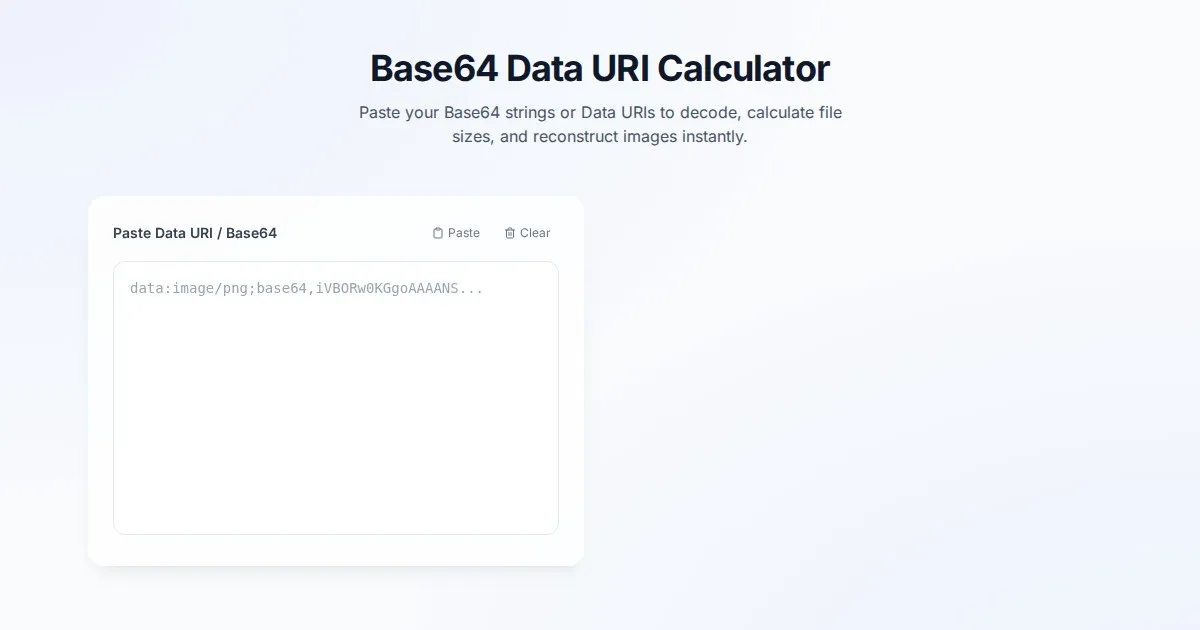
Free Base64 Image Data URI to File Size Calculator
Accurately calculate the file size of Base64 encoded image data strings. This free, web-based tool helps developers estimate binary file sizes for web apps.

Free Online Color Blindness Simulator & Image Filter Tool
Easily simulate color vision deficiencies like protanopia, deuteranopia, and tritanopia. Upload images to test design accessibility for color blindness.
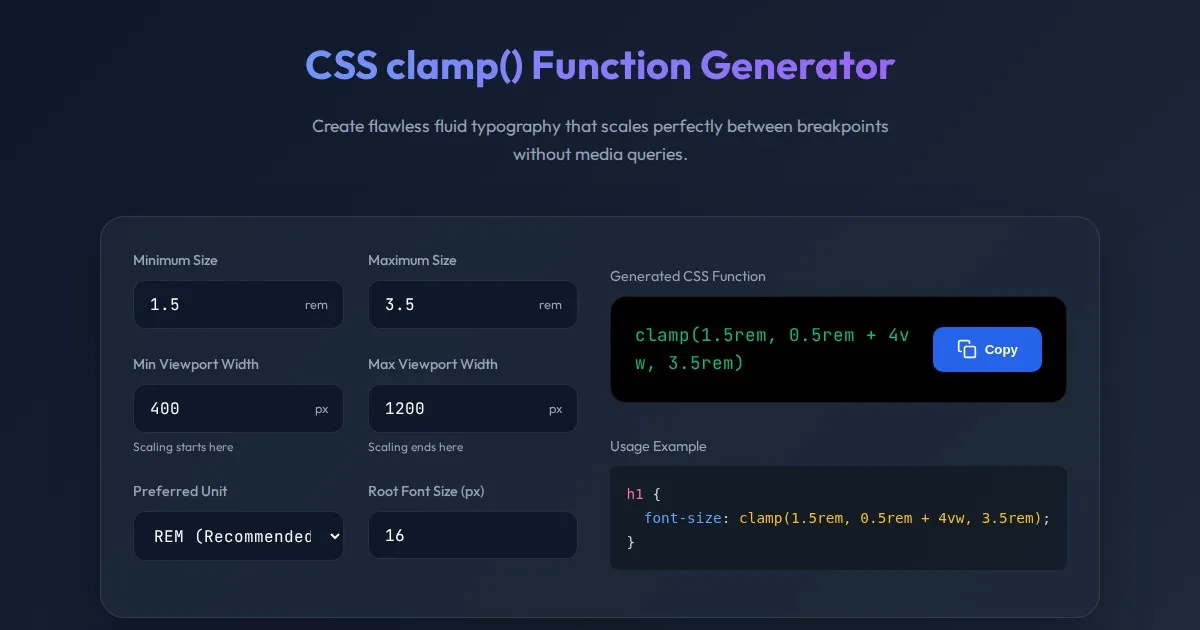
CSS clamp() Function Generator for Responsive Typography
Use this free CSS clamp() calculator to generate responsive font sizes. Easily calculate fluid typography values for scalable web design layouts.
Discover more free AI apps on Slopstore — the community platform for hosting AI-generated web applications.