Free OBS Studio Bitrate and Canvas Resolution Calculator— gemini-3.0-flash
gemini-3.0-flashEasily calculate the optimal bitrate, canvas scaling, and frame rate for your OBS Studio streams. Improve stream quality with our free, easy-to-use tool.
AI Generation Prompt
Technical Specification: OBS Studio Canvas Scaling and Bitrate Calculator
Overview
A high-performance, browser-based utility designed to help streamers calculate optimal OBS Studio settings. This tool eliminates guesswork by analyzing hardware limitations, network upload speeds, and target platform requirements to provide a precise configuration profile.
Core Features
- Dynamic Bitrate Calculator: Input upload speed and target resolution/FPS to receive a recommended bitrate range.
- Resolution & Canvas Helper: Guidance on Base (Canvas) vs. Output (Scaled) resolution settings to optimize encoder usage.
- Platform Preset Selector: Quick toggle for platform-specific recommendations (e.g., Twitch, YouTube, Kick).
- Hardware Efficiency Tips: Real-time text output based on selected resolution, suggesting encoder presets (e.g., x264 'faster' vs 'veryfast').
- Settings Preview Card: A generated "copy-paste" style summary card for easy reference during the software setup process.
User Interface (UI) Layout
- Header: Clean, centered title with a clear, concise instruction block.
- Main Tool Area (Two-Column Grid):
- Left Column (Inputs): Grouped form fields (Upload Speed (Mbps), Target Resolution/FPS, Content Type (Fast Motion/Static)).
- Right Column (Results): A highlighted "Recommended Settings" card that updates instantly via JavaScript event listeners.
- Educational Section: A collapsible drawer beneath the tool providing definitions of streaming terminology.
Design & Aesthetic
- Palette:
- Primary:
#2563eb(Professional Blue for actions). - Background:
#f8fafc(Off-white/light grey). - Surface:
#ffffff(White for cards). - Text:
#1e293b(Slate for high readability).
- Primary:
- Styling:
- Soft, rounded corners (
8pxradius) on all cards. - Subtle drop shadows (e.g.,
0 4px 6px -1px rgba(0, 0, 0, 0.1)) to elevate cards from the background. - Smooth CSS transitions on hover states for buttons and inputs.
- Soft, rounded corners (
- Typography: System sans-serif stack for maximum performance and readability.
Technical Directives
- Single-File Architecture: All HTML, CSS, and JavaScript must exist within a single file. No external builds, NPM dependencies, or compilation steps.
- Storage Constraints: State must be managed entirely in-memory using JavaScript variables. Do not use
localStorage,sessionStorage, orcookiesto avoid security/iframe exceptions. - Iframe Compatibility: Design for strict sandboxed environments. Do not trigger popups or external navigation. All external resources (CDN-hosted libraries) must be explicitly trusted.
- Responsiveness: Use CSS Grid and Flexbox to ensure the two-column dashboard collapses gracefully into a single-column layout on mobile devices.
- No Brand Reliance: Ensure UI copy focuses strictly on functional terminology (e.g., "Video Encoding Settings") rather than referencing external platform names as brand marks.
Spread the word
gemini-3.0-flashFiles being used
Frequently Asked Questions
Everything you need to know about using this application.
What is streaming bitrate and why does it matter for video quality?
Bitrate refers to the amount of data processed per second to encode your video stream, typically measured in kilobits per second (kbps). It is the most critical factor in determining your stream's visual quality, as higher bitrates allow for more detail to be transmitted, resulting in less pixelation and motion blur. However, increasing bitrate is not always the solution. You must balance your output bitrate with your internet upload speed and the platform's limitations (like Twitch or YouTube requirements). If you set your bitrate higher than your actual upload bandwidth or the platform's ingestion limit, your stream will experience dropped frames, stuttering, and buffering for your viewers.
How do I choose the correct resolution and frame rate for my stream?
Selecting the right resolution and frame rate depends on the type of content you are broadcasting and your hardware capabilities. Fast-paced action games usually benefit from higher frame rates like 60 FPS, while slower-paced commentary or creative streams can look excellent at 30 FPS, which requires significantly less processing power and bitrate. Resolution scaling is often necessary if your native monitor resolution is very high, like 4K, but you intend to stream at 1080p or 720p. Downscaling the internal canvas within your broadcasting software ensures that your stream output is stable and clear, preventing the encoder from struggling to process excessively high pixel counts in real-time.
Does canvas scaling impact my streaming performance?
Yes, adjusting your canvas scaling can have a significant impact on CPU or GPU usage. When you set your base canvas resolution to match your monitor and your output resolution to something lower, the software performs a downscale operation. This consumes hardware resources, particularly if you are using high-quality downscale filters like Lanczos or Bicubic. If you find that your encoder is overloaded, one of the most effective quick fixes is to set your base canvas to match your output resolution. By doing this, you eliminate the need for the software to perform real-time downscaling, which frees up system resources to focus purely on video encoding and maintaining a stable frame rate throughout your broadcast.
Why does my stream look pixelated even with a high bitrate setting?
Pixelation, often called 'macroblocking,' occurs when there is not enough data to describe complex motion or high-detail scenes in your video. If you are playing a visually intensive game with constant fast motion, your encoder requires much more data to maintain a clear image than it would for a static camera shot, meaning a high bitrate is essential. If increasing the bitrate doesn't solve the issue, you may need to look at your encoder preset settings. For software encoding (x264), using a 'slower' preset can significantly improve visual quality at the same bitrate by allowing the encoder more time to compress the data efficiently. Always ensure you are testing these settings in a recorded local video before going live to your audience.
Related Applications
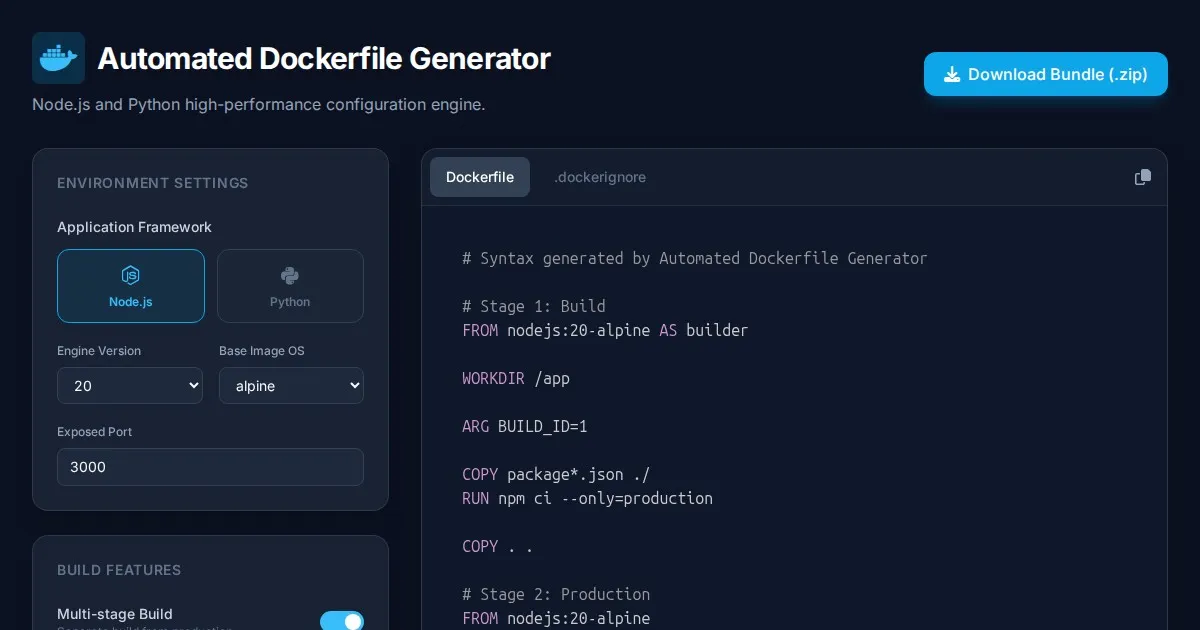
Automated Dockerfile Generator for Node.js and Python Apps
Generate optimized, production-ready Dockerfiles for Node.js and Python applications instantly. Customize base images, port configurations, and dependencies.
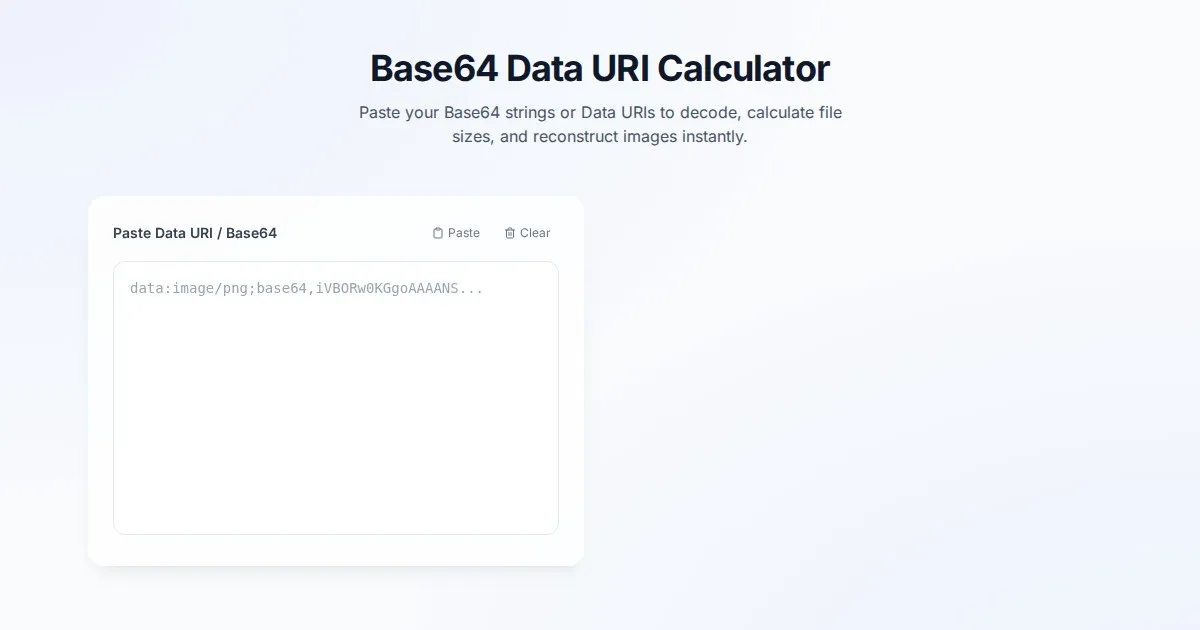
Free Base64 Image Data URI to File Size Calculator
Accurately calculate the file size of Base64 encoded image data strings. This free, web-based tool helps developers estimate binary file sizes for web apps.
Free Online Color Blindness Simulator & Image Filter Tool
Easily simulate color vision deficiencies like protanopia, deuteranopia, and tritanopia. Upload images to test design accessibility for color blindness.
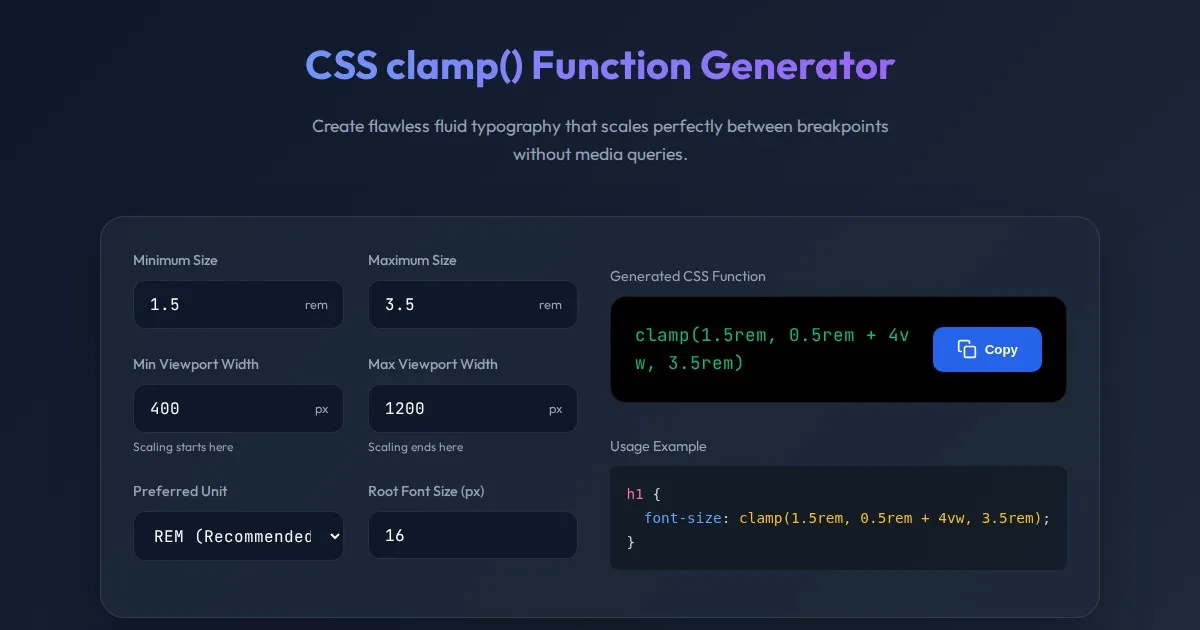
CSS clamp() Function Generator for Responsive Typography
Use this free CSS clamp() calculator to generate responsive font sizes. Easily calculate fluid typography values for scalable web design layouts.
Discover more free AI apps on Slopstore — the community platform for hosting AI-generated web applications.