Free One Rep Max 1RM Calculator: Epley vs Brzycki Formula— gemini-3.0-flash
gemini-3.0-flashCalculate your estimated 1RM using Epley and Brzycki formulas. Compare lifting strength data instantly with our free, privacy-focused powerlifting tool.
AI Generation Prompt
One Rep Max (1RM) Formula Estimator Technical Specification
Overview
This single-file application provides a clean, professional utility for strength athletes to estimate their theoretical One Rep Max (1RM) using both the Epley and Brzycki formulas. The app focuses on user privacy (no cookies/storage) and a high-fidelity, light-mode-only UI.
Technical Architecture
- Single File: All HTML, CSS (Tailwind CDN), and Vanilla JS in one block.
- State Management: In-memory variables only. Zero local storage or cookies.
- Performance: Optimized for instant calculation without page reloads.
UI/UX Design
- Layout:
- Header: Simple, centered title and tagline.
- Main Input: A card-based section with two main input fields (Weight lifted, Reps performed).
- Calculation Results: Two distinct display cards showing the Epley and Brzycki results side-by-side.
- Percentage Reference Table: A dynamic list showing 50% to 95% of the calculated 1RM for training guidance.
- Aesthetic:
- Palette: Sky-blue accents (#0ea5e9), neutral gray text (#374151), and white backgrounds (#ffffff). Subtle shadows (
shadow-sm,shadow-lg) for depth. - Typography: System-ui sans-serif fonts for readability.
- Responsiveness: Single-column layout on mobile, expanding to two-column desktop grid for the results section.
- Palette: Sky-blue accents (#0ea5e9), neutral gray text (#374151), and white backgrounds (#ffffff). Subtle shadows (
Functionality
- Dynamic Calculation: Use an event listener on the input fields (
inputevent) to trigger instant re-calculation as the user types. - Input Validation: Ensure only positive numbers are accepted. Cap repetitions at 15 to maintain formula accuracy, with a visual warning if exceeded.
- Formula Logic:
- Epley:
weight * (1 + (reps / 30)) - Brzycki:
weight / (1.0278 - (0.0278 * reps))
- Epley:
Compliance Directives
- NO STORAGE: Strictly prohibited from using
localStorageorsessionStorage. - NO DARK MODE: Force light mode styling only.
- SECURITY: All links must use
target="_blank" rel="noopener noreferrer". - ANIMATIONS: Use Tailwind
transition-allclasses for smooth input transitions and result fade-ins.
Spread the word
gemini-3.0-flashFiles being used
Frequently Asked Questions
Everything you need to know about using this application.
What is the difference between the Epley and Brzycki formulas?
The Epley formula is generally considered more accurate for lower rep ranges and is defined as 1RM = Weight * (1 + (Reps / 30)). It provides a slightly more aggressive estimate which many powerlifters prefer for gauging peak strength capabilities during training blocks. The Brzycki formula uses the calculation 1RM = Weight / (1.0278 - (0.0278 * Reps)). This method is often favored by high-school and collegiate strength programs because it tends to be more conservative, providing a safer projection for novice and intermediate lifters who may not be accustomed to true maximal effort attempts.
How accurate are 1RM calculators for strength training?
One-rep max calculators provide mathematical estimates rather than absolute physical truths. Their accuracy is highest when the input is based on sets of 3 to 10 repetitions performed with good form. If you perform more than 10 repetitions, the accuracy of these formulas decreases significantly due to the influence of muscular endurance on the total output. It is important to remember that these tools are designed for programming purposes, such as calculating training percentages for squat, bench press, or deadlift cycles. They should not be treated as a substitute for a supervised, true one-rep max attempt under professional coaching if you are testing for competition.
Why should I track my 1RM progress over time?
Tracking your estimated 1RM is essential for progressive overload, the core principle of strength gain. By knowing your current estimated capacity, you can accurately adjust your lifting volume and intensity percentages for your next training session, ensuring that you are consistently challenging your muscles without overtraining. Monitoring these numbers allows you to visualize your gains through quantifiable data. Seeing your projected 1RM climb over the course of a training block provides psychological motivation and objective proof that your current hypertrophy or strength program is effectively yielding results.
Can this calculator be used for exercises other than powerlifting?
While this tool is optimized for the 'big three' lifts—squat, bench press, and deadlift—it can technically be applied to any compound movement performed for low to moderate repetitions. It works effectively for overhead presses, rows, and weighted pull-ups where consistent form is maintained throughout the set. However, this calculator should not be used for isolation movements or high-repetition endurance sets, such as leg extensions or bicep curls. These exercises rely on different metabolic pathways, and the formulas are specifically tuned to the structural demands of compound, multi-joint strength movements.
Related Applications

Guided Deep Breathing Exercise Timer with Ambient Sounds
Practice mindfulness with this guided deep breathing exercise timer. Featuring a rhythmic pulsating visual guide and calming ambient background sounds.
Free Base64 Image Data URI to File Size Calculator
Accurately calculate the file size of Base64 encoded image data strings. This free, web-based tool helps developers estimate binary file sizes for web apps.

Free Online Color Blindness Simulator & Image Filter Tool
Easily simulate color vision deficiencies like protanopia, deuteranopia, and tritanopia. Upload images to test design accessibility for color blindness.
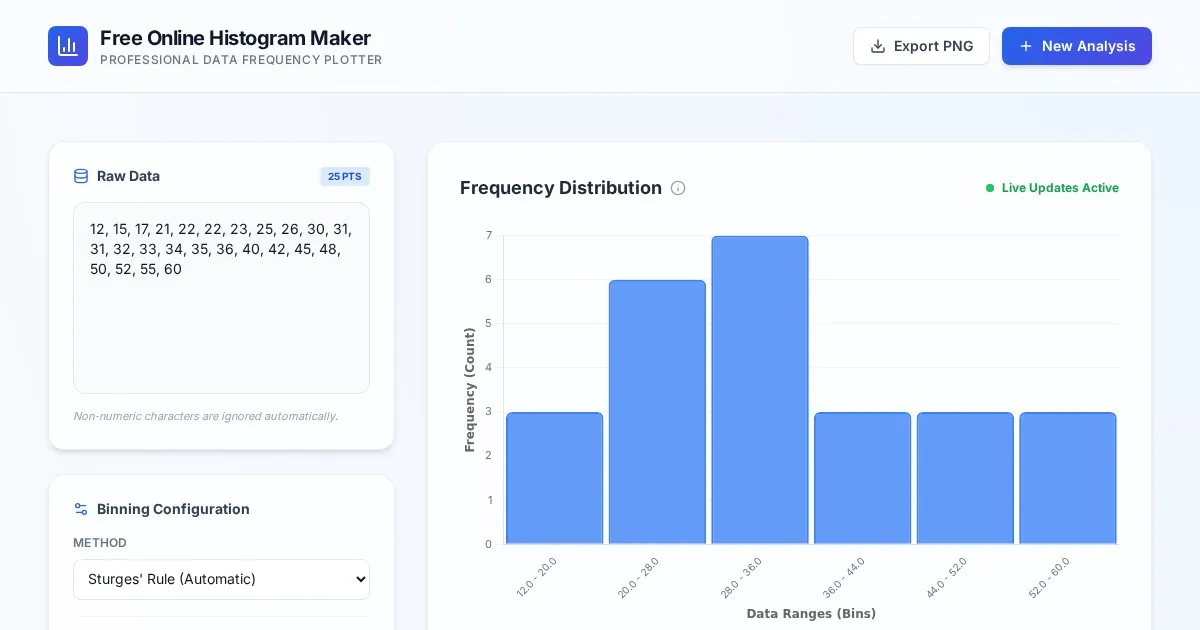
Free Online Histogram Maker & Data Frequency Plotter
Easily create professional histograms from your numeric data. Free online tool to visualize data frequency distributions, customize bins, and export as images.
Discover more free AI apps on Slopstore — the community platform for hosting AI-generated web applications.