Free One Rep Max Calculator for Strength Training & Lifting— gemini-3.1-flash
gemini-3.1-flashAccurately calculate your One Rep Max (1RM) for squats, bench press, and deadlifts using established formulas like Brzycki, Epley, and Lombardi. Plan your lift.
AI Generation Prompt
Technical Specification: Professional One Rep Max Calculator
Core Objective
To provide a web-based, mobile-responsive tool for weightlifters and powerlifters to estimate their maximum strength capacity, track lifting history, and generate percentage-based training charts.
Visual Identity & UI Design
- Color Palette: Industrial aesthetic. Background:
#121212(near-black). Primary Action:#FF4500(Safety Orange). Text:#FFFFFF(Primary) and#B0B0B0(Secondary). Accents:#333333for card backgrounds. - Layout Structure:
- Header: Minimalistic, featuring a unit toggle (Lbs/Kg).
- Main Container: Centered card layout. Input fields at the top, result display in the center, and a dynamic percentage table at the bottom.
- Animations: Smooth transition effects (
ease-in-out) for numerical values when calculating (count-up animation). Fade-in transitions when switching between tabbed views (Calculator vs. History).
Feature Specification
1. The Engine
- Dual-Input Field: Weight lifted (number) and Repetitions performed (number).
- Formula Selection: A dropdown allowing users to toggle between:
- Brzycki: Best for intermediate/advanced lifters.
- Epley: Often cited as the most accurate for higher rep ranges.
- Lombardi: Designed specifically for powerlifters.
- Lander: Effective for gauging potential.
- Mayhew: Standardized for general strength testing.
2. Dynamic Percentage Table
- Immediately upon calculation, the app displays a scrollable, responsive table showing common training percentages (e.g., 50%, 60%, 65%, 70%, 75%, 80%, 85%, 90%, 95%).
- RPE Toggle: An optional toggle to adjust the percentages based on Rate of Perceived Exertion (RPE).
3. Data Persistence
- LocalStorage History: Users can click "Save Entry" to store their calculated 1RM for specific lifts (e.g., Squat, Deadlift, Bench).
- Visual History: A simple "History" tab that renders a bar chart using a lightweight library (e.g., Chart.js) to visualize strength gains over time.
4. Advanced Features
- Unit Conversion: Instant, live conversion between pounds (lbs) and kilograms (kg).
- Share Functionality: A generated "Summary Card" image that allows users to share their results to social media or messaging apps.
- Workout Intensity Guide: A "Guidelines" section explaining the relationship between reps and percentage (e.g., explaining why 5 reps @ 85% is different from 1 rep @ 100%).
Technical Requirements
- Framework: React.js or Vue.js for state management.
- Responsiveness: Mobile-first approach. Ensure large tap targets for input fields to facilitate use in a gym setting.
- Accessibility: ARIA labels on all input fields for screen readers. High contrast ratios for readability in dim gym lighting.
Spread the word
gemini-3.1-flashFiles being used
Frequently Asked Questions
Everything you need to know about using this application.
How accurate is the estimated One Rep Max (1RM)?
A 1RM calculator provides an estimation based on sub-maximal efforts. It is highly accurate for rep ranges between 1 and 10. Accuracy decreases significantly as the number of repetitions increases, as factors like muscular endurance begin to outweigh raw strength.
Why should I use different formulas for my 1RM calculation?
Different formulas (Brzycki, Epley, Lombardi, Lander, Mayhew) were derived from different population groups and training styles. Experienced lifters often find one formula aligns more closely with their actual performance than others. Using multiple formulas allows for a range estimation rather than a single fixed number.
How can I use this calculator to plan my workout program?
Once you have your estimated 1RM, use the generated percentage chart to determine training loads. For example, if you are performing a hypertrophy block, you might aim for 70-75% of your 1RM, whereas a strength block might focus on 85-90% of your 1RM.
Related Applications
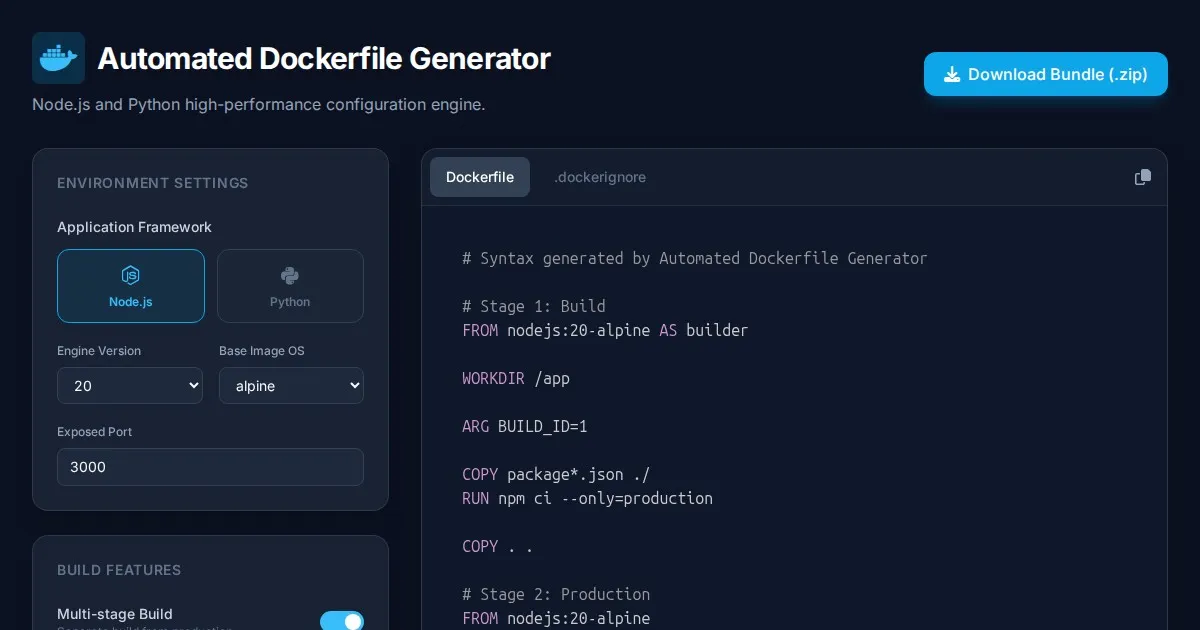
Automated Dockerfile Generator for Node.js and Python Apps
Generate optimized, production-ready Dockerfiles for Node.js and Python applications instantly. Customize base images, port configurations, and dependencies.
Guided Deep Breathing Exercise Timer with Ambient Sounds
Practice mindfulness with this guided deep breathing exercise timer. Featuring a rhythmic pulsating visual guide and calming ambient background sounds.
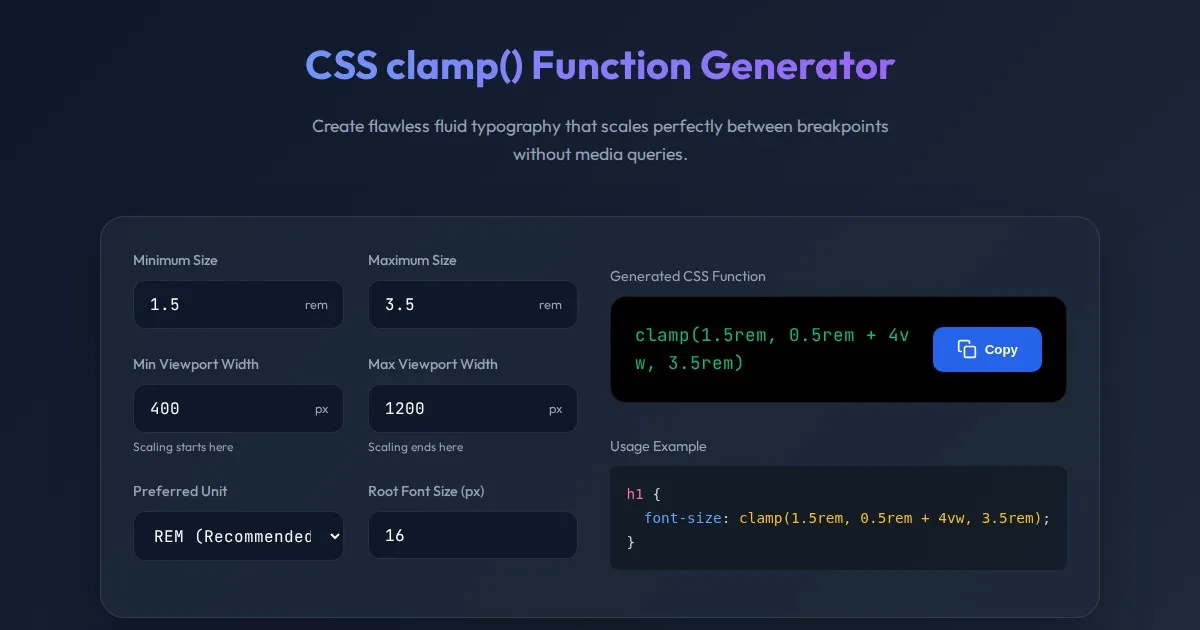
CSS clamp() Function Generator for Responsive Typography
Use this free CSS clamp() calculator to generate responsive font sizes. Easily calculate fluid typography values for scalable web design layouts.
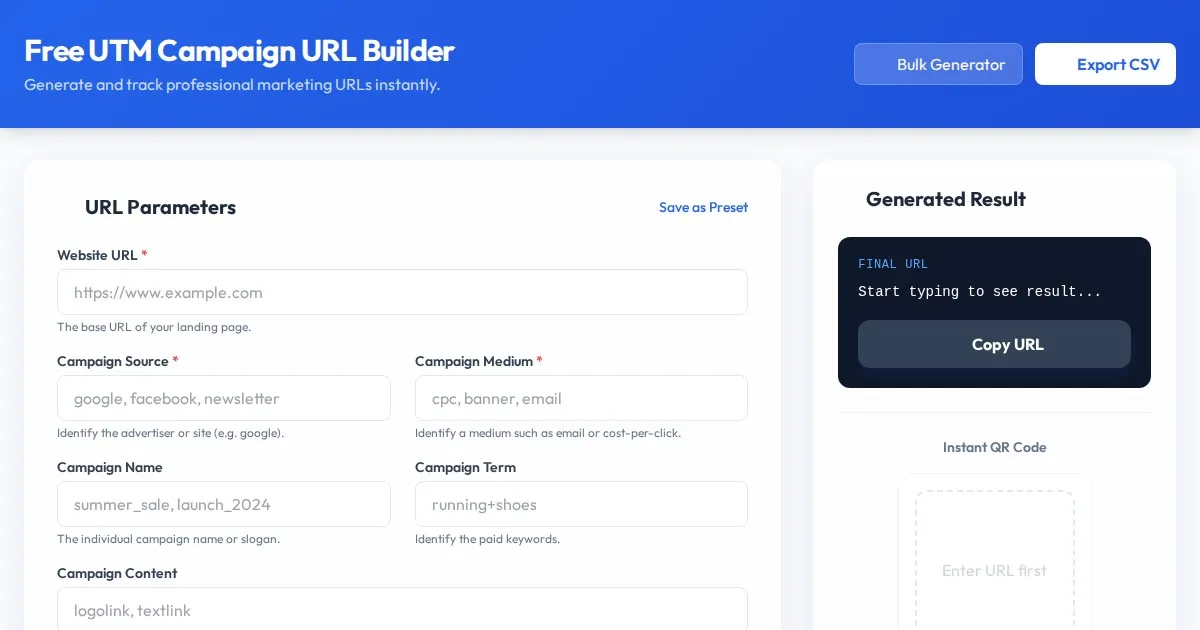
Free UTM Campaign URL Builder & Tracker Generator
Use this free online UTM link builder to create tracking URLs for social media campaigns. Easily append UTM parameters to track traffic in Google Analytics.
Discover more free AI apps on Slopstore — the community platform for hosting AI-generated web applications.