Free Online Color Blindness Simulator & Image Filter Tool— gemini-3.0-flash
gemini-3.0-flashEasily simulate color vision deficiencies like protanopia, deuteranopia, and tritanopia. Upload images to test design accessibility for color blindness.
AI Generation Prompt
Technical Specification: Free Online Color Blindness Simulator
Overview
A high-performance, single-file browser utility designed to help UI/UX designers and accessibility advocates test their visual assets for color blindness compliance. The app uses the HTML5 Canvas API to apply color-blindness simulation matrices to user-uploaded images in real-time.
Core Features
- Drag-and-Drop Image Upload: Seamless interface for dropping files or browsing local storage.
- Real-Time Simulation: Select from presets: Protanopia, Deuteranopia, Tritanopia, and Achromatopsia.
- Side-by-Side Comparison: View the original image alongside the filtered version for immediate contrast analysis.
- Export Functionality: Save the processed simulation as a high-quality PNG for accessibility reports.
- Responsive Controls: Intuitive toolbar for switching filters instantly without reloading the page.
UI/UX Design Strategy
- Aesthetic: Clean, professional "SaaS" aesthetic. Light mode only, utilizing a palette of off-whites (#F9FAFB), crisp grays (#374151), and a prominent primary brand blue (#2563EB) for interactive elements.
- Feedback: Use subtle CSS transitions (ease-in-out) for button interactions and loading states.
- Layout:
- Header: Minimalist title and short functional description.
- Main Stage: Left sidebar for controls/settings, central work area for the side-by-side image canvas.
- No Footer: Explicitly excluded to maintain a focused workspace.
Technical Implementation
- Single File Architecture: All HTML, CSS (Tailwind CDN), and Vanilla JS contained in one
.htmlfile. - Processing: Use
CanvasRenderingContext2Dto manipulate pixel arrays. The simulation is performed by applying a 3x3 color transformation matrix to the RGBA data of the image. - Constraint Compliance:
- Storage: No
localStorage,sessionStorage, or cookies. The application relies entirely on volatile memory. - Iframe Safety: No blocking methods (
alert,prompt). Custom modal UI components will be used for alerts/confirmations. - External Links: All external documentation links will use
target="_blank"andrel="noopener noreferrer".
- Storage: No
Developer Directives
- Vanilla JS Only: Do not use heavy frameworks. Keep the logic modular within a single
<script>block. - State Management: Use a simple JS object to manage the current image blob and the applied filter type.
- Performance: Ensure the simulation runs under 100ms for standard web-resolution images to maintain a high-quality user experience.
- Styling: Utilize Tailwind CSS via CDN for rapid, consistent styling. Do not implement a dark mode toggle; strictly enforce the light-mode theme.
- Asset Handling: Images must be handled as
blob:URLs in memory and cleaned up appropriately when replaced.
Spread the word
gemini-3.0-flashFiles being used
Frequently Asked Questions
Everything you need to know about using this application.
What is a color blindness simulator?
A color blindness simulator is a visual tool that applies specific color-shifting filters to images, allowing designers to see how their work appears to individuals with different types of color vision deficiencies.
Does this tool save or upload my images to a server?
No. This tool operates entirely within your browser using client-side processing. Your images are never uploaded to a server, stored, or processed externally.
What types of color blindness can be simulated?
This simulator supports the most common types: Protanopia (red-blind), Deuteranopia (green-blind), Tritanopia (blue-blind), and Achromatopsia (monochromacy/total color blindness).
Is this tool completely free to use?
Yes, this is a free, professional-grade accessibility utility with no usage limits, subscription fees, or account requirements.
Related Applications
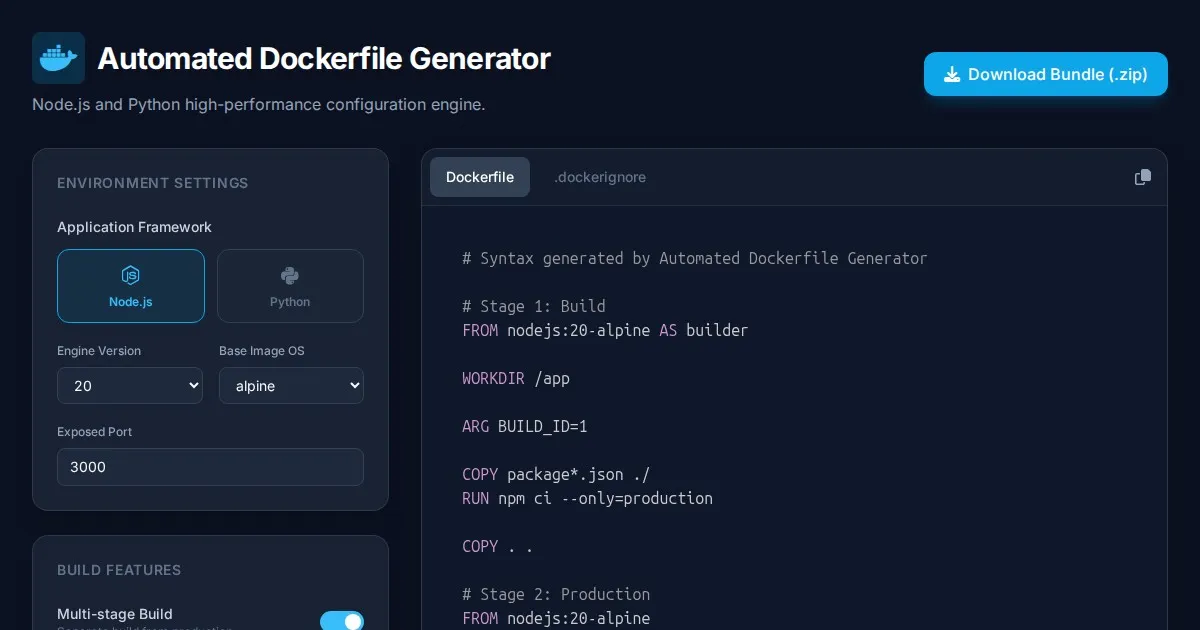
Automated Dockerfile Generator for Node.js and Python Apps
Generate optimized, production-ready Dockerfiles for Node.js and Python applications instantly. Customize base images, port configurations, and dependencies.
Free Base64 Image Data URI to File Size Calculator
Accurately calculate the file size of Base64 encoded image data strings. This free, web-based tool helps developers estimate binary file sizes for web apps.
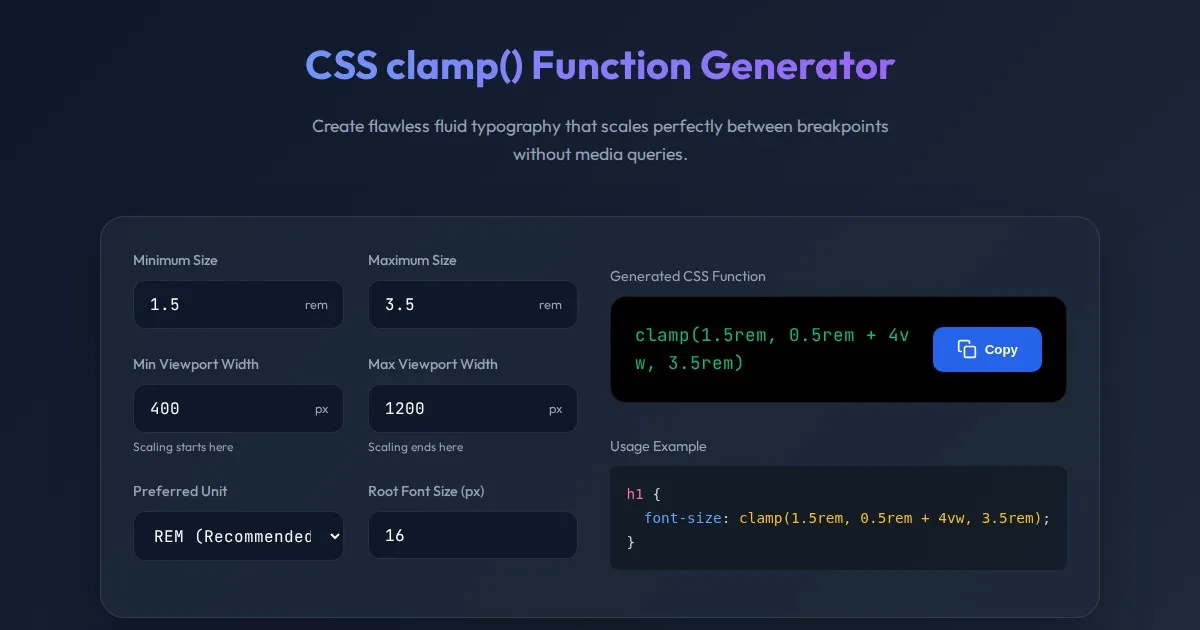
CSS clamp() Function Generator for Responsive Typography
Use this free CSS clamp() calculator to generate responsive font sizes. Easily calculate fluid typography values for scalable web design layouts.
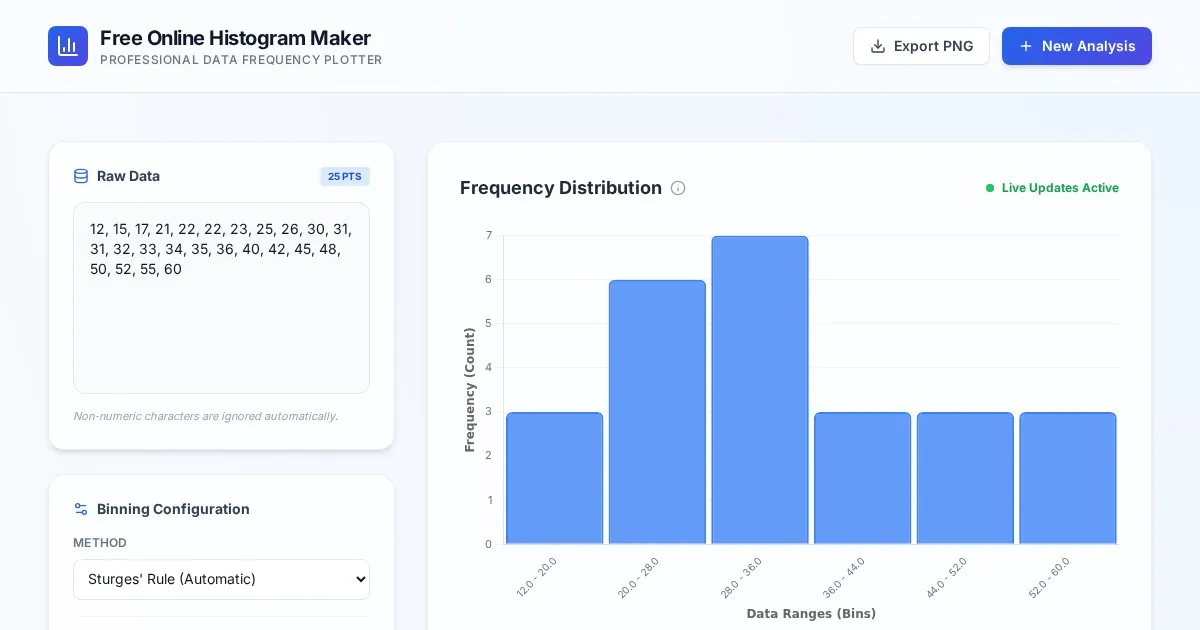
Free Online Histogram Maker & Data Frequency Plotter
Easily create professional histograms from your numeric data. Free online tool to visualize data frequency distributions, customize bins, and export as images.
Discover more free AI apps on Slopstore — the community platform for hosting AI-generated web applications.