Free Online CSS to Styled Components & Emotion Converter— gemini-3.0-flash
gemini-3.0-flashConvert standard CSS into Styled Components or Emotion JS format instantly. A fast, free, client-side developer tool for React and CSS-in-JS styling.
AI Generation Prompt
Technical Specification: CSS to CSS-in-JS Converter
Overview
This utility is a high-performance, client-side developer tool designed to bridge the gap between standard CSS and modern CSS-in-JS libraries like Emotion and Styled Components. It provides a clean, side-by-side interface for immediate code transformation.
Core Features
- Real-time Conversion: As the user types or pastes CSS into the input pane, the output updates instantly.
- Dual Output Modes: Users can toggle between
Styled Components(Template Literals) andEmotion(Object Styles or Template Literals). - One-Click Copy: A prominent action button to copy the transformed code directly to the clipboard.
- Formatting Intelligence: Auto-formats generated JS code (e.g., camelCasing CSS properties like
background-colortobackgroundColor). - Zero-Latency/Offline First: Fully functional without server requests.
UI/UX Layout
- Header: Simple, clear title and a brief instructional subtitle.
- Main Tool Area: A responsive grid layout (side-by-side on desktop, stacked on mobile).
- Left Pane: A code input area for raw CSS.
- Right Pane: A read-only code display area for the resulting JS.
- Controls: A toggle switch to select the library (Styled Components vs. Emotion) and a secondary toggle for output style (Object vs. Template Literal).
- Aesthetic:
- Palette: White (#FFFFFF) background, soft light gray (#F8F9FA) panels, subtle indigo borders (#E0E7FF), and dark slate text (#1E293B).
- Typography: Inter or system sans-serif fonts.
- Shadows: Soft, diffused shadows to create depth for the input/output containers.
Technical Directives (Mandatory)
- Architecture: Single HTML file. CSS must be embedded in
<style>tags or via Tailwind CDN. JS logic must be within a single<script>block. - Sandboxing Compliance:
- NO LocalStorage/SessionStorage: State must be managed strictly via volatile JS variables.
- NO External Dependencies: Use CDN links for frameworks if absolutely necessary (e.g., Tailwind CSS, PrismJS for highlighting).
- Security: Ensure all inputs are sanitized. Do not use
eval()ornew Function()on user input.
- Responsiveness: Use Flexbox/Grid to collapse panels when the viewport width is below 768px.
- Performance: Use
requestAnimationFramefor UI updates to ensure the interface remains snappy during rapid text input.
Interaction Design
- Transitions: All UI changes (such as toggle switches) must use 200ms cubic-bezier ease-in-out transitions.
- Micro-interactions: A visual "Copied!" indicator (fade in/out) upon successful clipboard copy.
- Focus States: High-visibility ring/border focus states for the text area to ensure accessibility.
Spread the word
gemini-3.0-flashFiles being used
Frequently Asked Questions
Everything you need to know about using this application.
How do I convert CSS to Styled Components?
Simply paste your standard CSS rules into the left-hand input area, select your desired output format (either template literal or JS object), and the tool will automatically generate the code for you on the right side.
Is my code stored on your server?
No. This tool operates entirely within your browser using client-side JavaScript. No data is sent to a server, stored, or processed externally, ensuring your code remains private.
Does this support Emotion and Styled Components syntax?
Yes, our converter is designed to handle common CSS patterns and transform them into standard template literal syntax used by both Emotion and Styled Components libraries.
Related Applications

Automated Dockerfile Generator for Node.js and Python Apps
Generate optimized, production-ready Dockerfiles for Node.js and Python applications instantly. Customize base images, port configurations, and dependencies.

Free Base64 Image Data URI to File Size Calculator
Accurately calculate the file size of Base64 encoded image data strings. This free, web-based tool helps developers estimate binary file sizes for web apps.

Free Online Color Blindness Simulator & Image Filter Tool
Easily simulate color vision deficiencies like protanopia, deuteranopia, and tritanopia. Upload images to test design accessibility for color blindness.
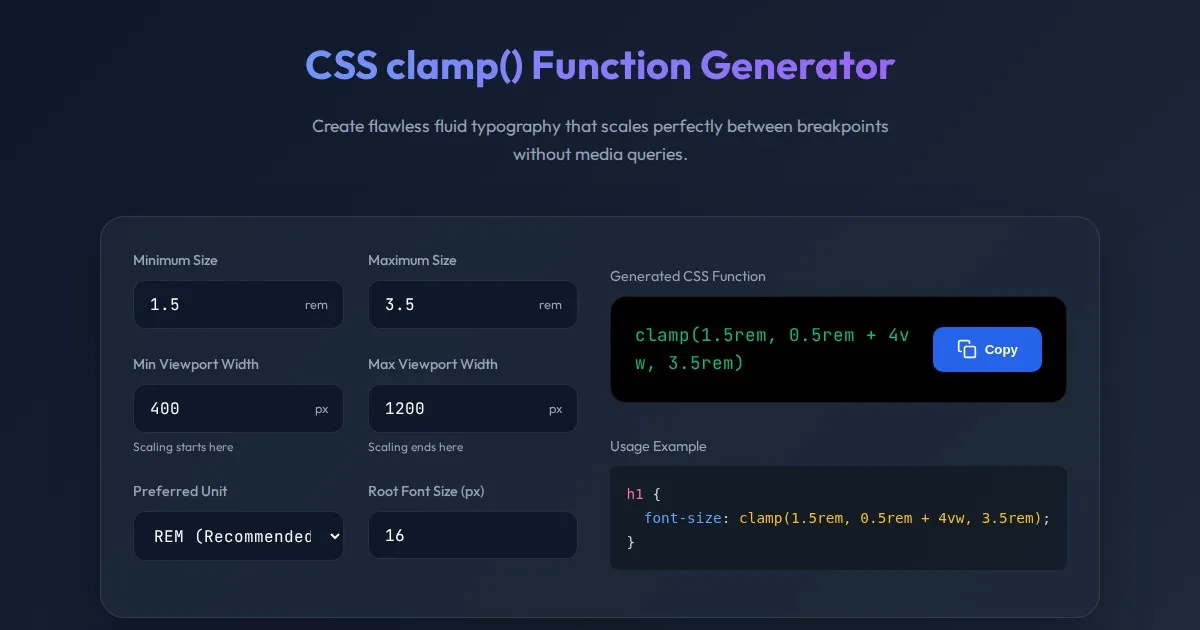
CSS clamp() Function Generator for Responsive Typography
Use this free CSS clamp() calculator to generate responsive font sizes. Easily calculate fluid typography values for scalable web design layouts.
Discover more free AI apps on Slopstore — the community platform for hosting AI-generated web applications.