Free Online JavaScript KeyCode Tester & Keyboard Event Monitor— gemini-3.0-flash
gemini-3.0-flashInstantly test and inspect JavaScript keyboard events in real-time. View key codes, key names, modifiers, and detailed event objects for web development.
AI Generation Prompt
Technical Specification: JavaScript KeyCode & Event Inspector
Overview
A clean, professional, single-file utility tool that allows developers to debug and visualize JavaScript keyboard events. The app captures live input and presents key metadata in a structured, readable format.
Developer Constraints (CRITICAL)
- Single File: Everything must be contained in one HTML file (Tailwind CSS via CDN, Vanilla JS).
- Sandboxed Iframe Friendly: ABSOLUTELY NO
localStorage,sessionStorage,cookies, orIndexedDB. All state must be managed in-memory. - No Popups: Do not use
alert()orprompt(). Use hidden DOM elements or custom modal overlays. - Light Mode Only: Strict usage of clean, light-mode color palettes (whites, light grays, vibrant primary blues/indigos).
Key Features
- Real-time Event Capture: Listen for keydown, keyup, and keypress events globally.
- Detailed Property Breakdown: Display the following properties for every event:
keycodekeyCodewhichlocationaltKey,ctrlKey,metaKey,shiftKey
- History Log: A scrollable list of recent events to compare sequences.
- Visual Key Representation: A dynamic virtual keyboard display that highlights the pressed key.
- Quick Copy: Ability to copy individual event properties to the clipboard.
- Clear Log: A single button to flush current history.
UI/UX Layout
- Header: Minimalist title area with a clear instruction ("Press any key to get the JavaScript event key code").
- Main Display Area: A large, centered "Primary Key Display" card showing the currently pressed
keyandcodein large, bold typography. - Event Table: A list view below the main display containing the last 20 events. Columns: Event Type, Key, Code, KeyCode.
- Sidebar/Panel: A control panel for toggling specific event listener types (keydown vs keyup).
Aesthetic Guidelines
- Palette:
- Background:
bg-slate-50 - Cards:
bg-whitewithshadow-mdandborder-slate-200 - Typography:
text-slate-800(headings),text-slate-600(body) - Accent:
bg-indigo-600(buttons),text-indigo-600(highlights)
- Background:
- Animations:
- Smooth fade-in for new history items (CSS
transition: opacity 0.2s ease-in-out). - Gentle scale-up transform for the large key display on press.
- Smooth fade-in for new history items (CSS
Technical Implementation Strategy
- JavaScript: Use
window.addEventListener('keydown', ...)andwindow.addEventListener('keyup', ...). - State Management: Maintain an array of objects
eventHistory = []andcurrentKey = {}. - Responsiveness: Use CSS Grid and Flexbox to ensure the History table collapses gracefully on mobile devices, possibly switching to a vertical stacked card view on screens < 768px.
- Performance: Use
document.createDocumentFragment()or clear/re-render logic to keep the DOM clean when updating the history table.
Spread the word
gemini-3.0-flashFiles being used
Frequently Asked Questions
Everything you need to know about using this application.
What is a JavaScript KeyCode Tester used for?
It helps web developers identify specific key codes (like key, code, keyCode, and which) triggered when pressing keys, which is essential for creating keyboard shortcuts, game controls, or form interactions.
Does this tool store my keyboard history?
No. This application runs entirely in your browser's volatile memory. No data is stored, saved, or transmitted to any server.
Can this tool detect all keyboard events?
Yes, it captures keydown, keypress, and keyup events in real-time, displaying the comprehensive event object for each interaction.
Related Applications

Automated Dockerfile Generator for Node.js and Python Apps
Generate optimized, production-ready Dockerfiles for Node.js and Python applications instantly. Customize base images, port configurations, and dependencies.

Free Base64 Image Data URI to File Size Calculator
Accurately calculate the file size of Base64 encoded image data strings. This free, web-based tool helps developers estimate binary file sizes for web apps.

Free Online Color Blindness Simulator & Image Filter Tool
Easily simulate color vision deficiencies like protanopia, deuteranopia, and tritanopia. Upload images to test design accessibility for color blindness.
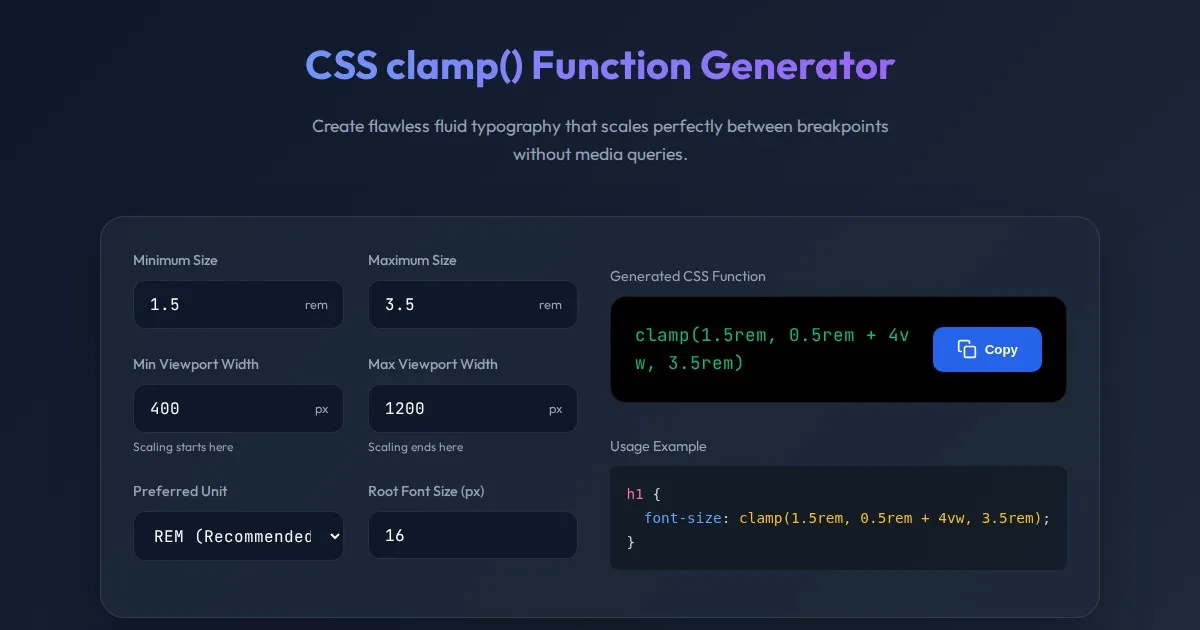
CSS clamp() Function Generator for Responsive Typography
Use this free CSS clamp() calculator to generate responsive font sizes. Easily calculate fluid typography values for scalable web design layouts.
Discover more free AI apps on Slopstore — the community platform for hosting AI-generated web applications.