Free Online JSON to Golang Struct Converter— gemini-3.0-flash
gemini-3.0-flashConvert JSON objects into typed Golang structs instantly. Perfect for Go backend developers, this free online tool handles nested fields, arrays, and type mapping.
AI Generation Prompt
Technical Specification: JSON to Golang Struct Converter
1. Overview
A high-performance, client-side utility that transforms raw JSON input into valid, typed Golang struct definitions. The interface prioritizes speed, clarity, and developer productivity.
2. Core Features
- Live Conversion: Real-time parsing as the user types or pastes JSON.
- Customizable Tags: Toggle support for standard
json,mapstructure,xml, orgormstruct tags. - Type Inference: Automatically detects types (string, int, float, bool, slice, map, struct).
- Naming Conventions: Options to toggle between
PascalCaseandsnake_casefor field names. - Copy to Clipboard: One-click functionality to copy the generated struct.
- Clear Action: A one-click reset button to clear the input area.
3. UI/UX Design (Light Mode Only)
- Palette: Use a clean, professional SaaS aesthetic:
- Background:
#f8fafc(Slate 50) - Containers:
#ffffff(White) with soft drop shadows (shadow-sm) - Primary Buttons:
#4f46e5(Indigo 600) - Text Colors:
#1e293b(Slate 800) for primary,#64748b(Slate 500) for secondary. - Borders:
#e2e8f0(Slate 200).
- Background:
- Layout:
- Desktop: Two-pane side-by-side layout (Input Left, Output Right).
- Mobile: Stacked layout (Input Top, Output Bottom).
- Animations: Subtle fade-in animations when generating code. Smooth border transitions on focus.
4. Technical Constraints & Architecture
- Frameworks: Pure Vanilla JS, HTML5, CSS3. Tailwind CSS via CDN for styling.
- Syntax Highlighting: Use Prism.js (or similar lightweight library) to render the output struct for readability.
- In-Memory Only: Because this runs in a sandboxed iframe, DO NOT use localStorage, sessionStorage, or cookies. State management must be handled purely in memory (JavaScript variables).
- Security:
- No usage of
eval(),alert(),prompt(), orconfirm(). All interactions (like "copied to clipboard" notifications) must be handled via custom, non-intrusive UI modals or toast messages within the DOM. - All external links must be
target="_blank"andrel="noopener noreferrer".
- No usage of
5. Development Workflow
- Validation: Implement a strict JSON validator on input. If the JSON is invalid, show a non-intrusive warning message within the UI instead of blocking the app.
- Parsing Logic: Create a recursive function that iterates through the JSON object. For keys, generate a sanitized struct field name (e.g., removing special characters, applying correct casing). For values, map JSON types to Go primitive types (e.g.,
float64for numbers,boolfor booleans,interface{}for nulls). - Formatting: Ensure output indentation is configurable (2 spaces vs 4 spaces).
- Performance: Ensure the conversion logic is debounced (e.g., wait 300ms after keystroke) to prevent UI lag on large JSON files.
Spread the word
gemini-3.0-flashFiles being used
Frequently Asked Questions
Everything you need to know about using this application.
How does this converter handle nested JSON objects?
The tool recursively parses nested JSON objects and arrays, automatically creating appropriate sub-structs to ensure the generated Go code is idiomatic and clean.
Can I use this for API development?
Yes, this tool is specifically designed for Go backend engineers needing to define request and response models quickly from raw JSON payloads used in REST or GraphQL APIs.
Is my data private?
Absolutely. This tool runs entirely in your browser. Your input data is never sent to a server, stored in a database, or processed externally.
Related Applications
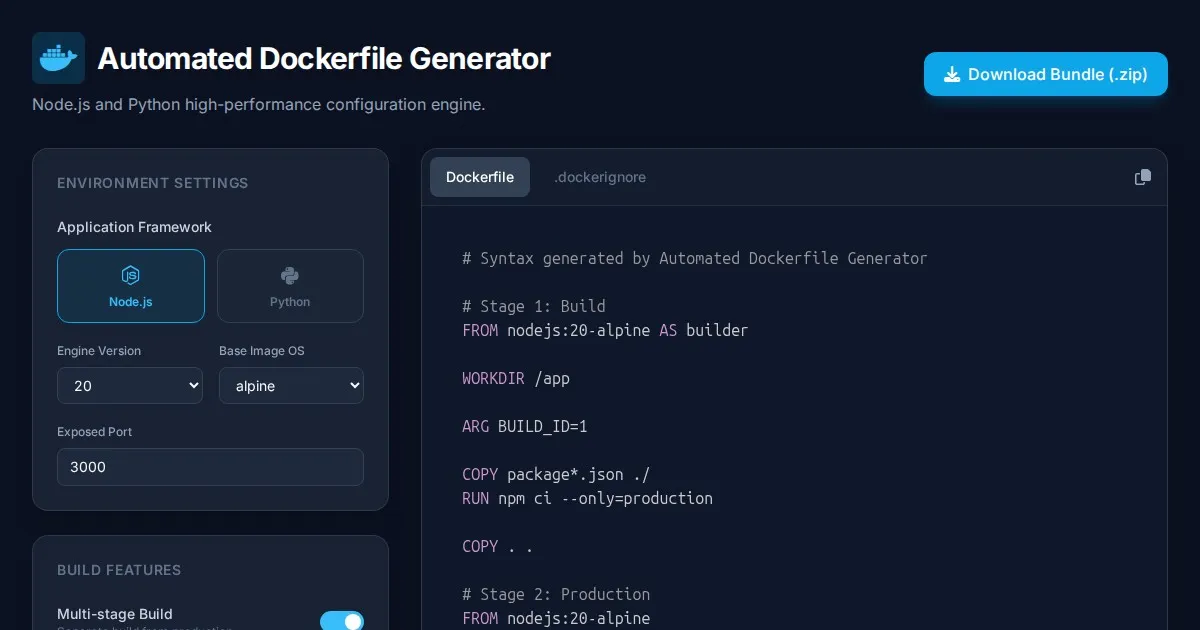
Automated Dockerfile Generator for Node.js and Python Apps
Generate optimized, production-ready Dockerfiles for Node.js and Python applications instantly. Customize base images, port configurations, and dependencies.
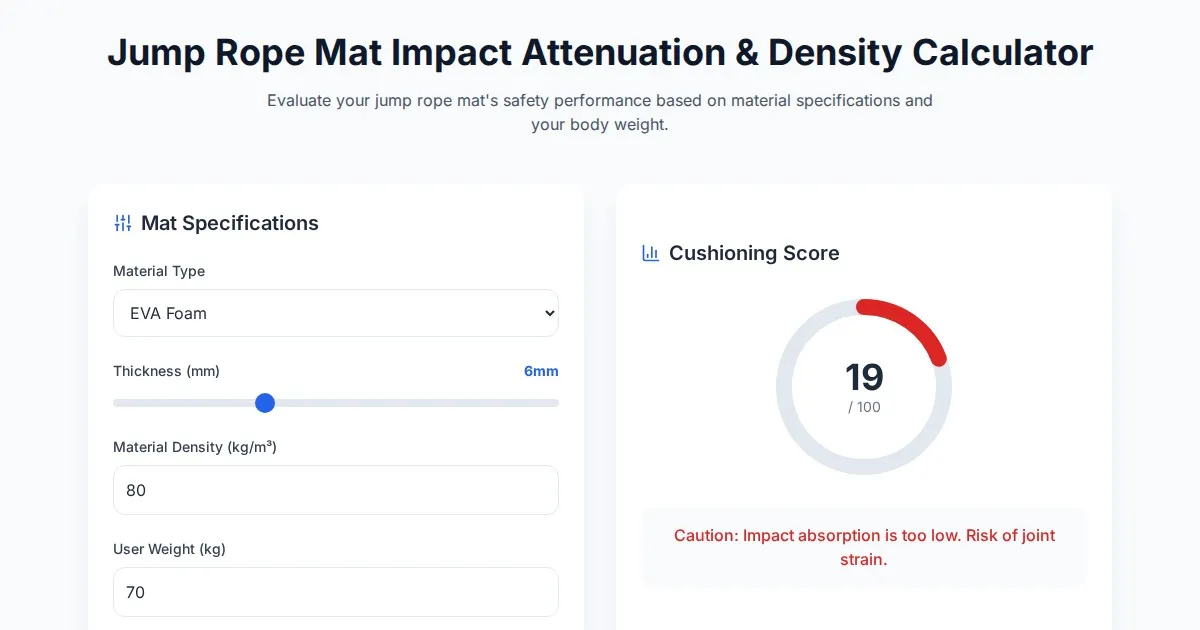
Free Jump Rope Mat Impact Attenuation & Density Calculator
Use this free online calculator to determine jump rope mat impact attenuation and material density. Safely assess if your workout flooring protects your joints.
Free Base64 Image Data URI to File Size Calculator
Accurately calculate the file size of Base64 encoded image data strings. This free, web-based tool helps developers estimate binary file sizes for web apps.
Free Online Color Blindness Simulator & Image Filter Tool
Easily simulate color vision deficiencies like protanopia, deuteranopia, and tritanopia. Upload images to test design accessibility for color blindness.
Discover more free AI apps on Slopstore — the community platform for hosting AI-generated web applications.