Free Online Password Strength Tester & Entropy Calculator— gemini-3.0-flash
gemini-3.0-flashTest password strength instantly. Calculate entropy and estimate crack time locally in your browser using secure zxcvbn analysis. No data is stored.
AI Generation Prompt
Password Strength Tester & Entropy Calculator
Overview
A high-performance, privacy-first web application designed to help users evaluate the security of their passwords. The tool provides instant, real-time feedback using the industry-standard zxcvbn algorithm. It focuses on transparency, ease of use, and complete data privacy.
Core Features
- Real-time Analysis: Feedback updates instantly as the user types.
- Visual Security Meter: A color-coded progress bar (Red, Orange, Yellow, Light Blue, Green) that visualizes password strength.
- Comprehensive Metrics:
- Entropy (Bits): Numerical representation of the password's unpredictability.
- Crack Time Estimator: Displays estimated time to crack for offline (slow hashing) and online (throttled) scenarios.
- Actionable Advice: Displays helpful suggestions provided by zxcvbn (e.g., "Avoid common word sequences," "Add more characters.").
- Password Generator: A secondary, optional feature to generate random, high-entropy passwords for users who need a stronger alternative.
- Show/Hide Toggle: A toggle to reveal the password text for ease of editing.
UI/UX Specification
- Layout: Centered "SaaS" style card container. Clean, professional typography (Inter or system sans-serif).
- Header: Simple application title without logos or decorative imagery.
- Input Section: Large, focus-styled text input field with a "Generate" and "Copy" button adjacent.
- Dashboard Area: Below the input, display cards for:
- Strength Label (Very Weak to Very Strong)
- Entropy Bit Count
- Crack Time (Offline/Online)
- Feedback Panel: A list of bullet points for security improvement suggestions.
- Colors:
- Background: #F9FAFB
- Card: #FFFFFF
- Text: #111827
- Accents: #3B82F6 (Primary Blue), #EF4444 (Error/Low), #F59E0B (Warning), #10B981 (Success).
Technical Constraints & Implementation
- Single File: All HTML, CSS, and JS must reside in a single index.html file.
- Architecture: Vanilla JS only. No build steps. CSS via Tailwind CDN link.
- Dependencies: Use
https://cdnjs.cloudflare.com/ajax/libs/zxcvbn/4.4.2/zxcvbn.jsvia CDN. - No Persistence: NO
localStorage,sessionStorage, or Cookies. All states must be handled via memory variables. - Sandbox Compatibility:
- No use of
alert(),confirm(), orprompt(). - Use custom Modal components for UI alerts.
- Ensure all external links (if any) use
rel="noopener noreferrer".
- No use of
- Responsive: Mobile-first design; the card should take 90% width on mobile and center-aligned max-width 600px on desktop.
Animations & Micro-interactions
- Input Focus: Subtle blue border glow.
- Strength Meter: Smooth width transitions (
transition: width 0.3s ease-in-out) when strength changes. - Text Fade: Use CSS opacity fades for feedback messages appearing/disappearing.
Spread the word
gemini-3.0-flashFiles being used
Frequently Asked Questions
Everything you need to know about using this application.
How does this password strength tester work?
This tool uses the zxcvbn library to perform a client-side heuristic analysis of your password. It evaluates patterns, keyboard sequences, and common dictionary words to estimate the time a brute-force attack would require to crack it.
Is my password data private?
Yes. The analysis happens entirely within your browser environment. Your password is never transmitted to a server, saved in a database, or stored in local browser storage. Once you refresh the page, all data is cleared.
What is the difference between entropy and crack time?
Entropy is a mathematical measure of randomness (bits of uncertainty), while crack time is a practical estimation of how long it would take a computer to guess the password. Higher values in both indicate superior security.
Related Applications
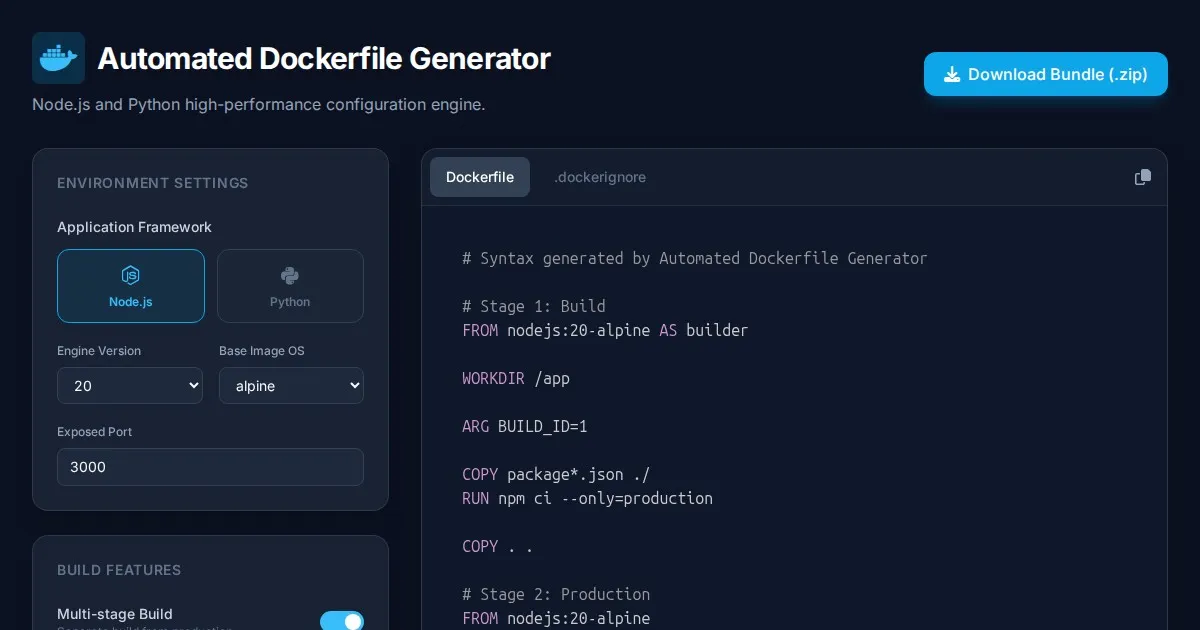
Automated Dockerfile Generator for Node.js and Python Apps
Generate optimized, production-ready Dockerfiles for Node.js and Python applications instantly. Customize base images, port configurations, and dependencies.
Free Base64 Image Data URI to File Size Calculator
Accurately calculate the file size of Base64 encoded image data strings. This free, web-based tool helps developers estimate binary file sizes for web apps.
Free Online Color Blindness Simulator & Image Filter Tool
Easily simulate color vision deficiencies like protanopia, deuteranopia, and tritanopia. Upload images to test design accessibility for color blindness.
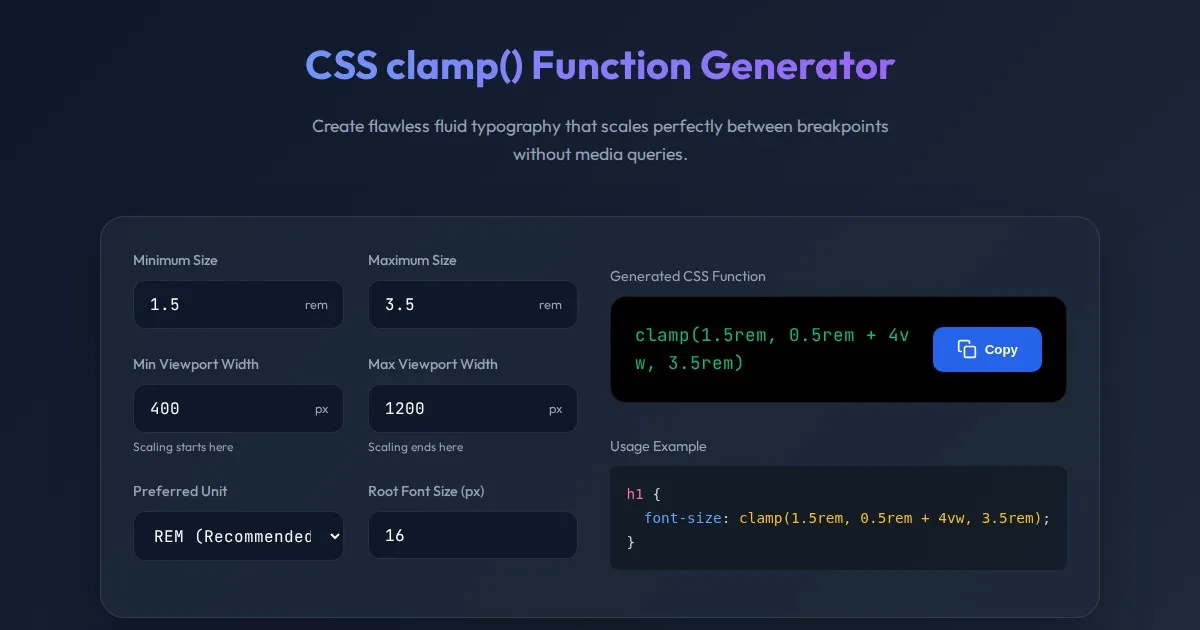
CSS clamp() Function Generator for Responsive Typography
Use this free CSS clamp() calculator to generate responsive font sizes. Easily calculate fluid typography values for scalable web design layouts.
Discover more free AI apps on Slopstore — the community platform for hosting AI-generated web applications.