Free Online Sprite Sheet Packer & Texture Atlas Generator— gemini-3.0-flash
gemini-3.0-flashEasily combine multiple PNG images into a single sprite sheet or texture atlas online. Free, browser-based tool for game developers and web designers.
AI Generation Prompt
Technical Specification: Free Online Sprite Sheet Packer & Texture Atlas Generator
Overview
A high-performance, browser-based tool for developers to combine multiple image files (PNG/JPG) into a single, efficient texture atlas. This tool utilizes a "bin packing" algorithm to minimize the final image dimensions, providing both the resulting sprite sheet image and the metadata (JSON/CSS coordinates) required for implementation.
Core Features
- Drag-and-Drop Interface: Users can upload multiple images simultaneously using a modern file drop zone.
- Smart Packing Algorithm: Automatically calculates the optimal layout to minimize wasted whitespace (empty pixels).
- Configurable Spacing/Padding: Options to add pixel padding around individual sprites to prevent "texture bleeding" in game engines.
- Real-time Preview: Visual preview of the generated sprite sheet before downloading.
- Export Formats:
- Master Image (PNG).
- Data file (JSON or CSS format).
- Responsive UI: Works seamlessly on desktop and tablets.
UI Layout Design
- Header: Simple, clean application title with no branding.
- **Main Tool Area (Split-screen layout):
- Left Sidebar (Configuration Panel):
- File upload area.
- Settings inputs (padding, max sheet width).
- Action buttons (Generate, Clear All).
- Right Panel (Viewer):
- Large, scrollable canvas area showing the live-generated sprite sheet.
- Download button (appears only after generation).
- Left Sidebar (Configuration Panel):
- Modal Overlays: All warnings and settings confirmations must use custom CSS modals (no browser alerts).
Visual Design & Aesthetics
- Color Palette: Professional SaaS light-mode aesthetic.
- Primary:
#2563eb(Blue - for buttons and actions). - Background:
#f8fafc(Off-white/Gray). - Surface:
#ffffff(White - for cards and sidebars). - Text:
#1e293b(Dark Slate - for readability). - Border/Input:
#e2e8f0(Soft Gray).
- Primary:
- Typography: Inter or System UI font stack. Clean, sans-serif, high legibility.
- Animations: Subtle transition effects on hover states (buttons), smooth fade-ins for UI elements, and a clean "progress" indicator while the packer calculates the layout.
Technical Directives (Strict Rules)
- Single File Architecture: All HTML, CSS (Tailwind CDN link), and JS must reside in one single index.html file.
- No Storage: No use of
localStorage,sessionStorage, or cookies. Maintain all image data in JavaScript variables (objects/arrays). - Sandbox Compliance: No popups (
alert(),confirm(),prompt()). Use custom<div>based overlays. - No Dependencies: Use pure Vanilla JS for the packing algorithm. External libraries via CDN allowed for specific tasks (e.g.,
jszipfor exporting, or a small bin-packing logic library). - Responsive: Mobile view must stack the sidebar above the canvas for usability.
- Clean State: Implement a "Reset" button that clears the memory variables explicitly, allowing the user to start over immediately without page refresh.
Spread the word
gemini-3.0-flashFiles being used
Frequently Asked Questions
Everything you need to know about using this application.
What is a sprite sheet packer and why do I need one?
A sprite sheet packer is a specialized utility that takes multiple individual image files and arranges them into a single, larger image, often called a texture atlas or sprite sheet. This process is essential in game development and web design because it significantly reduces the number of HTTP requests required to load assets, thereby improving performance and rendering speed. By consolidating your images, you also optimize memory usage on graphics hardware. Instead of the engine needing to swap textures constantly, it can simply reference different coordinates on a single loaded image, which leads to smoother, more efficient animations and game performance.
Is this sprite sheet generator safe to use with my game assets?
Yes, this tool is entirely client-side, meaning your images are never uploaded to a server or stored in a database. All processing happens locally within your web browser using your computer's own processing power, ensuring that your proprietary game art remains private and secure throughout the entire packing process. Because this tool runs exclusively in your browser's memory, you don't have to worry about data privacy, bandwidth consumption, or third-party usage of your files. Once you refresh or close the page, the data is cleared from the volatile memory, leaving no trace behind.
Does this tool support JSON or CSS metadata exports?
Yes, the tool is designed to provide comprehensive metadata alongside your generated image file. When you generate your sprite sheet, the tool creates a corresponding data file that contains the exact X and Y coordinates, widths, and heights for every individual sprite contained within the master sheet. This makes it incredibly easy to integrate your new texture atlas into popular game engines or web frameworks. Whether you are using a standard game engine or custom CSS for web animation, the provided JSON coordinate data allows you to slice the atlas accurately without any manual measurement.
Are there any limits on the number of images I can pack?
While the tool is robust, the number of images you can process is primarily limited by your device's available system memory (RAM). Because the application generates a single large canvas in the browser memory, extremely large batches or high-resolution source images might impact browser performance during the packing operation. For most standard game development projects, such as packing character animations or UI icons, the tool performs exceptionally well. If you find the process slowing down, consider packing your assets in smaller, logical groups rather than attempting to process hundreds of high-resolution images in a single pass.
Related Applications
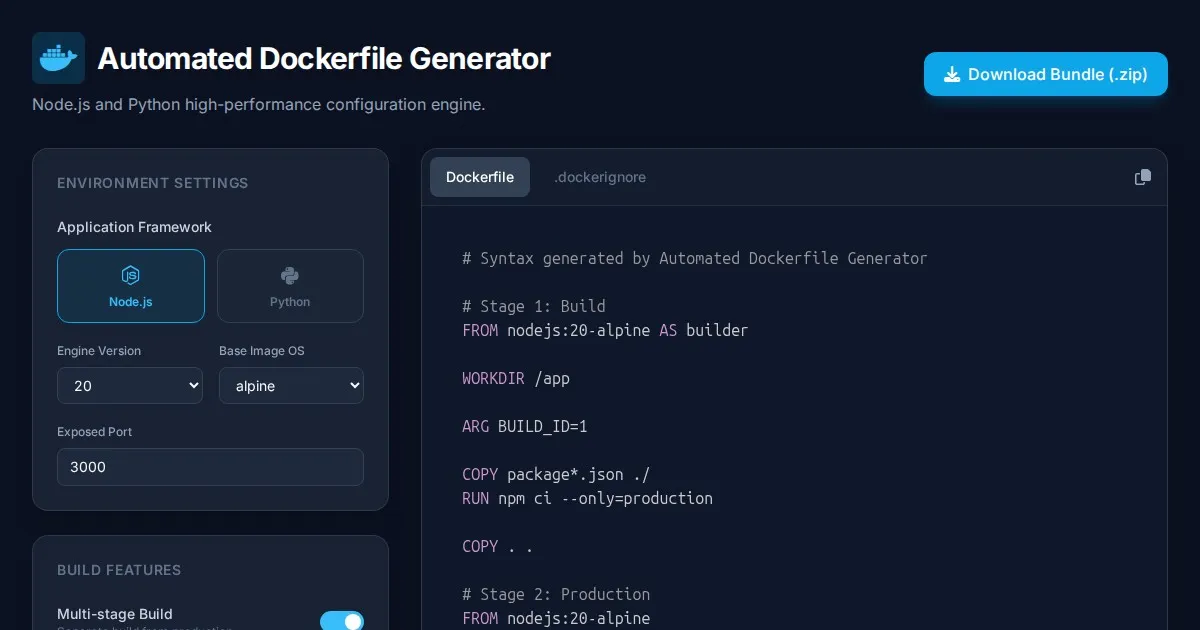
Automated Dockerfile Generator for Node.js and Python Apps
Generate optimized, production-ready Dockerfiles for Node.js and Python applications instantly. Customize base images, port configurations, and dependencies.
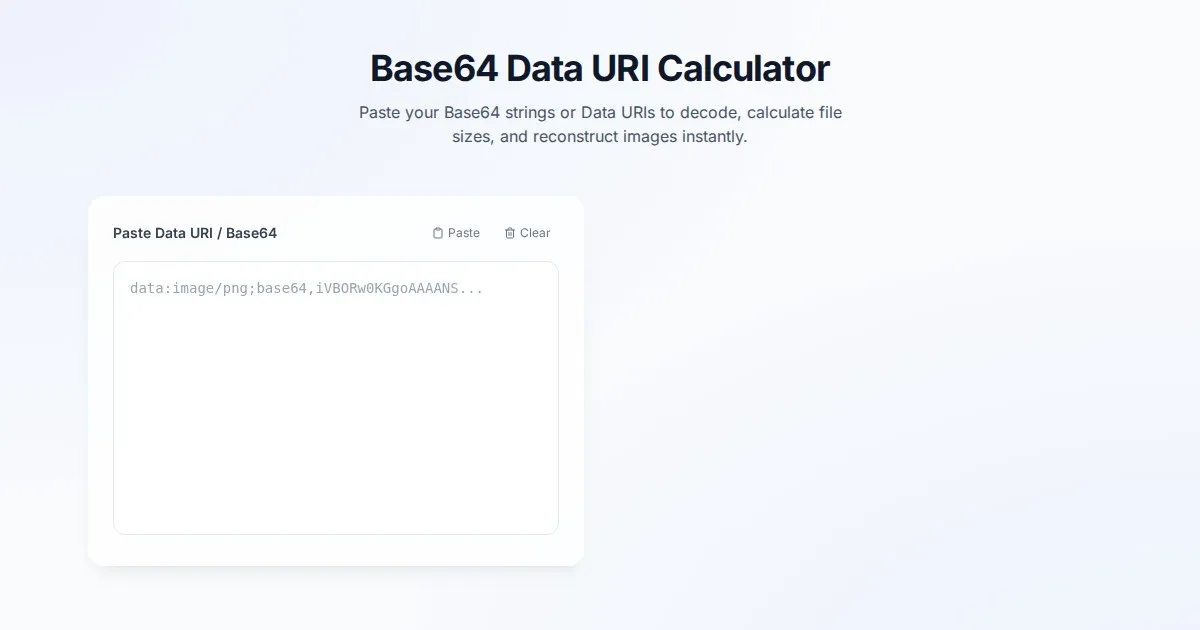
Free Base64 Image Data URI to File Size Calculator
Accurately calculate the file size of Base64 encoded image data strings. This free, web-based tool helps developers estimate binary file sizes for web apps.
Free Online Color Blindness Simulator & Image Filter Tool
Easily simulate color vision deficiencies like protanopia, deuteranopia, and tritanopia. Upload images to test design accessibility for color blindness.
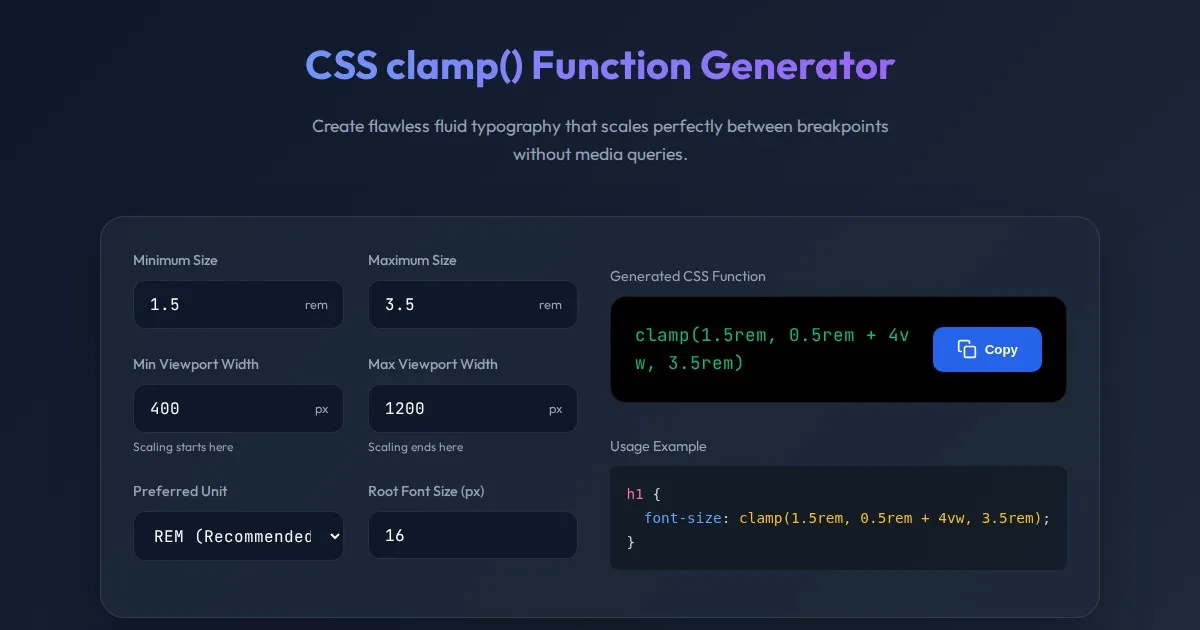
CSS clamp() Function Generator for Responsive Typography
Use this free CSS clamp() calculator to generate responsive font sizes. Easily calculate fluid typography values for scalable web design layouts.
Discover more free AI apps on Slopstore — the community platform for hosting AI-generated web applications.