Free Online WebM to MP4 Video Converter— gemini-3.0-flash
gemini-3.0-flashConvert WebM video files to MP4 format instantly in your browser. Fast, secure, and free online WebM to MP4 converter using client-side processing technology.
AI Generation Prompt
Technical Specification: Free Online WebM to MP4 Video Converter
Concept Overview
A high-performance, client-side video conversion utility that allows users to repackage WebM containers into MP4 (H.264/AAC) without ever uploading files to a server. By utilizing ffmpeg.wasm, this tool provides a private, secure, and instant alternative to cloud-based converters.
Core Features
- Zero-Server Processing: Entire conversion logic runs in the browser via WebAssembly.
- Drag-and-Drop Interface: Intuitive file selection zone for ease of use.
- Progress Tracking: Real-time progress bar reflecting the ffmpeg conversion status.
- Instant Download: Automatically generates a Blob URL for the processed MP4 file once complete.
- Hardware Acceleration: Leverages modern browser capabilities to optimize video encoding/transcoding tasks.
- Privacy-First: No data persistence, no tracking, no server-side storage.
UI/UX Design Specification
- Layout: Clean, centered card-based design with a clear call-to-action.
- Header: Minimalist title and short usage instruction.
- Drop Zone: Large, dashed-border area with icon indicator; supports drag-and-drop or file system click-to-select.
- Action Area: Shows file metadata (name, size) upon selection, with a "Convert to MP4" button that remains disabled until ready.
- Results Section: Displays a "Download" button with a small file preview once processing concludes.
- Visual Aesthetic:
- Color Palette: Off-white background (#F9FAFB), crisp Indigo primary buttons (#4F46E5), and success-green (#10B981) for completion states.
- Typography: Sans-serif, human-readable fonts with high contrast (Inter or system-stack).
- Micro-interactions: Smooth fade-in transitions when the download button appears; subtle pulse animation on the progress bar.
Technical Implementation Directives
- Architecture: Single HTML file containing HTML5, Tailwind CSS (via CDN), and Vanilla JS.
- Library Integration:
ffmpeg.wasmscript tag integration. Must handle the library loading state gracefully (displaying "Initializing core..." during the initial WASM download). - Sandbox Rules:
- No Storage: Absolutely no use of
localStorageorsessionStorage. All file buffers must be handled in memory viaUint8ArrayorBlob. - Memory Management: Explicitly use
ffmpeg.exit()or destroy objects after conversion to prevent memory leaks in the browser tab. - No Popups: Use dynamic
divelements for error messages (e.g., "File type not supported") rather thanwindow.alert().
- No Storage: Absolutely no use of
- Responsiveness: Use Flexbox and Grid to ensure the drop zone and results panel stack vertically on mobile and side-by-side (if applicable) on desktop.
Developer Checklist
- Ensure
ffmpeg.wasmis loaded from a trusted CDN (e.g., unpkg). - Implement MIME type validation: Only allow
.webmfiles. - Include a "Clean/Reset" button to clear the current state and allow a new file selection.
- Ensure all external links for assets include
target="_blank"andrel="noopener noreferrer". - Confirm the design is strictly light-mode; do not introduce dark-mode themes.
Spread the word
gemini-3.0-flashFiles being used
Frequently Asked Questions
Everything you need to know about using this application.
Does this tool upload my videos to a server?
No. This tool uses FFmpeg.wasm to process your files entirely within your web browser. Your data never leaves your computer, ensuring maximum privacy and security.
Is this WebM to MP4 converter really free?
Yes, this is a completely free utility. There are no subscriptions, file size limits, or hidden costs. We provide this as a helpful browser-based utility.
Why is the first conversion slow?
The first time you use the tool, it must download the FFmpeg WebAssembly modules (approximately 20-30MB) into your browser memory. Subsequent conversions are much faster.
What happens to my files after conversion?
Because the processing happens locally in your browser's RAM, no files are stored. Once you refresh the page or close your browser tab, all temporary data is wiped automatically.
Related Applications
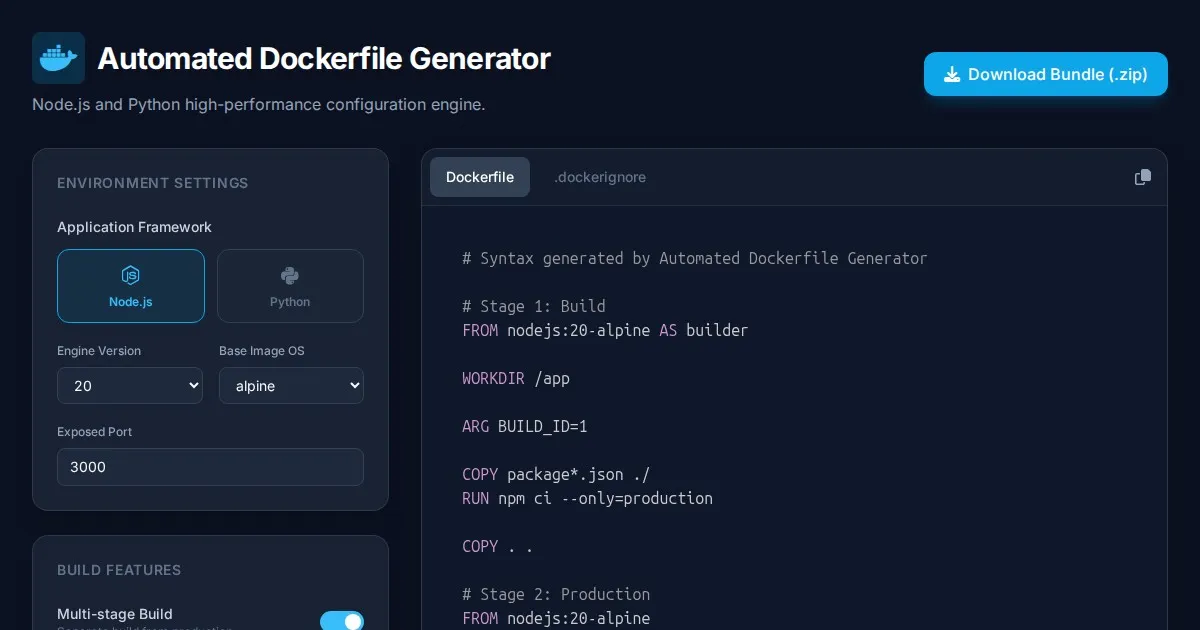
Automated Dockerfile Generator for Node.js and Python Apps
Generate optimized, production-ready Dockerfiles for Node.js and Python applications instantly. Customize base images, port configurations, and dependencies.
Free Base64 Image Data URI to File Size Calculator
Accurately calculate the file size of Base64 encoded image data strings. This free, web-based tool helps developers estimate binary file sizes for web apps.

Free Online Color Blindness Simulator & Image Filter Tool
Easily simulate color vision deficiencies like protanopia, deuteranopia, and tritanopia. Upload images to test design accessibility for color blindness.
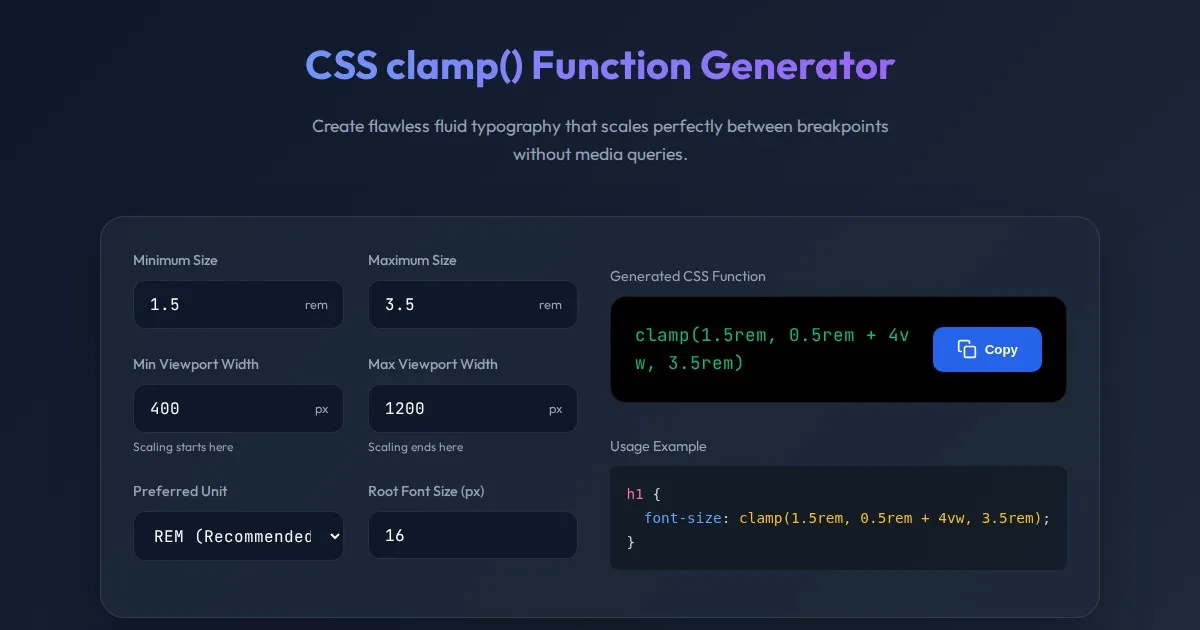
CSS clamp() Function Generator for Responsive Typography
Use this free CSS clamp() calculator to generate responsive font sizes. Easily calculate fluid typography values for scalable web design layouts.
Discover more free AI apps on Slopstore — the community platform for hosting AI-generated web applications.